
저자: DanIves등CNBC패널 · 외국인
요약 보기
엔비디아-인텔 협력은 엔비디아의 x86 CPU 수요 충족과 미 행정부 신뢰 확보 목적이며 파운드리 사업과는 무관하다. AI 혁명이 다음 단계 성장에 진입했고 금리 인하 사이클로 기술주 랠리가 강화될 것이라는 낙관 발언이 이어짐. 엔비디아는 영국에 20억 달러 투자, Enfabrica 인수 등 AI 생태계 확장 중. 인텔의 구조적 문제(파운드리·제품 병행)는 여전하다는 평가.
다듬은 글
It's good for Intel. What does Nvidia get out of it? Yeah, it's a good question. Nvidia gets a lot of positive um elements out of these partnerships. First, they build goodwill with the US administration. um making Intel like a strong player in the in the tech in the global tech ecosystem is a priority for the administration making uh the company you know like one of the the best assets we have to um maintain leading edge manufacturing in the US.
Then second uh very simply a lot of Nvidia clients we are very keen to be able to have x86 within their giant Nvidia clusters. So, uh, Nvidia is simply answering a very simple request from from these clients. And last but not least, with like the incredibly dominant position Nvidia has in the data center world, um, it's always good for Nvidia to show that they are not abusing their dominant position.
And so opening NV link partnering um with other players letting giving access to both their GPUs other CPUs sorry in their GPU clusters is actually a very very good thing to do and then the downside for Nvidia is virtually nothing because as Yensen put it yesterday it's going to be about either selling ARM CPUs they purchased from TSMC or selling uh x86 CPUs they purchased from Intel.
Pierre, how much is this about the cooperation in developing chips and and GPUs and how much is this about the actual foundry? And this is sort of a distinction I'm not clear on. Yeah. So the answer is actually very straightforward. Today there is absolutely nothing about the foundry business. We don't even know whether these chips are going to be manufactured at Intel or at TSMC.
In reality, it's still an open-ended question. Remember uh Intel is a very important client to um to TSMC. So um anything about Foundry would be like the second act or the part two of the uh the turnaround effort effort of the the new incoming the new incoming CEO. And today there is nothing about it.
It's all about being able to put an x86 Intel chip uh within the scaleup fabric like this very high speed interconnectivity between chips that Nvidia has de All right, lay it out for us. It's a bright green light. I mean for tech because to me it's like think about you got AI revolution hitting its next stage of growth.
We've seen Oracle, Nvidia and across the rest of tech. Now you got a cut cycle. In my opinion, this is really gonna turbocharge this tech rally. And it's not just about mag seven. It's about second, third, fourth derivatives. I think tech stocks could be up another 10% between now and rest of the year.
Is that a more of a sentiment issue? The idea that with with the Fed being more accommodative or is this really about like cost of capital because I would assume a lot of these people in the tech space, these companies in the tech space aren't really borrowing. Well, I think that's part of it. I mean, this is UN and guess what they're going to spend on AI data centers that so it speaks to our view like look tech had a strong year so far but it's get the popcorn out.
I mean, this is still we've talked about it's only 10:15, 10:30 p.m. in that party that goes to 4:00 a.m. start at 9:00 p.m. a year ago. And you look, it's software, it's chips. You you look at now the data center side, the power side, names like G Vernova and others. I mean, that to me is the most exciting.
It's about the second, third, fourth derivatives playing out across town and we kind of started to see that particularly uh based on what we saw out of this earnings period. I mean, Oracle was really kind of uh you know, just I I won't say it surprised everyone, but it was certainly the punctuation mark and the idea that it is broadening out.
We were talking the other day about how Corning was, you know, up for like 11 straight days. And you have all these stocks that were kind of uh either forgotten or not really considered to be part of that tech AI trade that now are getting a lot more attention. Well, I think that's it's a great point because that's now the focus because investors, they're looking to see, okay, who who now is going to benefit small cap, midcap, software, across chips because there's just further validation that this AI revolution is hitting this next stage of growth.
Use cases are exploding. Look what's happened on the consumer side as well. Capback continues to be rock solid. And I think as that plays out in a cut cycle, look, I just think tech, it's in the left lane in a Ferrari going 100 miles an hour. And I think that look, there's going to be speed bumps along the way.
But just like we saw with Nvidia, China news, and others. I just view those as bark worse than the bite because this now is the start of I think the next leg of the bull cycle. On Thursday, Nvidia, the largest publicly traded corporation in the world, declared its intention to spend 2 billion in artificial intelligence startups in the United Kingdom.
The commitment coincides with several other IT companies promising to invest in the nation, particularly during US President Donald Trump's visit to the UK. This week, the developments have made the country the hub of the AI world. The government claims that during Trump's state visit, the UK has secured a total of $150 billion in investments across the energy, banking, and technology sectors, resulting in the creation of almost 7,600 jobs.
The private equity firm Blackstone promised to invest 100 billion over 10 years while Microsoft committed 22 billion. Along with other prominent figures from Silicon Valley, Nvidia CEO Jensen Hang has also been in Britain attending events with the US president. Nvidia along with partners Coreweee, Microsoft and Nscale has committed to investing 11 billion to assist in the construction of AI factories in the United Kingdom by the end of 2026.
Additionally, it aims to advance quantum computing in the United Kingdom. The corporation recently promised to invest an additional $2 billion in the nation which will be used to boost the startup environment. According to Nvidia, the additional funding will be used to support economic expansion, advance cutting edge AI technology, establish new businesses and jobs, and enable the UK to compete internationally in the AI industry.
The business also pointed out that the country's current challenges with scaling AI companies include limited access to supercomputing, restricted venture capital, VC outside of London, rising energy costs, and the inability of VCs to get into prestigious academic institutions where many researchers double ace entrepreneurs.
In order to supply funding and AI infrastructure for startups, researchers, and developers, Nvidia is collaborating with venture capital investors, Axel, Air Street Capital, Balderton, Hawkton Ventures, and Phoenix Court. Hubs like London, Oxford, Cambridge, and Manchester are highlighted. According to CNBC, Nvidia has paid $900 million to acquire Enfabrica CEO Roachan Sankar and a significant portion of his staff, as well as to lock down the startup's technology.
Last Monday, the cash and stock transaction was quietly concluded. And Fabrica isn't your typical tiny semiconductor company. Its technology, which was introduced in 2019, can connect over 100,000 GPUs to function as a single enormous computer. The larger and more computationally demanding AI models are precisely the kind of system that Nvidia needs.
When Nvidia joined in Fabrica's $125 million series B in 2023, it was already an early adopter. According to PitchBook, the company was valued at about $600 million by the time it secured an additional $115 million later that year. Rivals of big tech are using the same strategy. Deals have been reached by Google, Meta, Microsoft, and Amazon to acquire the intellectual property of AI founders.
Nvidia's action demonstrates that it intends to influence the widespread deployment of those processors and is not satisfied with simply being a chip supplier. This agreement is another indication to investors that Nvidia is expanding beyond GPU sales to create an AI empire. How quickly Infabrica's technology integrates into Nvidia's next generation systems is now the question.
Nvidia is getting ready to increase its efforts in autonomous driving by potentially investing 500 million in the British startup Wave. Nvidia signed a letter of intent to take part in Wave's upcoming investment round, the company announced Thursday. The discussions take place a year after the London-based business secured over $1 billion in a round headed by Soft Bank Group, which also included investments from Nvidia and Uber.
Wave, which was founded in 2017, creates autonomous driving systems that don't rely on intricate pre-loaded maps, but instead use machine learning and camerabased sensors to learn from actual traffic patterns. While extending its work to Germany and Japan, the corporation has been testing its platforms in the United States and the United Kingdom.
With the possible investment, Nvidia would be better positioned to use its chips, which are already essential to the larger artificial intelligence explosion to power Wave systems. Additionally, it is consistent with Nvidia's promise on Thursday to spend $2 billion in the UK startup scene in the wake of a new agreement between the United States and Britain on technology and .
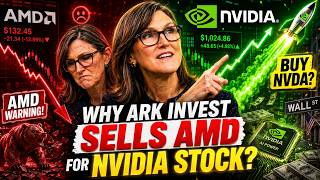
Right. I mean, interesting move here by Nvidia and Intel. And if you're looking at this, you're wondering, is this good for Intel? Is it good for India? Nvidia, what does it mean for um AMD overall? And if you break it down, it really means Nvidia is getting into AMD's business. Um, using Intel as the way to get system on chips.
That means taking a GPU, connecting it with NVLink, which is Nvidia's connection platform and getting and getting the ability to bring Intel. So GPUs and CPUs come together and of course that allows for better gaming desktops, amazing AI laptop processors, accelerated process units. That's the question.
And but the question really is what does that mean for Intel's foundry business? That's all we talked about really yesterday was that angle. I don't think anyone talked about how this was a great thing for Nvidia. Most people thought that the Trump administration, you know, it's already got a stake uh in Intel.
Jensen Wong is over with with the president in in the UK and there's immediately speculation, oh, you know, he said, "Hey, Jensen, you know, we're trying to for security reasons, we're trying to get intel back on its feet. Be nice if you would help." But you're saying it that there's something in it for for both companies.
It's a it's not that much money for uh obviously the Nvidia and it's not enough money to uh to make a huge difference in Intel. People were saying yesterday, right? It's the beginning of being able to get volume into the foundry business. The question really is can Intel build another foundry, get a chipset in place, get the volume so that you know the ability to make chips on US soil is possible because right now most people are fabulous.
That means you design the chip, you get TSMC and Samsung to go build it. Um, and if you're really competitive and you really want the US to be able to have a state policy in terms of being able to build their own chips, you're going to have to create some level of volume. And maybe this is the beginning that gives something there.
But it is a small number and you're definitely right. Uh but it's also important because you think about chips for the Department of Defense or war today. Those are made by Intel, right? And we're not going to get chips from someone else uh if we're putting those into our aircraft, our hardware, and military goods.
The way that I've been thinking about it is that the US is taking a stake in Intel and maybe pushing others to do the same because of the self-reliance uh or the future self-reliance or the hope of it on making chips in the United States. Is that the wrong story? Is that actually not the hopes and dreams of Intel?
It's just survival to fight another day. Uh I think actually you're actually right. Um but it's both. So Li lian the new the new CEO has a very clearly laid out plan and he has like a list of I think 10 priorities. uh one of his priorities is regain leadership in his product business and that deal is really about that and it's very important without leadership in their product business it's going to be very difficult for Intel to be successful anyways and one of the other priorities is about strengthening his balance sheet his predecessor has been on a spending spree investing a lot in manufacturing capacity now for Liban it's time to to to rebuild the balance sheets so the combination of attract ing um the US government, South Bank, Nvidia and potentially others uh onto the balance sheet with cash injections uh is very important to Intel overall.
And of course, Intel being strong, having a strong balance sheet and having a strong product business is critical to increase the chances for Intel to be successful as a manufacturer. So all all that actually holds together. there isn't like a foundry versus product story for Intel. Intel has to restore uh both ends of the business.
Yeah. Just a final question for me. I think we're all pretty familiar with how the west views Huawei for instance. What I don't have the understanding of right now is the evolving view of China on Intel. Now the government has taken a stake and effectively this has become a new baby investment for the White House.
Piet, what do the Chinese think about these developments? That's a good question. Intel has been probably slightly below the radar screens of the Chinese for quite a long time. And now that Intel is coming back into the game, the question you're asking is going to become more and more relevant. And I would say historically, you know, in the trade tensions, uh, Intel has always been like a fairly protected player because of the the strength of their ecosystem.
Um, the Chinese have a lot of very simple, very mundane, but very critical workloads running on x86, Intel x86 chips that would be extremely difficult to migrate um, just because of ecosystem dependencies, all these software dependencies that rely on what's available in your existing specifically Intel x86 environment.
So probably for China, Intel is going to remain a target that would be very expensive to hurt and that wouldn't really um present a significant stake. So probably Intel is going to be all right in China. would be at this very early stage. My bet, by how big the move was in we tried to to tie that to just the idea that look, if you thought that, you know, there was an actual existential long-term threat to Intel, it kind of takes that off the business.
They're they're probably going to be around now if they start uh with a partnership with Nvidia and with the US government. I think it makes it less likely that Intel will go away, but the structural issues at Intel still remain. It's a question of are you a found are you going to make chips or you're going to design chips?
And can a company doing both survive? That's the ultimate question. And I think most comp most people in the chipset business would say that's a pretty hard task to do. They're two different motions, but if you can pull it off, you get some synergies. the challenges Intel has underinvested over the last decade in the latest generation of chips.
But here's a situation where maybe putting Nvidia and Intel together might give you what might give you enough to get that catalyst to start. Ray, can I just ask how much do you think this investment is just sort of a placation, a a rounding error of, you know, pocket lint for Nvidia and a way to um effectively suggest frankly to the White House, not even to shareholders, just you know, we're in it, we're going to try to help kind of thing.
Well, if you look at it from the numbers, it is a rounding error. Um, and but it means more to Intel than it does Nvidia, but it also means that we're building and supporting the US ecosystem and of chips. Uh, it's a very small ecosystem as you can tell. And so this is the challenge is can you get more um suppliers, more design, uh, more software, more capabilities built here.
Um, Nvidia obviously wants to be in the x86 business. They could do it. They could have partnered with AMD to do it. Instead, they're here partnering with Intel. Um, giving them at least a lifeline. Uh the question is can Intel think of a broader ch strategy and can they start manufacturing chips that are packed better right when we're going from 5nanmter to 3 nanmter to 2 nanmter Intel's not even in that game.
Yeah. The very first thing you started with was that there actually is something here for Nvidia. There might be a method to the madness other than just uh you know 5 billion is not a lot but they expect some return from this. I think maybe it'll work. Maybe uh maybe there is


Comments 0