원문 보기
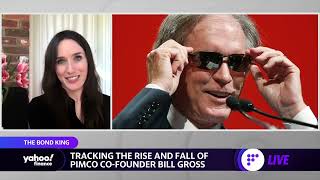
For those who may not be very familiar with Bill Gross, although his story in itself is fascinating because he is truly an extraordinary individual, what would you say to newcomers about why he is such an interesting and important figure in the US financial world? Yes, that's a great question, and I get asked it often.
In my personal opinion , the bond market and its role in the global financial system are somewhat underestimated. You know, in the financial press, of course, we understand this and we talk about it all the time, but I think in the wider world, everyone talks about the stock market, about some, in my opinion, lighter things; whereas, in my opinion, the bond market is where everything is really decided.
Thinking about it, you could say that Bill Gross laid the foundation for the bond market as we know and love it today. So when you think about PIMCO and Bill, you realize that they were at this inflection point in our economy for so long, and they had a huge impact in this niche that I think was very underrated, and people just didn't really understand who they were and what they did .
So, I think it's hard to explain, like forcing someone to eat peas and carrots, but in this case, it's not. I think it's a pretty interesting and fascinating story, and the people themselves are so fascinating that it's not just a homework assignment on studying the bond market, although hopefully you'll learn all about it in the process.
It's definitely not like eating peas and carrots. The passage I read contains a lot of, well, I don't know. I mean, Gross is known as an eccentric figure , and I think that's safe to say. And that's why it's so interesting that he was such an influential figure while remaining such an extraordinary person.
Was there, I want to ask in preparing the material , one thing, some story or detail that you discovered that surprised or impressed you the most as you researched his life? Oh wow, such a good question and so many stories come to mind. Um, I guess as far as surprises go, the events of the last few years of his life really were—he's still constantly making headlines.
And I think it was because of things he would rather not mention, and that really surprised me. You know, his divorce a couple of years ago was in the headlines, on the front page of the New York Post, and it was unexpected; The way he behaved in this situation went beyond what I expected. And then he got into an argument with his neighbor in Laguna Beach, and that, to me, was also not what I expected from him.
But he's such a fascinating person, and I think the best thing about him as an interviewer and a subject of the story is that he's reflective. He knows, nine times out of ten, if he 's going to do something he shouldn't, he knows full well that he shouldn't do it. And then he just does it against all odds.
So, to me, that makes him a very deep and interesting character for the book, as well as just a fascinating personality. Mary, is there any event that you can point to that has personally changed him over the last few years of his career at Pimco? Something that changed his behavior, because he really seemed like a different person when he left Pimco than he was in the middle of his career or when he was just starting out.
Yes, this seems a bit obvious, but when Mohamed El-Erian left Pimco, I think Bill took it very personally, and it seriously destabilized him. His behavior after that was more like that of someone going through a divorce than a professional departure and managerial transition. And I think a lot of it was because he felt that trust had been broken, he felt betrayed, and it was much more emotional than these things usually are or should be.
And I think he was also a bit unbalanced in the years leading up to this. Sometime in 2011, he made a very unsuccessful bet on Treasury bonds. And for someone like Bill Gross, who measures himself by his metrics, you know, he relies so heavily, I think, on how he performs in the market that I think it was a destabilizing factor, and then Mohamed El- Erian's departure was such a blow.
And the breakup of that relationship is one thing, but when he just walked away, I think Bill felt abandoned , and I do n't think he ever recovered from that . At PIMCO. Speaking of the bond market itself, what legacy did Bill Gross leave behind? Well, he introduced some permanent changes to how the bond market functioned and how people traded in it.
What do you think are the most important changes he has implemented? Well, there could be so many answers here, but I think he really helped increase the interest and prevalence of investing in mortgage-backed securities. You know, they started doing this very early , back in the 1980s, and they were very passionate about it.
And I think their ability to invest in mortgage-backed securities helped inspire others, right? People said, "Oh, they're so good at it , maybe I should try it too." And I really think that has helped fuel the growth of this market. And that's true for a lot of things, you know, they were very persistent.
Bill and some of his colleagues, like Chris Dialinas at Pimco, they really embraced derivatives and weren't afraid of the complexities. And I think that can be a great thing. You know , innovation is great. Financial innovations can be very useful. But at a certain point you start doing engineering for the sake of engineering, or you become a little too smart for your own good, and the social utility of these products becomes incomprehensible to me.
And so I think this financialization was a broader trend, and it's not that Bill Gross created it or invented it, but I think he really pushed it, actively embraced it, and helped create interest in very complex securities. Or let's make a huge bet on CDS and take on this ridiculous amount of risk in a mutual fund.
And I think all of these things are connected in some way . It's a kind of audacity, you know, an attitude that, of course, is not something foreign to Wall Street; but the more often you do it and the more often someone like Bill Gross does it, the more it empowers others to do the same, and, in a way, push the boundaries even further.
Well, to conclude on this, as the last question: who, do you know, is his successor? Whether it's someone like Jeff Gundlach, who I think some, perhaps he himself, is calling the new " bond king ," I don't know. Or are there other figures we should keep an eye on? I don't think Jeffrey Handluck, as far as I know, calls himself the " bond king ." He calls himself, he called himself "The Godfather" and, it seems, "The Pope." So this is an important distinction.
But I really think the way people are reacting to Jeffrey Handlak is very similar to how they reacted to Bill Gross. So, I think in that sense, yeah, it definitely feels like a kind of next generation. Bill just self- published a memoir where he said Jeffrey Handluck didn't deserve the title and if he could, he would crown Scott Maynard.
So I think it's an interesting detail, but I also wonder if we've outgrown the need for a king, if there's a world where we don't need to idolize our star mutual fund managers, and if we've become wiser about the flaws of this model. Maybe it's too much to expect, but I think there's been less of that centralization, like, "oh, he knows what's going on." He will tell us what to do.
Yeah, well, partly because the last couple of years have shown us that nobody knows what's going on, or



Comments 0