
저자: CNBC Television · 외국인
요약 보기
Fed Watch Advisors의 Ben Emons는 중간선거 이후 정치적 확실성이 높아졌고, 전쟁 조기 종결 가능성과 데이터센터 건설이 완화 요인이 될 수 있다고 말했다. 금리는 20bp 하락에 그쳤으며 10년물 4.81%를 지지선으로 봤다. 재무부 차환에서 장기채 발행을 줄이고 단기채를 늘릴 가능성도 언급했다. 다만 물가는 여전히 높을 수 있어 다음 주 CPI와 PPI가 12월 회의의 핵심이 될 것이라고 전망했다.
다듬은 글
To learn more about what the election means for the markets, we invite Ben Emmons, Chief Investment Officer at Fed Watch Advisors. Ben, we're glad to have you with us. Congratulations, Mel. Nice to see you, and, uh, happy birthday, right? I just heard about it . Happy birthday today. Thank you very much, Ben.
There's no escaping this. I would like to ask you, in general, about your thoughts on the markets. But I'm really interested in your thoughts on how you see interest rates in such a scenario, and whether things will change, whether it's because the war ends sooner or because the construction of data centers will ease inflationary pressures.
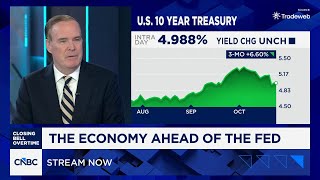
What is your opinion? Yes, it's interesting to watch rates today: they're trading without much of a decline, meaning the 20 basis point move down was, you know, moderate. I think the market is seeing this as a relief, but it's also about potential relief for the economy. First, we now have more political certainty and perhaps more political stability, which could actually mean that the war will likely end sooner.
But this also applies to the development of data centers. Yes, it can be postponed to slow the economy down a bit. But actually, I think it creates more relief. I think the rally in consumer discretionary stocks is truly telling. And if that's the case, you could have a small pullback, I think 4.81—that's a strong support level for the 10-year bond.
But I think you'll bottom out there and go up, because I've noticed that the probability of a rate hike in December has increased again. So, I think rates are only reacting to this news in the short term, and then maybe we'll see a strong economy again. So , now we have more political certainty. Hello, Ben.
Tim. Between what we assume from the oil market regarding at least part of the inflation shock and the Treasury's funding announcement today. Does this change anything , because today's refinancing announcement seemed like a minor event , although there are some nuances in the wording that may indicate that they may be doing less crazy things with long-term paper.
And does this change your view on interest rates? I mean the elections plus Treasury refinancing. Yes, that's a valid point, Tim, because the Treasury refinancing was indeed expected to bring a change in rhetoric, but even the hint of it is enough to alert people that the Treasury might try to change the impact somewhat, for example, by reducing the number of long-term bonds in favor of Treasury bills.
And you know, we are also approaching the national debt limit, and there are discussions that the Treasury may run out of money again. I think this also plays a role in how the Treasury plans the refinancing. So this could literally put some short-term downward pressure on yields before they start to rise again.
So, the election that I mentioned—I think it's a relief for the economy that happened today, but the markets reacted to it. And so, the refinancing certainly hinted at that . Okay, they could change the approach a little bit, and we know that if they reduce the auction sizes a little bit, say, for 10-year and 30-year bonds, that would have a big impact.
So, Ben, when you look at the interest rate environment, we didn't really mention Worsh, did we ? So did it really overshadow him? This is where he wants to be. He wants to be a secondary topic of conversation, not the main one. Did he achieve this through elections? Interesting. I asked because she is not involved in forming the forecasts, and this is, of course, not a political issue, but I think the election has really captured all the attention because it has an economic effect.
And it's about what will happen next year to the economy; what inflation will come to the fore. And high inflation in particular, to which some market segments are reacting nervously—how will this affect the economy? And that's why the Fed decided to essentially stay on the sidelines, let the situation develop, and then react to it.
I really think, Steve , that next week we will have CPI, PPI and other inflation data. This data will still be relatively high. I believe this sets the agenda for the December meeting, and this will remain a key focus for Worsh. Without price stability, that's the main thing, isn't it? And the elections...who knows what will happen with inflation next year.
We can't even say that, despite signs that we may see a quicker end to certain wars or the impact of AI productivity. So, I think the war has taken a back seat now, but next week's PPI will be key for the Fed.



댓글 0