
원문 보기
Caty Wood isn't talking about a simple recovery, she's saying that the US economy is like a compressed spring, ready to spring. If he were right, 2026 would not be just any year, but the beginning of the greatest economic rebound in decades. In this video, I explain what she's seeing that many seem to ignore, why she believes a wave of unstoppable growth is coming, and which sectors could explode if this scenario were to materialize.
Cathy Wood speaks not just of a compressed economy, but of a silent accumulation of productive energy. Even though GDP has grown in recent years, he argues that beneath those numbers there has been a kind of rolling recession. First, the real estate sector, with a 40% drop in sales since 2021, then the manufacturing sector, which according to the PMI has been contracting for over 30 months, and finally, investment in physical capital outside of technology, which has stalled after peaking in 2022.
Added to this is the collapse in morale among middle-income and even low-income consumers, comparable to that of the 1980s, when inflation and high interest rates eroded purchasing power. For Wood, all this indicates that the economy has been under pressure, but not paralyzed, it has simply accumulated potential.
The clearest example, in her opinion, is capital investment. What for two decades was a ceiling of around $70 billion could now become the floor of a new cycle. Technology platforms like artificial intelligence, robotics, blockchain, and genomic sequencing are no longer promises; they are ready to scale.
And if that were the case, we would find ourselves faced with a situation in which what today seems like weakness is, in reality, accumulated tension, ready to be released. If the first act was compression, the second for Kathywood is liberation and this liberation he says will come from a combination of factors, first the dereaction, then the tax cuts, the reduction of interest rates and a fiscal stimulus designed to accelerate growth.
In his analysis, current economic policy is simultaneously removing obstacles and activating incentives. For example, taxes on overtime, tips, and social security contributions have been cut, which he estimates could boost households' real disposable income from 2% annual growth to over 8% this quarter.
Furthermore, these measures are retroactive to January 2025 with an immediate effect on consumers' pockets. Added to this is a massive refund for businesses. The accelerated depreciation system now allows you to deduct 100% of the cost of machinery, software, new construction, and research and development in the first year, instead of spreading it out over decades.
And this isn't a temporary measure; it runs until 2028 and was made permanent in the latest budget. This brings the effective corporate tax rate down to 10%, one of the lowest in the developed world. Meanwhile, prices are falling. Oil is down more than 50% from its post-Covid peak. New home prices have fallen by 15%, and inflation, both official and measured by Trueflation, is now hovering near or below 2%.
According to Wood, we could even enter a phase of negative inflation in the coming years. All this, he says, is happening as regulatory restrictions are being dismantled. The most obvious example, according to her, is the appointment of David Sax as the first AI and Cryptozar, which is said to be paving the way for the mass adoption of disruptive technologies.
Overall, Wood argues that the fiscal, monetary, and technological environment of 2026 could be the most fertile in decades for starting, investing, and scaling new projects. Because if Wood the most important aspect is not only what is going down, prices, taxes, rates, but what is growing under the surface, that is, productivity.
According to his data, even in the midst of this sectoral recession, productivity has not only held up, but improved. In the last quarter, non-farm productivity grew by 1.9% year-on-year, which, compared to a 3.2% increase in hourly earnings, implies that real wage inflation is around 1.2%. No signs of an inflationary spiral.
Why is it important? Because, well, if productivity grows faster than wages, the unit cost of labor decreases and it's a deflationary effect. But according to Wood, what we are seeing now is just the beginning. The decline in technology costs is historic. The cost of training AI models decreases by 75% per year, while the cost of using them, inference, drops by up to 99%.
unprecedented speed and the impact is already visible. Companies like Open and Anthropic have increased revenue 10x or more in a single year. For ARC this is the sign of a structural change. Five platforms: artificial intelligence, robotics, blockchain, energy storage, and multiomics are converging and could drive productivity growth between 4 and 6% annually.
This not only supports nominal GDP, but allows wages to rise, prices to fall, and margins to expand, all at the same time. An explosive combination, but this jump also has an uncomfortable side. Wood warns that employment could suffer in the short term . The most productive companies will need to hire fewer workers, and unemployment could rise from the current 4.4% to over 5%.
But this too, he says, could become fuel. With rising unemployment as justification, the Fed would have room to continue cutting rates just as fiscal policy and investment accelerate. The result? an economy that cools where there is excess and heats up where there is room to grow. In his view, this cycle recalls that triggered by the combustion engine, electricity, and the telephone over a century ago.
A period of sustained growth with falling inflation and long-term interest rates lower than short-term ones. A deflationary economy that continues to expand nonetheless. Kathy Wood concludes her analysis by looking at financial assets and the global context. For her, the market is already sending signals of an ongoing reorganization.
In 2025, gold rose 65%, while Bitcoin fell 6%. At first glance, it seems like a classic sign of a search for safe havens, but Wood offers a different interpretation. What is driving gold is not fear, but excess wealth. Since the end of the beer market in 2022, the MSC World Index has risen 93% while gold supply is growing at only 1.8% annually.
Indeed, when compared to M2, the monetary aggregate that measures the secondary liquidity of an economic system, gold was more expensive only during the Great Depression. Yet Bitcoin is up over 360% since 2022, despite the recent correction. The difference, he says, is structural. When gold rises, miners can increase production.
With Bitcoin this is not possible. Its growth is projected to slow to 0.41% per year within 2 years. This adds a strong argument for investors. Since 2020, Bitcoin has shown the lowest correlation with any other major asset, even lower than gold versus the S&P 500 or bonds. According to his analysis, it is a pure diversification asset.
Meanwhile, the dollar fell 11% in the first half of 2025 and 9% for the full year. But Wood believes this cycle can be reversed. If his vision comes true and the United States returns to offering the highest return on capital in the world, global flows will return to the dollar, as happened in the 1980s with Reagan.
And if that were to happen, he says, markets should be watched very carefully, because even if valuations appear high today, his bet is not on further multiple expansion, but on earnings growth so rapid that they decline even as the market rises. It already happened between 1993 and 1997: the SP500 rose 21% per year, while the PE fell from 36 to 10.
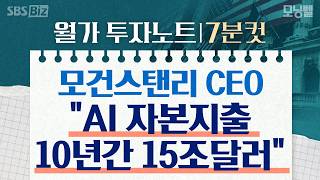
And according to her, it could happen again, only this time the driving force will not be credit, but destruction. Moreover, investments in data center systems, networks, and storage have already grown by 47% in 2025 and could increase by a further 20% in 2026. Artificial intelligence startups are exploding.
Open Anthropic has multiplied its revenues by more than 10 times in just one year and is already starting to be mentioned as a possible future IPO. For Wood, we are witnessing the birth of a new cycle of capitalization as deep as that of the Internet, but even faster. For those who manage capital, his thesis is not a simple macro forecast, it is an invitation to position themselves before the new cycle accelerates.
If you're interested in learning more and evaluating these ideas, you'll find a link to a broker you might find interesting to consider above and in the description. Also, if you found this video helpful, please like and subscribe to the channel so you don't miss future updates.


Comments 0