저자: LeeMson · 외국인
요약 보기
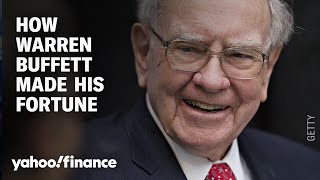
버핏의 투자 유산을 되짚는 인터뷰. 헤지펀드 구조를 버리고 영구자본(Berkshire) 구조를 택해 복리 축적이 가능했고, GEICO의 보험 플로트가 저비용 자본원이 됐다고 평가. 버핏 서한은 사회공학적 고객 관리 도구였으며 해자 기반 독점 기업에 투자해 왔다고 분석. 버핏 퇴임 후 구조·문화는 유지되겠지만 '영원 보유' 투자자층 확보는 불확실하며, 장부가 대비 가격을 보고 있다고 밝힘. 방송 후반 내레이션은 버크셔 2026년 자본배치·자사주 매입·보험 규율을 주시 포인트로 제시.
다듬은 글
Warren Buffett is set to step down as CEO of Bergkshire Hathaway. He'll be handing over leadership to Greg Ael. But before that change takes effect, we want to look back at Warren Buffett's legacy and some of the ways that he changed the investing landscape. Joining me now, Lee Mson, Portfolio Wealth Advisors President and CIO and longtime Buffett watcher.
So, it's good to have you here, Lee. Thank you. It's great to be here. So, I want to look at this through the lens of what you think were Buffett's sort of top three pivotal decisions. Let's take them one by one here and and dwell on them for just a second here. So first of all um the sort of model that he used to build Berkshire in the first place which was different from other investing models.
Talk me through that. So originally Warren Buffett had a hedge fund. Um he started in the 50s. He he shut it down 1969 and the the original structure was easy. The first 6% goes to the clients. every profit, every dollar above 6%, he he took 25% of the profits. Um, in 1969, he shut it down. He didn't understand markets.
They were too frothy. So, when he started Birkshshire, this was a profound change because all of a sudden, he's not looking just to make a performance fee. He's looking for permanent capital. So, he didn't want to have to deal with redemptions. He didn't want to have to deal with writing letters every quarter and keeping people in or justifying his moves.
He wanted something to think longer term. And that was a huge shift in his mindset when he uh you know got into his 40s. And you know every scholar of Buffett will look back and say he would have never become one of the richest men in history if not because of this permanent capital structure. So when we think about his legacy it's not necessarily about what he bought.
It's really the structure that allowed this uh compounding and reinvestment of all dividends. You know Birkshshire has never paid a dividend. It just was there just to appreciate over time. And it's also interesting because counterintuitively you would have think you would have thought that sticking with the hedge fund model would have brought him at least short-term profits, right?
But as we saw it it built the long-term profits and legacy for the company. Um let's talk about the structure while we're talking about structures. Let's talk about GEICO and how it is different um from other investments particularly other insurance companies as well. Well, it's the total engine behind be behind Birkshshire Hathaway.
Now, a lot of us like the old Warren Buffett grandpa with his sweater, you know, telling stories by the the fireplace about Se's candy. And most people have heard about he bought Seas Candy and he used all the cash flow from Seas Candy to buy other things, not unlike a more uh you know what Philip Morris did uh during the last century of taking all the the money they made from cigarettes and buying cheese companies, right?
But more profoundly, it was always really about Geico. I think that we talk about the seas candy story because it's easier to understand, but he bought Geico and then basically he made all of his policy holders investors because what he got with the float from Geico, you know, you take money in for for insurance and then which you don't pay out in claims, you can invest.
Well, he was one of the greatest investors of all time. So, he had a source of uh capital that had very very low cost. uh it was it was liquidity that you know he didn't have a liquidity problem with investors saying hey we need to nav this cash. So his ability to look forward into the future and know how much cash flow he was going to get made it a lot easier to take over companies and to buy things and have a schedule.
Um really it nobody had done this up until up until Buffett. Well, um, as you say, there's this sort of like image of him as this sort of grandfatherly figure, but that that's also calculated in some ways. It's it can be authentic and calculated at the same time, I suppose. But the way that he communicated with investors in addition to the shareholders meeting was through his annual shareholder level letter.
Um, how did he [clears throat] use that as a tool? Uh, he used it for social engineering. He wanted to engineer his client base. He wanted to make sure that he was selling long-term value. He wanted to be sure that he was selling. He was the original Bitcoin tout, right? He wanted to make sure that people bought Birkshshire and held it forever and never sell your Birkshshire.
And so, not only was the structure designed that way, not only did he have permanent capital, but through his letters, he would talk about um moving beyond volatility and not having to think about volatility, talking about a margin of safety. Everything he bought was, you know, a value. he was buying dollars for 50 cents.
Um, and and on top of that, he was a salesman, right? He talked about underperforming during bubbles and that compounding was really the way. And I think he convinced people that the moes were really about competition. I think that was one of his greatest uh magic tricks because really what he invested in through the most part of his life were monopolies and places that didn't have competition and were not based necessarily on the innovation of America but was based on companies like an Apple computer that just had all the cards and I think he made people comfortable with that type of you know monopolistic oligopy inside of America.
Lee, how many of these things do you think will continue at a post Buffett Berkshire Hathaway? Right. I mean, obviously the structures which were sort of original to Bergkshire and GEICO, they're already in place, but you know, the letter and and sort of how how do you think that all evolves? Well, I think it's going to stop, right?
Um I always look at book value versus the price. You know, we've had times where the net ass value of Birkshshire has, you know, gone negative. Here's what the thing is. Buffett's legacy is the architecture of Birkshshire Hathaway. His legacy is how he did this. And Greg Ael, I'm sure, I mean, he's a brilliant guy.
He knows how to operate. He's been doing it for years. This transition has been signaled. It's nothing new. Everybody on Wall Street knows. But we're not going to have the magic duo of Warren Buffett and Charlie Munger telling these stories and keeping investors uh focused solid. And also those Birkshshire Hathaway shareholder meetings were also sales uh productions to get people to buy the products that Birkshshire had bought within its holding company.
So do I think that the operations and the culture will stay the same? Absolutely. But how are we going to get that next generation of disciples of Buffett who just buy that stock and never ever sell it? That remains to be seen. I would say as an investor, I'm looking at book value. I'm looking at um anything where um just like Buffett did, if if the sum of the whole is selling for less uh if the hole is selling for less than the sum of its parts, it could be a good buy.
Interesting. Well, we'll see how it all plays out and I'm sure we'll check in with you again soon, Lee. Thank you. Thank you. In just a few weeks, Warren Buffett will no longer be CEO of Berkshire Hathaway, a job he's held for six decades. His number two, Greg Ael, will take the reigns. But this isn't a retirement story.
Buffett is still chairman of the board. It is, however, a succession moment for one of the most unusual, most successful companies in history. And for anyone who's ever looked at this stock and wondered what it's all about on today's stocks in translation, we are breaking down Berkshire basics. Berkshire is not a normal mega cap.
It's a holding company with three distinct engines. The first is its operating business. These are companies that Berkshire owns outright. They throw off real cash flow year after year, good times and bad, a Buffett staple. Engine number two is the Berkshire stock portfolio, which probably gets the most attention.
It holds big stakes in many, many public companies with Apple as the largest. And despite Warren saying that his favorite holding period is forever, there's a decent amount of trading churn in the portfolio from quarter to quarter. And Buffett has slowly given up control over its stockpicking decisions since 2010.
Engine number three, and this is the quirky one, is Berkshire's insurance business, including what's called the float. Insurance companies collect money from premiums first and they pay claims later. And that in between float money can be invested. That's a structural advantage that many companies do not have.
And it helps explain why Bergkshire can afford to be patient when others cannot. Now, let's check out a Berkshire stock chart. And here we're comparing Bergkshire to the S&P 500 over the last 5 years, which includes several market cycles. And you can see Bergkshire's up 120% versus 80 for America's benchmark index.
And you can credit the higher return to Bergkshire's ability to hold up better during both the 22 bare market and during the post liberation day selloff earlier this year. And while the rest of the market started soaring in midappril at the right of the chart, Berkshire has lagged a bit and many credit the overhang of Buffett's departure, which only means that 2026 could be a defining year for the conglomerate.
Now, let's take a look inside at the many businesses that make up Berkshire's own mini real economy. Starting with Geico, their insurance business provides a real-time risk on risk pricing across the world though and through its BNSF rail exc BNSF railway it gauges freight shipping and industrial demand and Bergkshire Hathaway energy not surprisingly gives a read on the energy markets including business investment spending and the power grid.
In manufacturing, it has precision cast parts which provides a window into aerospace and industrial orders and demand. And Bergkshire has a bunch of household brands from Dairy Queen to Fruit of the Loom to Brooks running shoes. Along with its MLAN supply chain services business, it has many eyes on the health of the consumer.
Finally, from services like flight safety, it gets business travel and training insights. So, Bergkshire doesn't just track the economy, it lives inside it. And then it brings to us that next question. What happens next? As 2026 kicks off with the uh with Abel at the helm, we're going to want to pay attention to Bergkshire's capital deployment as this is always the game.
When do they move? When do they sit on their hands? Because investors have been wondering for the last decade when Bergkshire will shell out cash for a big buyout. Will Greg Ael be just as willing to wait for the fat pitch? Meanwhile, that cash pile sits north of $300 billion and it is growing. Next up is stock buybacks.
Buffett has always been clear. He's only going to buy a stock, including his own, when the price is attractive or wonderful. So, watch that closely. Then there's insurance discipline, the quiet engine. If that stays tight, the whole machine stays healthy. And finally, watch the communication tone. And listen to that.
We might miss the marathon Q&A sessions and watching Buffett hold court for hours like a foly oracle behind a co a can of Coca-Cola, but clarity is what matters. And tune in the Stocks and Translation podcast for more jargon busting deep dives. New episodes can be found Tuesdays and Thursdays on Yahoo Finance's website or wherever you find your




Comments 0