
저자: Yahoo Finance · 외국인
요약 보기
이번 방송은 고용 지표 서프라이즈를 중심으로 AI 투자 열기, 기업 이익, 실질임금, 워싱턴과 주정부의 규제 가능성, 정치 지형 변화, 예측시장과 중독 문제까지 폭넓게 다룬다. 진행자와 패널들은 고용 지표가 예상을 웃돌았다는 점에 주목했다. 3개월 평균 고용 증가는 13만 7천 명, 6개월 평균은 8만 3천 명으로 제시됐고, 노동시장 안정에 필요한 수준인 월 3만 5천 명을 크게 웃돈다는 평가가 나왔다. 실업률은 4.1%에서 4.3% 사이에서 움직이고 있다고 언급됐다. 다만 인플레이션이 3.7%로 명목임금 상승률 3.1%를 앞지르고 있어 실질임금 감소가 소비자 심리와 경제 회복력에 부담이 될 수 있다는 우려도 함께 제기됐다. 기업 이익은 최근 두 분기 탄탄했고 3분기 성장률은 3.4%로 소개됐다. 생산성은 3분기 전년 대비 2.1% 증가한 것으로 언급됐으나, 패널들은 이것이 AI 효과라기보다 팬데믹 이후 흐름의 결과이며 AI가 실질적으로 영향을 주려면 3~5년 이상 걸릴 수 있다고 평가했다. 감원과 AI의 관계도 논의됐다. Microsoft의 6만 명 규모 희망퇴직과 Block의 대규모 감원이 예로 들어졌다. 한 패널은 팬데믹 때의 과잉 채용을 조정하는 과정이라는 해석을 제시했다. 투자 측면에서는 Nvidia가 연초 대비 하락했고, AI 인프라 투자 규모가 막대하다는 점이 강조됐다. 브루킹스 연구소가 2025~2032년 사이 10조 달러 이상 투자를 추정했다는 내용도 소개됐다. 반면 자본비용 상승, 레버리지 부담, 일부 기업의 재무 취약성에 대한 경고도 나왔다. 데이터센터 규제도 주요 쟁점이었다. 주 단위 규제 강화 가능성, 전기요금과 물 문제, 지역 주민 반발이 언급됐다. 패널들은 투자 흐름이 쉽게 꺾이지는 않겠지만 입지와 규제 리스크는 커질 것으로 봤다. 대안으로 구리 등 원자재와 헬스케어, 실물자산 분산이 제시됐다. 정치 측면에서는 중간선거 이후 분점 정부 구도에서의 입법 가능성, 관세와 생활비 문제, 부패 이슈가 다뤄졌다. 트럼프 대통령의 타협 성향과 민주당의 전략 등에 대한 해석도 엇갈렸다. 마지막으로 예측시장과 도박 확산이 젊은 남성의 중독 문제로 이어질 수 있다는 우려가 제기됐고, 앤트로픽 상장 시점에 대한 전망도 논의됐다. 전체적으로 경제 지표는 견조하지만 인플레이션, AI 투자 과열, 규제, 정치 불확실성이 동시에 존재하는 상황이라는 진단으로 정리된다.
다듬은 글
Kevin, my producers have threatened me to play back the tape of you and I in September saying we don't care about jobs. We only care about wage growth. So came in 165 and4%. So they don't play the tape back. Do we do we care now? Yeah. I mean listen this is just one blip in time and I think it's you know you need to look at comprehensively over the last couple months.
the next few months are going to look uh vitally important. Now, we do have seasonality obviously. Um we know a bunch of firms are saying they're ramping up uh for the holiday season, including Amazon. Um but yeah, wage growth is probably one of the most important things uh that matters as well as the labor force participation rate because we've seen it so so low for so long.
That's a structural situation. So, uh I think we had great jobs numbers. that one takeaway from this is that this could impact a December rate hike. So, uh maybe that's that's why I'll eat my words uh from our September conversation because now this will lead to higher rates. We maybe we can destroy the tape, but Joe, you're an expert in this.
I'd love to have have your thoughts on this morning. Well, we've had two really robust quarters of corporate profits and the third quarter we saw growth at 3.4%. So we generated momentum into the end of the year. This is exactly what you should expect to see which is an increase in labor demand, increase in hiring and typically what comes after is you begin to see wages climb.
Well, they they outperformed this morning. Now that that's a dual sword there, but the the important thing is we had a net revision upward of 84,000 over the past two months. The 3-month run rate is now 137,000. The six-month is at 83. So, what that tells me is is that we're likely to see job growth at more than three times what's necessary to stabilize the labor market.
Now, we only need 35,000 a month to stabilize the labor market. That's because we've got some demographic challenges that nobody can fix, right? That's retirement to the boomers. And then we've got a constraint via immigration policy. And even with the Democrats taking charge next year, that's not going to change either.
So, we're going to continue to see fairly solid job growth on a monthly basis. And the guys, the unemployment rates just moved between 4.1 and 4.3 for a number of months now. I don't know about you guys, but that's a really good description of full employment in this American economy. So, things are really moving along.
the economic expansion is is moving along. Even if the unfortunate downside of all of this is inflation at 3.7% is outstripping that 3.1% rate of growth in nominal wages. So, a majority of Americans aren't going to like what they see. I'm curious, Victoria and Mike, were you glued to your computer looking at the tape at 8:29 this morning?
Uh, yes, I was. I had to cover it. So, contractually obligated. Um, well, you were getting paid. Yes, exactly. Uh, but I do think that it was it was a pretty surprising number. I mean, as Joe was just saying, we need, you know, much less job growth to have a healthy job market and 165 is probably more comparable to what we used to think of as being in the 200s of thousands um, in terms of job growth.
And it it's it's really a reflection of the fact that the economy is still really holding up even though as also Joe just mentioned um inflation is still outstripping wages which is obviously why people are unhappy and uh presumably contributed to what happened on Tuesday. Um so I I guess the question is whether that that decrease in real wages over time actually does eventually really start to help hurt the resilience of the economy.
But so far, I mean, consumers still seem to be spending a lot. Very. Yeah. I I would just add I I think, you know, two two of the three underlying uh indicators would would say that the economy is doing you know really well. One is GDP growth. Two is the employment p picture and then the third of course is inflation.
Um and uh being having full employment is certainly better than you know not having full employment. But there's still I think we're in this and the election showed this. We're in this period where if you own assets, if you own real estate, if you're already in real estate, if you you were able to get on that treadmill in terms of buying into a first home, a second home, a third home, you feel very different about your position from a sentiment uh in a consumer standpoint than if you are still trying to do that.
And and that's where we are back to the the wage inflation versus the the uh or wage growth versus actual inflation. And uh it'll be interesting to see how things uh turn here in the next few months. Is there is there a moment where we start looking at this number differently because of AI? Because you know when when I see the tape and and somebody announces reduction in workforce stock typically goes up, right?
And and so I don't know are are less jobs better for the market, you know, at some point like what when does that happen? Yeah. Look, Microsoft stock when they announced 60,000, you know, buyouts is, you know, is going to send the stock a little bit higher in terms of, you know, what the P&L is going to look like from a profitability standpoint, but that is those are 60,000 jobs that at some point over the term of that buyout are not going to exist.
That's not a small number. Um, so we'll see how this shakes out. I think it's really important that we differentiate between companies, industries, and the economy. Yeah, you're right. Microsoft cuts by 60,000. That's going to help on margins, right? In terms of AI in the industries, you know, today the only industry we saw that might have been impacted by AI was information where we lost a thousand jobs.
But in professional business services, that was the most robust area of growth in the economy. We saw 70,000. Right now look, when you look at these things from an aggregate 50,000 ft view, AI is not impacting the economy right now. But I got to tell you, when we look at tech and we look at banking, well, we talk to people, they're our friends, they're our family.
I'm here in New York. AI is resulting in a little bit less labor growth. Kevin, you I just want to put things Yeah, I just wanted to kind of put things in context. And I mean, if we we saw from uh COVID in 2020 and 2021, we saw that there was a lot of job hiring. I mean, you just had companies, they couldn't get enough uh uh employees.
And we saw actually a couple years ago, Jack Dorsey with his block uh you know, company. They he it was pretty brutal. I mean, he sent out a a letter. He said, "We're cutting, you know, it was something it it was a big number, 25 50% of his workforce, whatever he was saying it was at the time." And he said, you know, he was kind of blaming AI, but that he also said, "We we we overhired." And so I think if you're looking at the tech side, there was a lot of overhiring during that time because there was a lot of buildout and growth in the economy and we're seeing the same thing happen with the tech companies now.
There's a lot of buildout and growth with AI. So you know I think these headline numbers, you know, may be shocking and and and that's all they are is their headlines. I mean I think a lot of companies are trying to rightsize their workforce for their business models going forward especially with the buildout of AI or the lack of buildout um that we're seeing you know due to due to the fact that there may be some data center moratorum so we may see some choppiness in the tech se sector and ancillatory services around that going forward.
Well, the thing that I think is sort of interesting context is the fact that we saw we got productivity numbers yesterday and uh productivity grew 2.1% in the third quarter compared to the same period last year. And so it does sort of raise the question obviously productivity numbers are noisy and it's hard to know kind of in real time what's happening there.
But uh it does kind of make me wonder paired with this jobs report whether we can have our cake and eat it too where we can add a bunch of jobs and get more productivity from AI. Well, I don't think we're quite there yet, right? I mean, it was the these numbers are highly volatile and subject to provision, but 2.1% that's in line with the postwar average.
So, we'll take that. That's good. It's better than that 1 and a.5% that we dealt with for 15 years. But guys, total factor productivity, which is at the end of the day how we're going to measure this. That's how we're going to get our cake and eat it have our cake and eat it too. If total factor productivity rises, it's not quite there yet.
You know, the increase in productivity we're observing right now as a function of what happened during the pandemic when we didn't have AI. We were just dealing with machine learning, right? Very early form. We won't see really any any impact from AI for a good another three to five years. You know, I'm an economist to be honest with you.
Listening to tech guys has gotten a little tiresome. They're full of for the most part, right? Yeah. We're not going to have a jobs apocalypse even though for the last 5 years that's all they said until they realize the public turned on them, you know? So, we're going to see, I think, a real increase in productivity, but not until it's it's quite a ways away, guys, because we love to talk about the frontier model that four companies use, right?
Yeah. We need to see that integrated into the real economy before we get that big payoff. Which is why we're having some of this volatility right now because the returns on investment likely aren't going to meet the investment match the investment. Right. Well, and you all brought up uh yesterday um you know there's massive massive selling.
Um you you could say that the action is uh creating the narrative. Uh, Mike, I'm curious. You know, were you were you hitting the sell button yesterday? No, we were we were doing the opposite. We were buying a little bit yesterday. Good for you. Um, good for you. No, we were I had a friend who sent me a text late last night saying the phone must have been ringing off the hook.
And I said we fortunately our clients uh, you know, trust us enough that that uh, I didn't feel one inbound call on the volatility and that gave us time to have a midm morning meeting and talk about where we maybe wanted to add a little bit. So, we did a little bit of nibbling yesterday, right? What about you, Kevin?
Were you Yeah, I I I mean, I was really actually constructive on this for for the sole purpose that trees don't grow to the sky and we needed to see sort of a pullback, a digestion. We saw a lot of overlever in the system. A lot of multiples were getting out of hand. I think this is really emblematic of what's going to happen going forward where we're going to have, you know, some episodic volatility that's coming in and but you're seeing deals happen.
And I mean if you look at uh Marll trying to buy Lentum uh you and that and those two names have run pretty significantly. It's an all stock deal. So you're you're seeing a lot of M&A in the space that's sort of validating the business models the the numbers. So a lot of concern has been about the forward pees the forward earnings and as we talked about earlier you know these are three five 10year buildouts.
Uh and so yeah, we're going to we're going to get hurt on Micron, we're going to get hurt on a lot of these names that have moved. I mean, if you look at Nvidia after at at the close, it was down on the year. So if you own if you wanted to play the number one one sort of proxy for AI, uh Nvidia was down on the year.
Uh and so that that just kind of tells you everything you need to know about what's sort of happening with the investment cycle uh around AI, right? Well, I mean, I would just I I would just I was that it wasn't just down on the year. It was trading at 12 times next year's number. Yeah, it's incredible.
I mean, that that's like the biggest growth story in this uh you know, over the last three and a half years and it's trading at, you know, 70% of the market yesterday. Back in the first decade of this century, when I used to go on different television networks, we used to talk about something called the weighted average cost of capital.
Sure. Then with the advent of zero interest rates, that went away. But it's back and it's back with a vengeance, right? In the the kind of businesses that my company serves, the weighted average cost of capital ranges from 11 to 15% these days, right? And I think about a company like, you know, core, they're borrowing at 15 1.5% and their expected ROI is 9%.
I don't know about you guys, but any expansion is a generation of negative equity. Okay? We're not the coyote running off the cliff where we can spin our legs continuously and not fall. At what point does, you know, the reality check cause perhaps a more pronounced correction than the one we're seeing?
Well, what's the what's the reality? Well, that's what I'm Well, you cannot go on borrowing at 15% and seeing an ROI of nine, right? Well, I think the central bank of Nvidia is probably going to have to bail you out. Conveniently, Nvidia owns I think 11% of that company, right? Yeah. And just just real quick to your point, I mean, that's why there's the winners and losers.
There's the bifurcation in certain names. Uh because if you look at companies like Amazon who can use free cash flow from their advertising business, which is doing well because they've gotten into live content to help subsidize some of those costs. They don't need to go out and borrow. Uh so you're going to see winners and losers that have balance sheets that can actually you know deploy capital and and take their licks on a quarterly basis over the next you know uh several years uh for that because they know where we're going.
Uh but a company like Cororeweave relatively newer business model certainly uh singularly focused that you know as a neo cloud I mean that that that's where the concern is. So if you diversify yourself like take a company like Dell for example I mean and you can look at the chart on that you know they're providing the pickaxes and shovels they're providing the servers and so you know that the Nvidia chips go in into the core weave data centers and so you know their their risk is to their counterparties but they have so much demand they can pick and choose who they do business with.
Well let me ask a question because over at the Brookings Institute we've got that great 25 to 32 estimate of over 10 trillion in investment. Are we gonna get 10 trillion in seven years? Do you do you actually really believe that's going to happen? Well, you know, so here here's why I think the 10 trillion number has some legs to it because it's not just it's every segment of the economy investing in it.
Healthcare's in investing it into AI. You've got uh I mean accounting, everything. I mean software. That's why we had the SAS apocalypse. So, every different business and segment of the economy is investing in this, including industrials. I mean, I've talked about this before. Ashkosh is a company that's an oldline industrial company that has 15 billion dollars in backlogs or $10 billion market cap, but they're deploying sophisticated systems into all of the new uh you know fire trucks that they're deploying for municipalities cuz they want the fire trucks to talk to the street lights so they can be green and clear the way and so they can get to to uh you know emergencies faster.
So I think it's every sector of the economy is investing in this. It's just at what point uh you know can we hit that $10 trillion number? I I I don't know. But you have businesses that are trying to rightsize and become more productive and gain more contracts based off of winning in the AI race. I mean that's 3.6% of US GDP in 7 years during the 20 years of the railroad boom.
That's I mean we we only got 2.2%. So it's a full 1/3 larger. as I hear you speak and again I'm very optimistic around AI. I'm thinking okay this is getting in the medical care this is getting in the consumer products we're going to need some regulation around this. Well, it's it's interesting you brought that up because yesterday, you know, there so much of the selloff was for companies that was not going to, you know, in companies that needed Washington to be friendly and uh you know, I don't know, Victoria, was was that a theme um in your office yesterday, like talking about stocks that needed Washington to be friendly?
Yeah, not just Washington, right, but the states. I mean, you think about the the blue wave hit the the state level in a way that nobody was really expecting. I mean, I as a as a Texan, I was not expecting Greg Abbott to lose that election. And so, suddenly you have a situation where, you know, he'd obviously tempered on data centers as well, but um you know, there was a stat that uh one of my co-workers reported yesterday that now uh I think 41% of data centers are in places that are looking at more restrictions on on on buildout.
So, um, you know, that seemed to have been a really significant factor in all of this, although there was also a question of just whether it was just a good moment for people to exit positions that they wanted to exit. But uh I mean also as as somebody who follows the Fed really closely, I do wonder whether um you know, kind of to Kevin's point, it's it's it's useful a little bit to take some of the the wind out of the sales because uh you know, it seems like it's better to have more targeted approach where if you're regulating AI and slowing it down slightly that way rather than having the Fed take a a huge sledgehammer and have to raise rates a lot um in order to cool some of this down.
But obviously the risk there is you can't cool things just a little bit and expect it to stay there. So so I mean I I definitely believe the the slowdown is is possible and it's real. But like the day after the midterms Google announced that it was going to invest a bunch of money in Malaysia, right?
And then uh this morning Open AI says we'll keep investing in AI data centers despite election results. So like this can't be slowed down. And Joe, I hear your point and and I wish I had something more intelligent to offer, but it's like I feel like we're experiencing something that is like we can't even analyze it.
Like the the scope and the grandness of it and it's like just just be long, close your nose, close your eyes, and and like go away. That's that's what I think. So it's a it's a historic cap expo. I think it's all I think that's an accurate statement. But with booms come busts, right? That means there will be malinvestment, malfeasants, and failures.
I actually think the the last this week has been healthy. I think the AI trade was way out over its skis that I mean I I don't use this term loosely, but helter skelter is a good way to describe what was going on. Uh irrational exuberance, whatever euphemism you want. I think it's healthy that it slows down.
AI is not going away, right? I don't think we're going to have mass failures. This is not this is not the great financial crisis, but I think it's a good idea that we have a rotation of capital out of the overconentration of risk into other areas of the real economy. While I love my 3.4% $33 trillion economy, what I don't like is the balance of growth and the composition of growth.
that's way overexposed to mistakes in AI. And my my real concern is I don't even think this is even out of consensus now. We're rapidly moving towards a tragedy of some sort. Okay. We created a technology we can't control. Right. Mike, what do you think the biggest risk? Oh, sorry. I'm sorry, Joe, if I
No, no. We just We need to slow this down. It's in the interest of the industry. We're not slowing it down. Economy and the AI trade. Yeah. All speed ahead. Yeah. So I I I definitely agree in terms of regulation. I I um you know I came into the business in in 99 and um you know this is the first time in 26 years where I've seen an industry tell government they need regulated and government say no no you don't.
Um and so there's definitely some lines crossed there. Um I do think it's interesting again Joe brought up a good point in terms of you know these these um companies that are kind of out on the uh on the frontier and are doing some of the data center building they seem most exposed to some of the you know the potential regulatory environment or um or the the nimi attitude around data centers.
I also think it's true that we are going moving forward. So Google's announcement um they are going to spend this money. The the hyperscalers are going to spend this money. Whether those the data centers are going to be built um whether they're built in Texas or my home state of Ohio is is a is another story, right?
And so, um, I I think for individual investors, you know, you want to be closer to the the where the AI, uh, spend is coming from in terms of the cap the capsex expenders rather than those that are involved in some of these circular financing arrangements all the way out who may actually be in charge of shovels in the ground and the the leverage that's happening there.
Cost of capital still matters, Joe. It's just the market, you know, has these periods of of forgetting it. And I I do think that people the some of these same companies we're talking about, whether it's Marll's down, you know, 50% in and in in 5 months, right? Nvidia is down, you know, 25% in and a month and a half.
So there's the retail selling that occurred, you know, yesterday. Um it a lot of these businesses have scaled up in terms of market cap that is is now when you're talking about the cost of capital doubling you know that the the math doesn't work as well. So individuals would do well to think about what type of position they have in their portfolio exposed to that.
Tney can I posit how this will end um and how I think it could end. So, if you take a step back and we're talking about the economy and buildout and cost of capital, well, we really haven't had like a major recession um that you know where it's really impacted the economy globally. And I think with $2 trillion deficit that we have and we've got 40 trillion in debt and we've got unfunded liabilities hitting the balance sheet as the population is getting older.
I think if we start to get a whiff of, you know, higher inflation for longer and we start to go into a recession, I think that's really going to hurt us because the government's just going to keep hitting the printing press. So when they when they start I mean we're I mean think about where we are fiscally and financially and we're talking about great GDP.
We're talking about great jobs numbers. We're talking about all these great things. Why are we $2 trillion deficit? And Washington doesn't have the stomach to fix our fiscal house. And so if we start to get a recession and then they start printing more money to, you know, get us out of a recession, then cost of capital goes up even more and inflation's going to go up even more.
I think that's where this could really, you know, really is you brought up something before is the way to thread the needle. the non- tech companies, every other industry using AI. Is that is that how you thread that needle? Well, yeah. You you want to hide I mean basically the way to think about in those type of scenarios and where to invest today.
I mean asset inflation is happening and you need to own real assets because we see inflation is actually going above what your wages are. So whether you know if you're getting paid in dollars, I guess you could get into gold if you want to hold sort of a a currency. uh but you you need to own assets because we are the inflation is is happening and so that's why you you've seen the moves in the market.
I mean we what have we had uh 20% compound annually over the last 3 to four years in the overall market right I mean so you need to own assets because it's an inflationary environment and that's where you need to be so diversify yourself out into great dividend paying companies with business models that you have confidence in and and financials that you like
it's on the fiscal picture I mean I would say now that we have a situation where we have President Trump and Democrats controlling in Congress. Um there's a there are a lot of ways that they're going to conflict, but one would imagine that they're going to have to reach some kind of spending deal and that that spending deal is higher rather than lower um because that's the easiest way to reach political consensus.
So I don't think that is going to get um much better. And then I I also wanted to say on the Google Malaysia point, I mean there's kind of an interesting political dynamic around data centers. You know, you all uh Mike was mentioning that they're going to be built somewhere. Um, and a lot of unions actually like the fact that they uh, you know, data centers employ trades people.
And so there's a there's an interesting push pull there on the left where on the one hand, you know, they want to have good labor standards, good environmental standards. Uh, you know, they people are mad about electricity costs and things like that and cost burden sharing, but um, there might be some bit of a push to say no, we want these built here,
right? Well, well, like Texas, right? She the governor. I um I live in America's glamour capital, Austin, Texas. And I've got two data centers that are permitted in under construction less than an hour from where I live. You know, some of what's gone on since Tuesday has been grossly overstated. People don't want these things stopped in their tracks.
What the locals want, and this is where it's going to be decided, is it in the states and the municipalities, they want to make sure the quality of their water will not be disturbed by the building of the data center. They want to make sure that as their utility prices go up that they go up in a reasonable fashion, that they don't go parabolic, right?
And I think this is where the the the AI community, the tech community has to do a much better job at getting out there and talking to the locals rather than just feeling that they can go through the White House or David Sachs, right? There's been a bit there's been a massive fail on the part of the tech community and they're going to have to engage locally.
It's going to cost an enormous quantity of cash. But my sense is is that these data centers are going to get built, right? It's with higher regulations. Let me just one more thing. The governor of Texas, the new one, Gina Hinosa, right? Y she's committed to building everything that's already under construction, which takes us all the way into 2028.
We're talking 2028, 2029 before the mortorium even makes sense, which is why I think we had a we had a really oversold moment on uh Thursday and why it's one of the reasons why we're seeing it in real time. We're having a pretty nice bounce back today and we'll see if if it follows through in the next week.
Right, Mike? are where where do you come in on this? Yeah, I I don't know. I'm I'm I'm going back to Ohio this weekend and uh the the um the the property that I grew up on in Licking County, Ohio is um is abudded by the new Intel factory that's been um you know sanctioned to go on there for the past half a dozen years or so.
So, I'm sure the conversations are going to be uh driven by, you know, multi-generation farmers and um and what's happening, the money that's coming into the schools and the tax base and whatnot. Um but yeah, I I agree. I I I think again I think that some regulation is likely. I think that I I agree with Joe.
I think it's going to be at the local level. most of this stuff is going to be at the local um level politically um between now and and 2028 and um everybody that you talk to says that the the the demand for compute is still uh growing, right? So So is there and maybe maybe someone can connect the dots for me higher regulation like are there certain picks and shovels that will benefit because of higher regulation?
Is there a way to play that to make money with higher regulation? Yeah, I think I think I'll I'll just jump in. I think if we're talking about you can't have data centers without power. You can't have power without the underlying commodities that run that power, copper, aluminum. So, you can look into the miners.
They've been greatly unloved. Uh I think you know another way to sort of hide out if you don't want if you want to avoid the trade not completely but uh one way to hide out is healthcare. You can get into some healthcare names. Uh we've seen healthcare done do do well. Um but I think you know the I mean we we go back to the cost of capital.
If you're if you were a minor you couldn't go out and dig up and get these natural resources over the last 10 years. So there's been no investment because our cost of capital has been 12 to 15%. And so we we do have shortages and deficits when it comes to these uh you know metals that we need even for our defense purposes cuz we were if if you recall we were in a capex light era from 2000 to 2024.
Now we're in a heavy capex spend from 2024 onward and we are just in shortages. So I think the way to think about it is pickaxes and shovels could be like I I mentioned earlier Dell, right? They're just going to be putting the servers together and still selling them. They'll have huge backlogs. They'll keep meeting their numbers.
They'll keep reinvesting. Uh you can go into the miners uh that produce a lot of these critical minerals that we need that the government has even designated. I mean, Trump's tariffs literally brought all the copper here to the United States. All the stocks went away and and he didn't even need to implement the tariffs.
They're all sitting in New Orleans or Baltimore, Maryland. Uh, you know, so he got what he wanted because everybody just literally moved all the copper here uh from overseas. So, uh I I think that's a way to hide out. Yeah. Um, so Victoria, you wrote an excellent article uh about the midterms um for Politico.
It's phenomenal. Uh, and we've all kind of flirted with with this uh already, but I would love to know, can Congress actually change and and and how fast? Yeah. Well, and you were asking earlier about like are people worried about Washington not being friendly to AI? And you know, it is an interesting point that the Democrats only control Congress, right?
There's still the veto pen uh the the President Trump still controls the the executive branch. And so there's only so much the Democrats can do. And I mean, they can pass legislation. You know, there's a you all may know there's a budget reconciliation process that allows uh you know, you to pass single party legislation that affects the budget.
That's how Republicans were able to pass the tax cuts that went into effect. And so, um, they could, you know, if they agree, send, uh, legislation to the president's desk. But part of the point of my piece is that, um, this is a really sprawling coalition that they put together here. I mean, you know, the fact that you've turned a bunch of red states blue means that a lot of those people are going to be pretty moderate on a lot of stuff.
And then meanwhile, you also have, you know, Democratic socialist wing of the party, right? And so trying to get all of these people to even agree on legislation that the president might veto is in and of itself a difficult thing to do. And so um the big question is are there areas where the Democrats might be able to coax President Trump um and and get him to do stuff.
And but that brings us back to what I I was talking about a second ago, which is a you know a spending deal, right? That's that's where you're definitely going to have to have action. And so the question is like what are the areas that the Democrats are going to really press on? Um seems like healthare is a really big priority for them.
But we'll see. It's going to be really interesting. Um, so when I read your article, I I had one thought and and and you I'd love for you to explain how I'm wrong, but um so I believe uh you know, regardless of what people think about Trump, good, bad, indifferent, um I believe he cares more about his legacy than setting up the Republicans for 2028.
So, I could see a situation where Dems can get a lot done going into 2028. Does does that check out? Theoretically checks out, but the way that President Trump operates doesn't tend to be very long-term strategic. He tends to sort of feel things in the moment. And you know, I I think that the housing bill that passed um in this past Congress was really instructive where you actually had sort of a unicorn of bipartisan legislation where there were all four corners of Congress that participated.
It was something very straightforward of we need more housing supply and uh the the White House was pushing for it, but then at the at the last minute the president decided not to sign it because he was he was interested in pushing for his uh you know, right voting rights bill, right? But like the the the point that I think was really interesting there was if you looked at some of his social media posts, he would talk about the bill and say, you know, there was a lot of like Elizabeth Warren stuff in there.
there was a lot of the stuff Democrats liked. And so it's one of those things where he says that he likes to make deals, but I don't think he really likes compromising, right? Like I think when he says he likes to make deals, he likes it when people agree to things that he wants. And so I I I guess it's a question of um how much he feels like he is just getting what he wants versus having to give up a bunch of compromises to Democrats.
He doesn't seem to love that. Well, can I just one thing that may impact this is that um if we and we we saw this after the election is how much are the Democrats going to go after him and his administration? I mean, we saw in the first first go round of Trump, you know, it was all Russia, Russia, Russia.
They went to impeach him. They did it multiple times. And so in order for something to get done and the Democrats want to chalk up wins and and work with him, they're going to need to peel back and say, "Listen, let's get some key initiatives done so we can set ourselves up for 2028 and win and continue the blue tsunami that they had.
But if they go back to this, you know, lawfare and they keep going after his administration, Trump's not going to want to do anything." I mean, you even saw Kevin Hasset earlier today. He was speaking about the jobs numbers. He said he was with the president for 45 minutes last night. He's in good spirits.
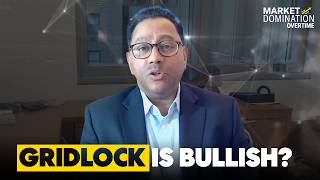
But he also has a veto hat. So instead of MAGA, it says veto. So that's what Kevin Hassid said. So um you know from one Kevin to another. I just thought as we all know, you know, typically the markets do like a divided government, right? Gridlock. And that's where we're at. So again, buy more stocks.
So Victoria, you know, the top two issues it appears in the exit polls. One was inflation/affordability. The other was corruption. All right. The quickest way to deal with the issues around affordability are twofold. One is is that bring tariffs down. The other is obviously end the war and you will slowly see gasoline and distillate other distillates as well as oil prices come back down.
Do you think that there's any lane in which Congress can bring down tariffs or will that require uh an override of a Trump veto? Yeah, I I think that it will require an overriding vote. So, I don't think they actually can. Um and I I think an important question is whether they actually want to, right?
they they campaigned as a party against President Trump's tariffs, but if you really dig into the details, they don't necessarily agree on just rolling back all of them. And so, you know, I I feel like if you're a business, part of what you're looking for from Democrats over the next two years is not necessarily rolling tariffs back today, but it's what is if Democrats take power, full power in 2028, what does that mean for tariffs?
And so I think that the extent to which they can actually even reach a consensus within the party on okay we want to roll back these tariffs but keep these um will be instructive and I'm actually not certain they will be able to reach that consensus which um I actually mentioned in the piece that um was mentioned earlier like that they could actually miss out on a chance for for an easy political bank shot because they get really lost in the weeds uh even before they have the ability to actually change policy.
Yeah. Uh Mike, do you do you think that the politicians who were elected are even looking at the market? Yeah, I I think they're looking at the market. I don't think that they care a whole lot about the the the up day on Wednesday followed by the big down day uh yesterday. But yeah, I think they follow the market.
Maybe not as much as President Trump does. Um, but you know, I I think we made the the point was made earlier in terms of uh I think it was Kevin who said you have to own real assets. I think the the election results were decidedly uh decided upon uh a majority of people that don't have uh real assets um to the same degree that a lot of our our clients or or readers and uh do and um you know that's the big disconnect
again 3% plus GDP growth 4% unemployment yes inflation is higher you know at 3.7% it's it's well above the two um and um you know people in state after state kind of um you they're not buying it when it comes back to affordability and and the corruption piece is totally understandable as well. Um so you know if you're Democrats I I hear the lawfare argument but if you're Democrats one of the one of the things that you said was you know do something about corruption.
So it's going to be very interesting to me to see what the agenda is when they come in. Hey guys, isn't it in the interest of the market of the investment community that corruption be dealt with? The rule of law is the baseline foundation, the institutional setting around what we call the investment industry.
And I'm separating that out from gambling, which I think there's way too much of today in in our economy. And I can tell you, having travel around the economy for the last six months, there's a huge backlash building to ki and predict it and the rest of these things, right? But the insider trading that's been going on for the past two years, come on guys, we all can see it.
Well, I can tell you, but it's it's it's long it's longer than that. I mean I mean it's No, no, but I know there's a reason for the jumping in the last few years, right? No, for for for sure. And it and it's like, you know, sometimes you just want to call call a spade a spade, right? 100%. And that but that should be like there should be able to be some agreement on that.
My point is if if the way that it's decided to deal with that is to haul people up in front of Congress for photooots and then to spend tens of millions of dollars on investigations rather than coming to some type of terms in terms of an actual policy. The stock act goes all the way back to 2012. The Scott Brown and and it was led by Republicans and Democrats wouldn't get on board because Pelosi did wouldn't support it in the House.
So these should be the these should be half half a loaf type of situations for sure. It's going to be very interesting to see on the two political polls who actually has the um the wherewithal uh and the intestinal fortitude to bring some of this stuff to the table. Right. Well, and like ju just thinking out loud, right?
Let's say Musk gets questioned, right? And and his companies start to sell off. Um you know, like is that partisan? you it's it's such a like cuz Joe I'm 100% I agree like exactly with what you said. Uh optics just make it make it really difficult. Um and Kevin I think last time we were on you you were saying Tesla is not a uh a car company anymore.
And I think Musk agrees with you, right? Because I think they're ending the uh the the Cybert truck. So I don't know. Did you pour a 40 out for that one? Yeah. No, you you you have to pour a 40 out for one of the ugliest vehicles on the road. I mean, it's like RIP, right? Uh I mean, you know, he said it was one of the most successful uh you know, car launches they had.
Um but yeah, he's he's trying to move into robotics. Uh so you've seen that he wants humanoid robotics. So he's trying to invest for the future. And you know, just to go back to sort of talk. So, I think what you'll see is Tesla won't be independent anymore. I mean, he's even alluded to that. Um, I think when he was on either the SpaceX call or what have you that, you know, I mean, SpaceX is is going to do its darnest to try to acquire Tesla because they also have so much data around everything that they have and he wants to rightsize it for turn it into really an even bigger AI company underneath uh, you know, SpaceX.
But corrupt corruption is such a broad word. I mean, you know, I I hate to bring up one of the the things of corruption, but I think both sides can agree that like with the Epstein situation, it was just like we're going to hold people accountable. We're going to release all the files and they never did, right?
And it's because of certain people that have been alleged in Trump's orbit. Uh so, you know, for every Washington DC politician, whether it's Epstein, whether it's Medicare uh fraud, Medicaid fraud, I mean, you've it's just the corruption is just so rampant that every American sees it and nothing's being done about it and it hasn't been done.
And I think it's just ramped up over the last several couple years that now voters are just like this is getting so egregious that like we're going to go and vote whatever party is going to deal with it. Um because corruption actually flows through into the real economy with inflation and rising wages.
I mean when I'm talking about Medicare, Medicaid fraud, all those types of things. So, you know, it's just DC was built on a swamp. And so, can you get any real corruption, you know, sweeping changes if you know, every both sides are involved and it's on a swamp and nothing's ever been done? Let me let me interject here cuz this is the single biggest political shift since after another period of corruption.
Okay, we're going through a not so subtle political realignment. the sides the really the coalitions are broadly and rapidly changing. My real concern here is there's an opportunity to address this and if we don't this will hurt our business. This will hurt investment and trading because if it's not addressed and what's been permitted the past couple of years continues at one point there will be a much more pronounced shift and then you're going to see people who are honest who actually do who are ethical then get dragged into the muck.
Right? That's why sometimes you just have to call it for what it is. the bullsizism isn't going to do isn't going to satisfy that this time. We have to actually call this out and be honest about it. I don't know about you guys, but I saw 46% shift in men 18 to 44 switching their votes over the past two years.
Something's clearly happening here. And it might behoove those of us who work in this industry to speak openly and honestly about it. Well, there's also a kind of an interesting existential point. You know, you you brought up uh Elon Musk earlier, and I do wonder whether there's a question about a whether a normal rulebook applies to somebody with his level of wealth.
I mean, even before he was as wealthy as he is now, when he was still quite wealthy, um, back when he bought Twitter, you know, I was covering when the SEC was investigating his tweets and, uh, you know, the upshot was basically, well, even if he's found guilty of some of this stuff, like the fines are just nothing to him, right?
Like some of the some of the punishments around this are just nothing to him. And so the question of like, you know, is Elon Musk is going after Elon Musk partisan, right? This is also such a complicated question because so he spent half a billion dollars on trying to elect Republicans. So in that sense it feels obviously partisan, but then he's also one of the most powerful people in the world who spent months having an extremely real impact on how the government operates.
And so I it's like I think that this is interesting to think about for rich people in general, but it's it's especially interesting for Elon Musk specifically because I feel like he poses all of these um like public policy questions that are really hard to answer just because of his staggering level of wealth.
Yeah, it's Yeah, I I Well, I just I mean, I think there's uh Yeah, I don't think uh that he's going to care about a typical, you know, SEC or FCC fine. Um but I I I do think there's a difference between, you know, corruption and in in Washington and which I agree with you, Joe. I don't think it's about, you know, you both sides.
I think that it's call call a spade a spade. let's figure out some type of, you know, legislation to shut it down. It used to be like blind trusts were just a given and, you know, all of a sudden that's, you know, that's not a thing. Um, I we're we're located outside of DC. So, the irony is the the lifelong committed, you know, bureaucrats who are working in these different departments who are clients of ours who are, you know, not wealthy but savers.
They're restricted out the wazoo from things that they can and can't do. But the but Congress who is in in charge of uh of actually has insider information about you know would be regulations and things of that nature does not the same rules do not apply to them and so that's low hanging fruit for them I think take that off it should it should it should be just take it off the table that's absolutely right and back to the functioning economy you're absolutely right rule of law is is something that is you know if you're investing anywhere in the world you know the the question is you know what is the what is the investment opportunity and what is the risk profile within risk profile right in between both of those is is there is there like rule of law in place and anything that happens from a market a free market standpoint that looks like it's in conflict with that is negative to the industry it's negative to investment and I'll do you one better tying it back into the conversation about rising indebtedness cost of capital in terms of what it costs to run the good old USS of A um then you These are issues that this isn't a next year problem, but it could be a next decade problem for sure.
Right. Um it seems like there's been a running theme of uh uncertainty today. Um but you know, some people who are feeling pretty good about themselves like Poly Market and Joe, you brought up like the betting markets. Um you know, they're saying that they called um you know, all the races before the TV networks, before the AP.
Uh, should economists and prognosticators be be worried with with the prediction markets? I don't think so. No. I mean, I don't have a problem with them in principle, but the way they've gamified it, the way in which men, you know, 20 to 40 appear to be growing increasing numbers addicted to it. um the way in which say we have a financial crisis and we need the you know fiscal authority or the monetary authority to act and we want and the reason why they tend to act is on the weekends is because it's quiet people can catch their breath right do we want people making specul speculation speculative bets on when what time where I'm not certain that we've thought through this quite the way that we need to and again like the AI industry, there's going to have to be more regulation around this, right?
Right. So, maybe less so the prediction markets and more uh gambling, but like to me it it it feels a lot like the opioid uh epidemic um you know, 15 20 years ago. Um it's it's it's not good out there. Uh you know, I've had people come up to me when when I'm giving speeches around the country, they brought that up.
You're not the first one to draw that parallel. And I'm telling you guys, there's an enormous backlash is building out the country around this. People are legitimately upset. Not necessarily their daughters, but mostly their sons are really getting sucked into this. And it's part of the malaise of that younger group of men who can't seem to socialize into into the, you know, society and the economy in the way they have in past generations, right?
Yeah. It's it's they're not going out to a game in person or to a bar and and talking to a a girl or a guy. Yeah. They don't know how to literally you know how they describe themselves unemployment because I mean really I've heard them say that. Yeah. It's literally the dopamine nation. That's the problem we have.
Whether we get hits from gambling, whether we get hits from social media. In 2007 when the first iPhone was launched, you've you've seen that happen. Our attention spans have shortened, movies have shortened. We're all looking at clips and reals and and we're all looking for whatever is going to be viral.
So, it's not just the gamification of, you know, I I guess you could say financial markets. It's something a lot larger. And I mean, you look at our education system. I mean, we've we're we're now reverting back where kids got to put, you know, their phones in Faraday bags, right? We've seen with adolescent girls, right?
like their depression's up, the suicide rates went up. Um, you know, we're we have tons of school districts that, you know, aren't passing, you know, simple basic uh arithmetic or reading levels. We've had these discussions before, say around cigarettes. People smoke cigarettes because they had bad morals.
No, they were addicted to nicotine. That was the problem. This isn't the problem of society. It's the problem of gamification. You guys know as well as I do, Facebook knew a long time ago what they were putting out. That product was addictive. It's why 10 years ago when I go to Silicon Valley and I used to live there a little bit, they they cut down the screen screen time for their own kids because they knew, but they didn't tell the rest of everybody else.
Right? We've been through this before. There's a real problem with gamification. Those boys are getting addicted to this and they don't properly understand the consequences and they don't have the means to support it as such where we've got a generation that we just can't seem to get off the couch and into society.
Even more insidious is um you know whether it's gambling or phones or social media. So so I'm I'm sober 17 years, right? And so when when you're a cocaine addict, you you hit bottom like fast, right? But this type of addiction can go on for for a very very long time. And um it's it's almost worse. Um you know, especially, you know, a gambling addiction, uh like really really bad things are are are going to happen to a lot of people.
Uh, and uh, yeah, not not to be a downer, but uh, you know, looking at the prediction markets, you know, people are going back and forth on anthropic, going public. Um, you know, if I shouldn't say this. I was going to say if you're placing bets, you know, are do we think they're going to go public by the end of the year?
I'll say I don't think so. Um, I think you've had investors come back and they've boked at sort of that $2 trillion valuation. They're now sort of bing at the $1.5 trillion valuation. It's a tough time of year to come out. Um they wanted to beat open AI from coming out, but all those concerns that we talked about previously, whether it's cost of capital's going up, um you know, regulation, the regulatory environment now is getting tougher for them um just due to what happened on Tuesday.
So, I don't think they'll be able to squeak it out at the valuation that they want. I think they'll probably punt to first quarter. uh hopefully have a Santa Claus rally in the markets. Uh the seasonality effects going to take hold, but it'll all be driven by the institutional investors and what valuation they're comfortable with.
We've got if we look at spa SpaceX just recently went public, where did IPO at? Where is it trading at now? It's trading around the same level. You know, it's it's had up and down. So, we we've got some proxies of how it's how it's coming. It's just I think the institutional investor appetite right now is just kind of hands back.
We saw we saw um a headline yesterday where ING is actually trying to shop $500 billion of data center debt and get it off their books. So that's just an anecdote. I'm not saying that's what institutional investors are feeling writ large, but I don't think the appetite's uh really wanting to go in right now.
Mike. Yeah, I um I I I appreciate the the bold call I I of uh of Kevin. I'm I'm I'm a little bit less certain. I think the company should make the decision though based on what they think is going to be best for the company in the long run, not trying to uh squeeze something in in the short term if that's going to be detrimental out of the gate.
because those those types of situations can take a long time to uh to recover in in public markets in terms of credibility. Any thoughts, Victoria? Joe, depend so much on the the policy environment, right? I mean, given what we've just seen in markets, it's clear that investors are trying to figure out exactly what the the new the new regime means um for AI.
And so I think from anthropics, so much of what's going to drive not just, you know, the environment in which you're IPOing in, but the longer term environment, kind of what what Mike was getting at, what's what's good for the long term of the company is really going to depend on what the trajectory is.
And so, uh, you know, if if I were them, I'd at least want to get some sense of of, uh, where Democrats were heading on this. Awesome. And Joe, close us out. I think if the status quo holds, they probably go this year, but get nowhere near 1.5 trillion. Okay. Well, I want to thank you all for for being here today.
Phenomenal show. Also, uh breaking news, Kevin Kelly is hosting Market Hang next week. So, definitely definitely tune in. And uh yeah, thank you. Yeah, we're go we're going beast mode. And we also have uh we also have next week Yahoo Invest on Thursday. Oh, that's right. Yeah. And I'm a guest on Friday for your show, Kevin.
Yes. Thank you. Have a have a great weekend everyone. Fantastic. I think so. Thank you. Bye. Bye. All right. Hey. Hey. Hey. Heat.




Comments 0