저자: Yahoo Finance · 외국인
요약 보기
Affirm의 CEO Max Le이 출연해 시장이 AI 자본지출이 멈출 것이라는 쪽에 베팅하고 있지만, 그 판단은 틀렸다고 주장합니다. 그는 AI 기술 진보가 암이나 알츠하이머 같은 중대한 생물학적 문제 해결로 이어질 수 있으며, 데이터센터 건설 논쟁도 결국 지역사회가 혜택을 얻는 방향으로 해결될 것이라고 말합니다. 기술 진보가 쉽게 멈추지 않는다는 낙관론을 펼쳤습니다. Affirm의 트랜스포머 기반 신용 심사 모델도 소개됐습니다. 과거 편향적이던 신용 심사에서 벗어나, 모델을 통해 더 많은 자격 있는 차입자를 찾아내고 승인 풀을 넓히면서도 손실률은 같은 수준을 유지했다고 설명합니다. 또한 에이전트 쇼핑이 확산되면 신용 접근 수요는 줄기보다 늘어날 것이며, 구매자와 판매자 양쪽에 에이전트가 등장할 것이라는 전망도 제시했습니다. 연말 소비에 대해서는 매출 34%, 이익 35% 성장을 근거로 낙관적인 입장을 보였습니다. 본 내용은 CEO 개인의 주장과 전망이며, 투자 판단의 근거로 삼기 전에 원문과 공식 실적 자료를 확인할 필요가 있습니다.
다듬은 글
Max Le's here. Get in here, Max. Come on. Let's go. A firm. I brought you a My man. Good to Good to see you, man. I appreciate that. We're going to put that right. We got to get you. I'm going to put a photo of you on the shelf next cuz I think you are aust participants. I'm not sure I deserve it, but
I'm sorry. I got I got to put you next to my new Intel blue guy here. I'm much more fascinated by your uh whites. I do want to note I purpos I picked that protein drink out for you that has protein water. You and I are fit dudes. I brought that for you. If you wanted any type of this conversation, you just put it in there.
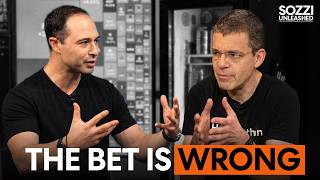
All right. So, she has a particularly tough one. So, what look your quarter crushed it. Um, but as a veteran of of many battles in tech, like what in the world are we seeing right now in markets? If I knew how to predict markets or even understand them, probably have a different gig. But uh I think we've been teetering on this will they won't they uh AI capex for a little while and uh the current bet is they won't.
I think I I think that's wrong but uh I sure uh I'm an obser observer not a participant. I got this other gig going on. I always view you having like maybe like three different lives. you rate you're racing bikes. Um your heads down with your headphones on like building a firm, but then you have like you know everybody in in tech.
You know so many people. Are they really like basically how worried are they about everything that happened two days ago in the election? It's been two days and I've been prepping for a quarter which was if I do say so myself pretty stellar uh and and making the rounds afterwards. You know, I think we are living through a profoundly important time in tech, both from a consumer use, from the business.
Any way you slice it, we are in the moment in time where you you want it to be. Like we're this close to solving some of the world's most important problems. Like you can reframe the current debate around data center construction like 100% real concerns around noise and electricity shifting away from residential neighborhoods and all of that.
Like those are real, they're going to get addressed between now and a solution for cancer, a solution for Alzheimer's is AI progress. Like it is factually obvious that if we can solve quantum field theory or almost solve whatever the current status of that one is, if we can do any of your stokes, if we can solve these profoundly difficult mathematical problems, we are some number of iterations away from solving profoundly important biological problems, health diseases, all those things.
We'll probably get to figuring out things like anti-gravity before the next decade is out with the use of these tools. So we will find a place to build data centers. We will we should and we must make sure that the communities are not just unaffected by actually beneficiaries of these data centers, but we're not going to be hitting the heartbreak and saying, you know what, let's go back to the dark ages.
We do not want a solution for cancer. Like we just we just don't. That's why I would ask you because I mean you are I mean look, you're a pioneer in technology and you love tech. Doesn't it just it doesn't it suck that our progress might get dialed back that we may not be able to cure those health problems you're talking about?
I'm a tech optimist. I think progress is generally uh unstoppable. I think once people see that something is possible, they find ways of doing it. I think if anything, we've had a lot of tourism in the world of AI recently and uh a nice little shake out by the market. If you want a silver lining, which you know, a bloody bloody red day.
No, no, I need the positivity here. I'm I'm always very positive. You're my guy for that. Thank you. Um, I think the silver lining is we will have to have a real conversation around regulation, around fair access, around applicability to most important problems versus, you know, maybe a few a little bit fewer silly videos, a few more dollars spent on figuring out how to solve cancer.
So, I think all of that is going to happen. So, the the moment is okay. Like, I don't think it's profoundly destructive. I don't think is going to write Frontier Labs to zero or half their price or they are the most important genre of business invented in the last maybe ever but certainly in the last 20 30 years.
So with within the business of a firm um talk to me about this transformer model you talked about in the earnings call because I was really fascinated about it and look I'm not gonna pretend like I really really understand it but maybe you could explain it to me. Uh it's pretty amazing. Uh it's our own little frontierish labs.
Uh it it's a very special purpose model. So we're not uh encoding all of human knowledge into a language in language out capable decoder. What we are doing is we are training models have trained models and are now training better, larger, newer ones that look for data patterns in your credit reports in your credit performance and all the things that we know about you as a borrower and ask yourself what could we have missed as humans.
So underwriting models have been constructed by humans since beginning of time and like back in the day you know underwriting model in the 50s sort of the dark ages of credit were like you sir look a lot like me well good credit for you like you don't so uh so like that's a people don't talk about it so much but credit used to be a thing that like literally was determined like I think I think you're trustworthy
we do kind of look a little like but kind that's cuz we're both I couldn't help myself go. Um, no. So, I I think we we came very very long way from this extremely prejudice kind of a zip code driven racriven underwriting which was a bad bad day to what became largely a model driven well- reggulated well articulated set of things that you can and cannot use to underwrite.
Those frameworks remain in place. Fair lending is a very well- reggulated, very well thoughtout body of law. We're certainly very careful, very thoughtful about making sure we meet every one of those requirements. As we got smarter and smarter about underwriting, as you build these models, and you do it largely by you train them obviously with machines using statistical learning, but you figure out what you're going to use to underwrite through analysis and deep thought and some very, very smart people.
And then you test to make sure it doesn't correlate too closely to things you're not allowed to use, eg race location, etc. Smart as you may be, you're not going to find hidden patterns, things that express someone's ability to pay between jobs like somebody. So gig work is a brand new thing. So the data going back to you know 80s 90s whenever we started getting real data on underwriting that's usable for machines just doesn't have enough to learn from for humans to spot these patterns.
LM are much smarter. So you can build a transformer that says, I'm going to look at all this data that's available from a vast source collection of sources that that we certainly see and see what else we can learn with an absolutely simple goal of let's find more deserving borrowers. How can we find more people we can lend to responsibly, safely so they can pay us back that would normally be declined by traditional models.
And that that was the goal of our research and we spend multiple years having hypothesis training these transform based models comparing them testing them for explanability. So if somebody gets the client for credit you can't say well not so sure I may have hallucinated like that's not okay like you have to be able to explain you have to be able to have it return the same answer every time.
So all that work took years and years and we finally felt very confident. We launched it and immediately saw an ability to expand our approval pool quite meaningfully with the same exact losses which literally means more access to credit to folks that would have been otherwise declined. Look, the bottom line is we're able to lend more money at the same exact loss rate, which is obviously very important for us and our investors without still charging late fees, compounding interest, all the junk that we set out to destroy in the industry.
We're still sticking to those principles, but we're able to expand our pool even wider. You take that and then I think about this age of agentic shopping, like if you and I are talking year from now, I mean, the earnings power for your business, you know, knock on wood, the economy stays well. H I mean just saw the job print.
Yeah. Job's okay. Like things are okay. The world is not ending. But like ejecting shopping bolted on to what you're doing internally, your models. I mean that that's pretty huge. Yeah. It it's super important and I'm very bullish on where we're headed with agentic shopping. I think it will take its time.
You know, people were promising all sorts of things the last five times when AI was going to revolutionize. Everything takes time even though it does feel like the world is accelerating just because there's so many people inspired to do some amazing work. But as Agentic Shopping grows, we will see more people needing access to credit, not less.
And we're there that that is our job and that that's that we will absolutely be there for them. Do you have do you will you have a an agent of your own or I think at the limit every company that wants to participate in the new economy will have probably many more than one agent. So the short answer is yes.
There are many kinds of agents coming. So, one of the things that's not very often talked about, but sort of seems very obvious, like you're going to have an agent, I'm going to have an agent. They're going to go talk to a retailer. How are you going to talk to a retailer? They're going to click on buttons like that.
That's what, by the way, a lot of agents do today. That's a very temporary state. What's actually going to happen is the retailer is going to have their own agent. They're like, "Hey, I know you. You're an agent of that Brian guy. He's really fit. You need protein. He needs protein. So, uh, I got a protein package for you right now.
We'll throw it in for free if you buy a nice, you know, ripped t-shirt." And so I you will have all of that from every site, not just from the buyer side, you'll have that on a seller side. You'll have an agent that steps into the conversation and says, "Hey, I am willing to finance this transaction.
By the way, here's the exact smart way of pricing it, including the risk of the consumer not paying, the risk of the merchant not delivering as expected, all of so you will see more and more. And by the way, this agent is like a very fancy term for intelligence. like each process in the world will have more intelligence injected into it and we're all going to be better for it.
Uh you bullish on the holiday season? Yeah, I am. Uh we're seeing demand now that that's not representative of any sort of a dying of the American consumer at all. And we just printed our quarter yesterday. You can see that credit is fine. Demand is excellent. We grew 34% the top line. We grew 35% on the bottom line.
So the business is healthy. Business is a great weather vein for what's happening in the economy. If the top line is not growing, people aren't shopping. If people are losing their jobs or deciding they can't pay their bills, the bottom line's not growing. Both are growing. The bottom line is exceeding the top line.
Max, good to see you. I thank you for the mug. It is going to be staying in there on my shelf. I appreciate you, man. Good to see you as always. Phoenix are doing this.




Comments 0