
원문 보기
ing to some rumors about supply constraints. Yeah. Which I was a little confused about. I even texted saying, "Are you front running something because I hadn't seen as many rumors." But they're saying we've seen some erroneous chatter in the media about being supply constrained about the H100 and the H200 chips.
They are saying that is false. They are not supply constrained. We have more than enough H100, H200 chips to satisfy every order without delay. So they are also saying that all of their cloud partners can rent these chips, but uh that doesn't mean they're unable to fulfill said orders. So they're just trying to let the market know that supply is not an issue.
Even with the H20s, these are the chips headed to China. They said that uh you know, even with the production of H20s, that's not reducing any of their supply uh for the H100. So it's not impacting and they can satisfy both markets should uh the need be there. So, they're just uh putting this out there because they're trying to get ahead of some rumors about uh them being sold out of supply, which is not true.
I I wonder if if in any way they they thought that maybe what they call chatter, these are the words that they're using from their, you know, the Nvidia newsroom that they they posted on social media. They use the word chatter. They use the word chatter in the media. Are they are they are they coming out and refuting that because they think maybe that those rumors and the chatter is in part why the stock has traded weak um of late and then again today
the stock I I think that's just a a greater move with the chips in general and you saw you know some you know Marll numbers last week that disappointed Dell and although AI servers are doing well I guess it's the narrative of you know the capex peak for AI is really weighing on it. Uh for Nvidia, the next major movers could be these these tech conferences in the next week or so.
Uh but it was a kind of a situation where so many people got into this name before earnings. They got the earnings. It wasn't the blowout quarter that we had seen in the past and so now they're getting out and we've seen this rotation out of chips in general just over the last two weeks. So I'm not necessarily sure it's uh company specific, but you constantly get these headlines coming from China and elsewhere that they're not looking uh to buy Nvidia chips.
So perhaps that's weighing on it as well. Yeah. As investors continue to pull out of the top producer of AI chips, Nvidia closed below a critical technical mark for the first time since May. Tuesday saw a fourth consecutive negative session as the stock dropped 2% to $170.74 below its 50-day moving average of $1716.
It is considered a bad indication of short-term momentum trends if the price breaks below this highly watched level. In reference to the 50-day moving average, Buff Dormier, chief technical analyst at Kings View Partners, stated, "This illustrates how the momentum has broken down, and it makes me concerned about the stock over the short term." Dormier believes that $160 will be the stock's next level of support, followed by $145, which was the level before a June breakout.
I'd be really concerned about its prospects if it breaks under $145, he continued. As worries about geopolitics and high valuations grow, the chipmaker shares fell along with the overall equity market. Nvidia's market capitalization has lost over $286 billion in the last 4 days due to a more than 6% decline.
But recent performance has been improving. With a market value of almost $4.1 trillion, the stock is still by far the largest in the world, up more than 80% from ALO in April. Microsoft Corp. in second place has a market value of $3.75 trillion. Nvidia's modest revenue projection last week highlighted investor apprehension on the rate of expenditure on AI infrastructure.
Analysts however remained generally optimistic and the chipmaker's growth tendencies have controlled its valuation. Analysts predict an increase of over 20% from the current levels based on the average price objective. It appears to have peaked for the short or intermediate term, but there is still long-term opportunity, Dormier said.
Although September is known as the worst month for American investors, semiconductor stocks are underperforming US indices to begin the month. However, for some Wall Street bulls, this could indicate that it's time to buy. Although chip stocks pulled on the sector to start the week, UBS analysts said Tuesday that they advise investors who are underallocated to equities to think about phasing in and leveraging market troughs to boost exposure to preferred areas.
They listed tech and AI bets as some of their favorites. With shares down about 3% on Tuesday afternoon, Nvidia was among the worst performing firms on the Dow Jones Industrial Average. With the PHLX semiconductor index down 2%, the stocks of advanced micro devices Broadcom, AVGO, and other chip companies were also down.
Amid worries about America's relationships with key trading partners and uncertainty following an appeals court's Friday challenge to the legality of the Trump administration's reciprocal tariffs, Tuesday's decline prolonged losses from the previous week. Bond sales cause treasury yields to rise, which often hurts the IT industry because rising yields can make growth stocks less appealing.
The fact that September is seen as a difficult month for stocks may also worry some investors. But UBS analysts say that shouldn't deter them. According to them, this is because October and November are typically good months for US equities with average returns of 1.2% 2% and 4% for the SNAMP, up 500 over the previous 10 years, respectively.
Investors may be able to better position themselves for future performance by purchasing in September. As further evidence of their optimism in the IT industry, UBS cited the company's good second quarter earnings, a positive view for AI demand, and the prospect of a rate decrease later this month. We like US technology, healthcare, utilities, and financials in addition to AI, power, and resources, and longevity, the analysts stated.
Jensen Huang of Nvidia says they're only in the beginning of this buildout, and that their new technology represents a $4 trillion infrastructure opportunity. During the company's most recent earnings call, Nvidia CEO Jensen Hang made one of his most ambitious predictions to date, estimating that the long-term artificial intelligence AI infrastructure market opportunity will reach $34 trillion over the next 5 years.
He made his remarks when Nvidia announced the Blackwell MVLink 72 system, describing it as a significant advancement in large-scale computing. According to Hang, the switch from Nvlink 8 to Nvlink 72 signifies a significant redesign of computer systems. Each node in NVLink 8 operated as a separate computer on a node scale level.
This is taken to a rack scale level by NVLink 72 where a whole rack functions as a single computer system. Wong claims that although this disagregation was very challenging to design, it has resulted in orders of magnitude increases in speed, cost effectiveness, and energy efficiency, especially in generative AI token processing.
We've been aiming for this design for a number of years, Hang by turning the rack into a computer, NVLink 72 achieves remarkable performance and efficiency. Huang pointed to the multi-trillion dollar AI infrastructure rollout that is currently taking place among the biggest cloud service providers CSPs in the globe.
The top four CSPs have quadrupled their capital spending to $600 billion in the last two years alone. Hang anticipates that Nvidia's Blackwell Reuben and Next Architectures will continue to drive this growth trend. He predicted that this expansion would grow into a $34 trillion worldwide market for AI infrastructure over a 5-year period.
With Blackwell, Reuben, and followons, we're going to scale into a 3 to 4 trillion AI infrastructure opportunity over the next 5 years, Hong stated. We are just getting started with this buildout, he added. Hang also underlined how AI's technology advancements are facilitating adoption in a variety of areas, including manufacturing, logistics, healthcare, and finance.
Hong restated his calculations later in the call, making it clear that these weren't just wild forecasts, and that $3 to$14 trillion is a reasonable amount for the ensuing 5 years. According to Nvidia's most recent guidance, the business is positioned as the foundation of an AIdriven global economy in addition to being a chipmaker.
Hong is indicating that Nvidia wants to control not just hardware sales but also the future architecture of enterprise and hypers scale AI by connecting the Blackwell launch to the larger infrastructure buildout. The $34 trillion estimate highlights the extent of the AI arms race. It also explains to investors why demand for NVIDIA's GPUs is still higher than supply and why the company's market capitalization has risen above historical standards.
At the moment when industries are rushing to incorporate generative AI into their processes, Hang made these comments. NVIDIA is establishing itself as the go-to option for enterprise and government scale AI infrastructure because to advancements in rackcale computing and token production efficiency in the same way that electricity and the internet changed industries in earlier times.
The $34 trillion investment window has the potential to change not only cloud computing but the entire global economy if it materializes. Jensen Hangs the race has only begun and Nvidia is wagering that AI infrastructure will become the next big industrial revolution. . So in other words, Paul, you know, here's a company that obviously is growing handily without China, but Jensen says we still need to be there.
And so to your point about the China deal sort of hanging over everybody's heads, is that what's needed in order for tech stocks to sort of get their groove back? Well, I think a comprehensive deal is very much needed. And I expect what happens here, Julie, is not only settling or coming to some kind of at least stalemate on tariffs that we will address the AIGPU export controls.
will probably also figure out where does the US operations of Tik Tok end up residing and so a lot is on this and it's a very important catalyst and even if Nvidia in the short term has so much demand from other regions that it can get by without these China revenues over the long term they and the rest of these companies and the supply chain must be in the China market.
They absolutely must. This is a situation, believe it or not, at least in my opinion, I believe that we need them. We cannot gloss over Nvidia, though, because there has been some breaking news in the last hour on the AI chip leader. It is at the moment the third worst performer on the Dow Jones Industrials behind Nike and Goldman Sachs.
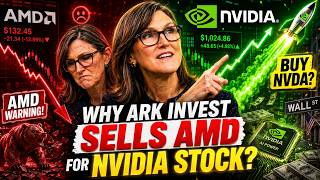
Nike is the worst here. You've got Nvidia down 2 and a half%. In kind of an unusual move, Nvidia took to X to address what it said was quote erroneous chatter in the media that it is facing supply ch short shortages of its high-end chips. Nvidia posted on X, quote, "The rumor that Nvidia is supply constrained or sold out of either H100 and 200 or Blackwell chips that power AI is quote categorically false." Over the past five sessions, it's been a rough go here.
Down 5.6% for Nvidia at $169.70. Just keep in mind it's not too far from its annual high of 184 bucks. But today, I want to start with Nvidia. Uh down about 6% over the last four days, down 2% today. The company's earnings showed restrictions on sales to China eating into revenue and uncertainty about when those sales could resume.
That was to the tune of about $4 billion. Now, despite the recent drop, the stock is still up about 80% off that April low. Analysts see upside of more than 25% from current levels with gross trends keeping valuation in check. We should note the whole chip sector under pressure today. Reminder, we learned early today that TSMC regarding TSMC, the US has revoked TSMC's authorization to freely ship essential gear to its main Chinese chipmaking base, potentially curtailing its production capabilities.
The worst stocks today as beits of the horrendous wave of profit taking are the best ones of the year. That's what I told you about when you get to this point in the year you start bringing the register which means the artificial intelligence components we all know about namely Nvidia and its compodies.
Remember the long knives which I have to start having a backdrop of long knives. I don't think you get knives into the exchange but long knives are what is out for Nvidia. These stocks are so huge they can swing the entire market in this tape. One company can be so big with so many tentacles that it can cast a
concern and what levels are you watching this morning Kevin? Well good morning uh Sam. Yeah obviously we are seeing uh several sectors that we would like to see leading the market doing exactly that. Communication services up over 2% information technology as well as consumer discretionary which uh under the hood actually looks pretty good over the longer term time frame if you're kind of looking at some of the components.
But today, obviously, we are trying to retrace some of those losses uh that we saw from yesterday here and kind of hitting into a a middle of the a gap zone that we actually created yesterday. If we're looking at the intraday levels to the upside, I'm looking at 6460 as your first major area of resistance.
That's somewhere around uh that same level that we see for the 200 day or 200 period moving average on the 15-minute chart, which has been an area of re uh support in the past. Now, it's going to potentially turn into an area of resistance. any further breakdown to the downside 6,400 obviously that was a pivotable pivotal uh level yesterday and then you're looking at 6360.
So these levels are still actually fairly wide that also complements uh volatility still being a little bit elevated when you're looking at the VIX. Uh and hopefully we are able to see kind of this rotation not only just back into tech communication services, but having it broaden out just a tad bit more uh so we're not so weighted into just maybe two or three stocks that are seeing obviously uh healthy gains this morning because of the news around the antitrust uh case with Google.
Yeah, tech and communication services no doubt doing the heavy lifting this morning. Communication services up at 2.7% right now. I'm just wondering shifting our focus to the treasuries what you're seeing as far as volatility there. We saw the 30-year yield topping 5% briefly overnight coming off a bit but still within arms length.
How are you keeping tabs on things there Kevin? Yeah, we actually did see a a break of trend when you're looking at treasury volatility and so we're going to be looking at the move index in blue here. We have seen obviously uh this volatility index making lower lows as well as lower highs. But actually what we saw for yesterday was a breakage of that trend.
And let's see if that's going to continue. The higher the uh volatility that we look at for the treasury market. If you're looking at twos, fives, 10, 30year treasury uh maturities and those options there as those implied volatilities actually increase that does coincide with equity volatility. So not surprising that we do see this direct relationship.
But if that does kind of increase as we lead up to uh the jobs report on Friday leading up to the Fed meeting, uh that could also once again kind of create near-term volatility for the equity market. And then when we talk about equity vault, it doesn't mean that the market automatically has to go down, but we could actually see uh some intraday girration actually taking place here, which does provide some opportunities for traders that are kind of trading on an intraday basis, but could give us a lot of head fakes as well.
So, a nice bounce today for equities just as a whole. But I don't think that we're done yet, just given the fact that once again, we just broke a a pretty decent trend here that's been intact pretty much since April uh to to early May this year. Okay. And the dollar, we've seen the DEXI back off a bit off yesterday.
How are you keeping uh your eyes on that one? Yeah, so the dollar index, I mean, if you're looking at a weekly chart, it's still looking fairly bullish here. We have seen a consolidation around this 97 to 98ish area. Uh we have seen obviously a fair amount of movement because of what's happening overseas with global uh yields especially in the long end of the curve.
You talked about the 30-year just for the US here. But when you're looking at this technical setup that MACD is still in a bullish formation with that 12 EMA above the 26 now still below the zero line here, but this could be basing in order to kind of break out. out. And the reason why I kind of bring that up, you're going to see this highlighted yellow or this circle uh in the past here at the left side of the screen.
This kind of aligns with the UK or the Liz Trust moment that we had back in 2022 where they had a budget proposal that hit uh and the market obviously was very spooked by that. We saw Liz Trust uh was only in that position for around 15 days or so. And you did see that dollar actually making those highs at that same particular time here.
And the reason why I also bring this up, if we go to the next chart, it's a comparison between the dollar index and gold. And if we go back and look at a 5-year weekly chart, when we had that same type of situation taking place, that's when gold actually bottomed out and started making its rally for the next two and a half years or so.
That's when the dollar was actually fairly high. So, could we actually have this leadup to this UK budget deal that's going to hit uh and be voted on, I believe, on November 26th. uh the leading up to this event which has created a lot of bond volatility on the longer end. Is that going to be another reason for gold to continue to move higher?
And then also do we have this flight to quality on this on the commodity front uh that actually actually pushes the dollar up a little bit more. So this is something that's not a today event or tomorrow event, but this could be over the next 60 days. A very big development when you're looking at the commodity space as well as the dollar as a whole.


Comments 0