
저자: CNBC Television · 외국인
요약 보기
샌프란시스코 연은의 메리 데일리 총재는 CNBC 인터뷰에서 예상을 웃돈 고용보고서를 미국 근로자에게 좋은 소식이라고 평가했다. 그는 채용이 다소 살아났지만 임금 상승은 호황 수준에 이르지 못했고, 실질임금이 물가 상승을 따라잡지 못하고 있다고 지적했다. 노동참가율은 완만히 오르는 추세로 보이며, 노동시장이 개선되면 구직자가 돌아올 것이라고 낙관했다. 반면 인플레이션이 장기간 이어지며 가계에 부담이 되고 있다고 설명했다. 그는 2% 목표 복귀를 확신하기 어렵다며 물가 안정이 최우선 과제라고 강조했다.
다듬은 글
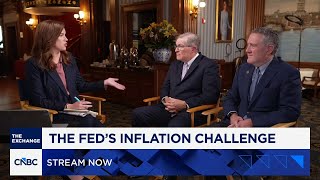
Steve Liesman: Let's start with the Fed. Mary Daly, President of the Federal Reserve Bank of San Francisco, joins us to talk about jobs data, AI investment, and more. I'm CNBC's chief economics correspondent Steve Liesman, and Kelly, thanks. We're talking to Mary Daly on the day we cover Friday's jobs report. She's a labor economist, and she's from San Francisco, the home of Big Tech. Scheduling this couldn't have been easy. Thank you for being here, Mary.
Mary Daly: It's great to be here, Steve. And the timing is good. It's better than anything else.
Steve Liesman: I'd like to hear your take on how Kelly Evans introduced the jobs report. It came in 165,000 above expectations, well above the 100,000 mark. What do you think is happening in the labor market right now?
Mary Daly: I see this as good news for American workers. There are jobs, and people are being hired. We had been stuck in a frozen environment with low hiring and low firing, and now hiring has picked up somewhat. That's good news for Americans too.
There's one more thing I took from the jobs report. Job gains are good news, but wage growth isn't booming. The labor market is stable and solid, but it's not a boom. Real wages are falling behind prices. That's the core of the good news on the jobs side. I wouldn't say Americans are really getting ahead in the labor market.
Steve Liesman: Mary, one reason employment numbers have been seen as underestimated is labor supply, the shortage of people available to work. There weren't enough workers to fill the jobs. Do you have a sense of where the labor is coming from, and whether this can continue?
Mary Daly: What actually determines labor supply is the labor force participation rate. It isn't just a matter of birth cohorts. It's about how many people participate in the labor market over the course of their lives. That number has been creeping up, which is a good sign. Americans want to work. When the market looks better, more people come in. Jobs draw workers in, and the two move together. Looking at the American workforce, I feel hopeful.
If you look back at 2017 to 2019, people were saying there were no jobs left and no one else would come in, that we'd squeezed everything we could out of labor force participation. Still, people kept coming back. So good labor market conditions bring workers back. I'm quite optimistic that this trend will continue.
Steve Liesman: Mary, the labor side was actually the easier part of this interview, since that's the employment piece of the Fed's mandate. Now I want to hear your thinking on prices, the other side of the mandate. Do you think things are improving? Are you confident we're moving toward the 2% target?
Mary Daly: To be honest, Steve, I wish I were more confident. You're right. This is the hard part of the interview, and it's also the core of a hard equation for Americans. They can get jobs and they keep spending. They haven't been knocked out of the game, but they're on a treadmill of high prices. Inflation has been running for nearly six years. The strain is now being felt everywhere. It has been a burden for a long time, and people are now saying, "I'm doing okay on everything, but I can't keep up with price increases."
So restoring price stability has to be the top priority. The fact that we have a solid labor market gives us room to do that. We need to stay on that path.




댓글 0