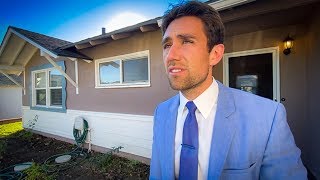
저자: Kevin · 외국인
요약 보기
임대차 소송의 8가지 주요 원인을 설명. 보증금을 마지막 월세로 쓰는 행위, 거주 적합성 분쟁, 상해 소송, 평온한 거주권 침해, 불법 퇴거, 차별, 보증금 미반환 등을 다룸. 소송 예방을 위해 사진·영상 기록, 즉시 서면 소통, 보험 가입(임대인·임차인 모두) 중요성 강조. 작은 소송(small claims)의 낮은 비용과 위험성 설명. 종목·자산에 대한 가격 예측 발언은 없음.
다듬은 글
Filing lawsuits by tenants is terrible. Today, we will not only talk about my personal experience with lawsuits, but also about the eight main reasons why landlords and tenants unfortunately decide to sue each other , and what you can do to avoid filing a lawsuit or having to go to court. After all, there is nothing more stressful than litigation, and preventing litigation can be the best cure for any legal matter.
With that in mind , let's look at eight main reasons and break down why things tend to go wrong in real estate investing. Then we will also look at personal experiences and comments that will also help take your letting, investing or even renting business to the next level. Common lawsuit number one: the tenant suggests to the landlord, “You know what?
Instead of me paying last month's rent, why don't you just use my security deposit and I'll live it out. Unfortunately , this can often lead to legal action, because if after the tenant moves out, the landlord has to make deductions from the security deposit and there is no security deposit left, the landlord may have the right to file a lawsuit against the tenant.
Now, many areas across the country have started charging tenants the first month's rent, a security deposit, and the last month's rent to prevent this. But it is becoming increasingly expensive for people to move into housing. This makes moving into housing very unaffordable. But, on top of that, a lot of tenants came back and said, “You know what?
I'm just living out my last 2 months for free because I've already paid you the security deposit, you can use it for the penultimate month, and I've already paid you the last month's rent." So, I'm just going to live with it. But let me explain why this is actually a bad idea for both the landlord and the tenant, and how it can lead to lawsuits.
We will also, in the first step, break down how lawsuits can arise, even if you think it doesn't make sense for the landlord to sue you for $1,000. You might be surprised. Then we'll look at the other seven reasons why people get sued . Let's give an example. Let's say a tenant rents a home for $1,500 and has a security deposit of $1,500.
He ends up spending his security deposit and not paying his last month's rent. Now, as they are about to leave, they damage three doors. Then the landlord realizes that repairing this door will cost $1,000, and the tenant has already moved out. The landlord carries out these repairs and arranges for a new tenant.
However, the landlord does not have a security deposit from which any deductions could be made. Now, the landlord may be tempted to file a lawsuit against the tenant if the tenant does not return that $1,000 to the landlord. Unfortunately , this is where many people think, “Oh, well, the landlord isn’t going to sue me for a thousand dollars.
Are you serious? "Who would sue for a thousand dollars anyway?" And usually that's because a lot of people read their lease and see, "Oh, well, if there's a dispute, we'll have to go through mediation and arbitration." And people usually understand that the costs of just organizing mediation and arbitration usually start from a thousand to five thousand dollars, sometimes even more, because you often have to hire a lawyer to help you with the paperwork.
This is where a lot of people assume, "Hmm, they're not going to sue me for a thousand dollars." But usually there is an exception in most lease agreements . Again, I'm not a lawyer, so check this out for yourself, but the exception is small claims court. Here, a landlord can file a small claims lawsuit, sometimes for $50 to $100, and suddenly the tenant gets sued, and it only costs the landlord $50 to $100 to file that lawsuit.
And usually in small claims, the presence of a lawyer is not possible. With a filing fee of $50 to $100 and an award amount of over $5,000, a small claims lawsuit is a very real legal remedy for both landlord and tenant. And paying a security deposit could result in a small claims lawsuit. Avoiding this is the best scenario because if, say, a tenant fails to show up for a small claims court hearing and ends up getting a judgment secured against them, that tenant's credit rating could suffer because credit bureaus sometimes look for unenforced judgments .
This is where the concept of tenant leverage, which I talk about in my real estate investing course and my DIY property management course, becomes very, very important. Tenant leverage means that the landlord has leverage over the tenant to the extent that the tenant does not want their credit rating to be damaged.
This is where , obviously, if the tenant had, say, a credit score of $500, they might not care if a judgment was entered against them. This would be an example where the landlord doesn't really have leverage over the tenant, because there's an old saying: "You can't get blood out of a turnip ." But keep in mind, tenant leverage works both ways.
Tenants usually own the property, which gives them a big advantage. There is a saying that possession is 9/10ths of the law, but the ability to file a small claims lawsuit and affect someone's credit rating is also a form of leverage, and negotiations usually end with both parties having some form of equal leverage.
Obviously, the goal is to avoid litigation, and we will talk about some methods of avoiding litigation, but let's look at the next reason why tenants and landlords commonly sue each other. And then we'll also talk about collateral reduction, when it's done properly, and how to do it right. Now, the second reason why lawsuits often occur is disputes over habitability.
And this is where we will start talking about ways to actually prevent lawsuits. You see, a landlord has a duty to provide a tenant with habitable and safe housing within reason. If something breaks, the landlord has an implied guarantee that he must fix it. However, this damage may not be the tenant's fault.
And it is in such cases that disputes can arise. If a tenant damages something, shouldn't the tenant repair it themselves? But what if it's a problem with the heater, plumbing, or something that could affect habitability? This is where things get complicated. And this is where we will talk about prevention.
And then we'll talk about ways to address habitability issues . Regardless of which lawsuit scenario we are talking about, the easiest way to avoid a lawsuit is through proper communication and proper documentation. Whenever a tenant takes possession of a property or a landlord rents it out , I strongly recommend that both parties not only take photos, but also shoot time-lapse video confirming the condition of the property.
It's very convenient to be able to shoot slow-motion video and see parts of the house that you would n't normally think to look at, like behind a door or when you open the garage door to check if it's working. Have you covered them again to make sure there is no strange damage or strange storage in the rafters above the garage?
These are common things that people miss and then get blamed for throwing out old paint they didn't put there or damage behind a door they didn't cause. Photos, videos, and sometimes even 360-degree virtual tours are key when it comes to documenting the condition of a property. Think about it. Who will best convince the judge of the condition of the property before and after?
A person with a 3D virtual tour showing a beautiful property ready for occupancy, before and damaged after, or someone without photo documentation and just something like : "Well, it was already damaged when I moved in." This is a decisive decision, and this is where prevention solves most lawsuits.
If you have relevant photo or video evidence and you think something is wrong, please speak up. If you are a tenant, tell your landlord. If you are a landlord, document this to the tenant. Here are two short examples. The landlord can say to the tenant, “ Hey, tenant, we noticed that there is actually a defect in this screen door.
We are letting you know what we know about this. We have no plans to fix it. But let us know if it becomes a problem." This is a proactive landlord. Just like a renter might say, “Hey, I noticed there’s this long corrugated dryer vent in the garage. I don't think this is in line with the norms. Is there any way to check whether this is true or not?
This doesn't mean that tenants need to know building codes or that landlords aren't obligated to do everything they can to make sure everything is up to code, but remember that there are usually red flags when something is wrong or bad. And if you simply send a short email, you will not only document your position and confirm the condition of the property as it was when you rented it or when you took possession of the property, but you can often resolve issues that otherwise turn into disasters.
My best advice on this is the same one I give people in my real estate investing course. It's very helpful to remember your CPA or insurance agent's email address, or at least the first part of it, so that it appears when you pull out your phone and start writing an email. The same thing you should do for your landlord.
So , if you're walking down the street and you think: you know what? Oh, I have to ask my landlord, my CPA, my insurance agent about something. Stop. Don't delay. Get out your phone. Send this email with one or two lines . Add a photo. Send it right away, immediately. Don't delay. This will help prevent the vast majority of your headaches.
Communication. This also applies to text messages and phone calls. It doesn’t hurt to send a follow-up email and say, “Hi, just confirming that we talked about this and landlord, are you planning to do this, or tenant, are you planning to do this. Thank you very much for your time on the phone. " We'll talk later." Whatever.
You can take screenshots of text messages. Documentation is key. Now let's give an example. Let's say the heater broke down and the tenant did nothing wrong. However, the landlord simply doesn't respond for some reason. Who knows? They are on vacation, or say they will take care of it, and a reasonable period of time passes.
Let's say 48 hours pass, the tenant is freezing and his heater isn't working . The tenant has several different legal remedies. The first is called repair and deduction. And there are limitations to all of this, so obviously consult with an attorney before just doing it, but there are cases where a tenant can hire a heating and air conditioning technician, fix the problem, and simply deduct the amount of the bill from the rent.
The second option is that the tenant may decide to simply leave the property and stop paying rent. This usually means that you will actually have to leave your home. You can't just stop paying rent and continue to stay in it. Of course, if you can't use the third option. The third option is usually reserved for very serious cases and usually only partial problems.
Let's say there's a roof leak that has damaged one room, and it's a three-bedroom house . Now no one can sleep in this third room. The tenant may be able to deduct the rent for that portion of the house, whether 1/3 or any other proportion deemed reasonable in such a case, and not pay that portion of the rent.
It's very, very difficult for a tenant to say, "I'm staying in my apartment and not paying rent because you're not fixing something." This is usually not the best way to solve this problem. And if you, as a renter, ever find yourself in this situation, ask yourself, can you repair and get a deduction within the limits?
Can you get proper communication to address this issue, and can you at least get an agreed upon text stating that the landlord is allowing you to hire someone, or are you just going to move out and move out? But be very careful about staying in accommodation without paying. Now remember that communication is extremely important , as habitability issues are one of the common causes of lawsuits.
If a tenant is forced to leave the home because the landlord doesn't repair it, that's bad because now the tenant is bearing the cost of moving, and that creates, you know what, small claims liability. The same can be true for mold, lead, or other issues that usually just don't get resolved due to poor communication.
Here is a common problem that almost everyone hears about. I also reached out to the course participants before recording this video and asked them, “ Hey, what are your top questions about landlord- tenant issues?” And everyone seems interested in knowing, “Oh my God, do I, as a landlord, need to form a limited liability company to limit my liability?
Should I take out a general policy to limit my liability in case number three, when the tenant slips and falls and sues me ? Something like a personal injury lawsuit. Let's dig into this. First of all, it is important to determine who is being sued. If a tenant slips and falls, they can sue the landlord and owner for negligence.
Maybe there were crooked stairs or broken handrails or some reason that the tenant blames the landlord, the property manager, the owner for this fall. And what usually happens is that everyone is sued. Typically, a property owner files an insurance claim to try to resolve a dispute with a tenant. It is also important here, if you have a property manager , to add the property manager as an additional insured party .
So homeowner's insurance also acts on behalf of the property manager. Now, insurance is not only useful for the landlord, insurance is also useful for the tenant. Because if a tenant legitimately demands, say, $50,000 in damages, they will likely get it much more quickly from an insurance company than from a landlord who doesn't have proper insurance.
From my legal experience, and I'm not saying I'm a lawyer, I'm saying I've hired a lawyer because of legal issues, let me say that having proper insurance is the first and often best line of defense. In this case, it is important, as a landlord, to always make sure that the landlord has proper renter's insurance.
Often these insurance policies may have a limit of, say, $300,000 in damages. This is where sometimes landlords, and I encourage it, increase that limit, perhaps on a few of their properties, through general insurance policies, which can expand that coverage to a million, five, ten million dollars. This is really, really good.
Of course, provided that the insurance company pays. The insurance company doesn't do that, a lot of people think, well, then I'll have a limited liability company and I'll use that to protect myself from losses. I recently posted some very, very detailed lectures on whether to form a limited liability company in a real estate investing course.
You can view the coupon code for this at the link below. And by the way, here's a testimonial from a course participant who says he's halfway through the course and has taken over 80 pages of notes, and his wife says, "Oh my God, you take more notes in Kevin's course than you did when you were in college." But anyway, even though I have very detailed lectures on limited liability companies, let's just get this straight.
Insurance should be your main stopping place. Just to clarify, this is after proper communication and proper documentation, and after you are a good landlord and the best tenant you can be. Then insurance should be your main stop for troubleshooting. Secondly, even if you have a limited liability company, you should prevent the infiltration of the veiled corporate department, which usually requires the help of corporate and legal experts to help you deal with things like writing affidavits on Form 30 B6.
If you can deal with this as an individual, perhaps an LLC would be right for you. But let's leave that aside and flip the script. What if a tenant has a visitor and the guest slips and falls and the guest sues the tenant and the landlord? Who will protect the tenant? Not the owner's insurance policy.
This is where it is very important that you, if you are a renter, also consider getting renter's insurance. This is not only necessary to protect your belongings if, say, the roof leaks and suddenly your sofa and computers are damaged. This is also to protect yourself if one of your guests slips, falls, and sues you , even if it's not your fault.
Of course, on all of these issues, as I said before, please consult with a lawyer and insurance agent. I don't belong to any of them. I am a real estate broker and property manager . The fourth cause of lawsuits between a tenant and a landlord is a violation of the tenant's right to peaceful enjoyment.
This can usually be a much more complicated lawsuit. I don't think small claims can help you, other than recovering actual monetary damages. I'm pretty sure that in small claims you can't claim things like punitive damages, for example, you were injured or traumatized and now want to claim a certain amount of money to compensate for it.
However, I'm not sure, small claims has a very limited scope and that's something you should check. If you have had experience with small claims, I encourage you to leave a comment below and let me know how you enjoyed your experience. I'm not an expert in small claims court, but I can tell you that landlords should mostly leave their tenants alone.
And ultimately, if landlords want to enter a tenant's property for any reason, they must actually do so by communicating with the tenant. When I talk to my tenants, I send them a text message. Hey, how would you like to meet today, or is this time more convenient for you? Usually, the best solution will be open communication and a pleasant, friendly, and honest dialogue.
If you have to go into a home and post a 24-hour notice on the door that the landlord is coming in, that's your entry notice, then the landlord is probably establishing an unreliable relationship, and that won't make anyone happy. It's also important to remember that many landlords can sometimes be very mean, because they come across as arrogant, a little slippery, like, "You owe me, I'm your landlord." I always like to treat my tenants with mutual respect, and if a tenant comes up to me and says, “Hey Kevin, the stove isn’t working, can we fix it?” I immediately send someone over to take care of it.
If that still doesn't fix the situation, like what happened recently with a property I listed on YouTube, I will send a new furnace and install a brand new furnace because I will do everything I can to maintain a positive relationship between me and my tenant. As for the security deposit deductions, we'll talk about that later, and you'll see that I'm actually a lot more sensible than some people might think, mainly because if a tenant looks at a landlord, they usually think, "Oh, the landlord is automatically ripping off the tenant." But this is not always the case.
Let's talk about this in more detail a little later. The fifth source of lawsuits between landlords and tenants is illegal evictions. This is very common in rent control areas where landlords try to raise rents more than they are allowed to, or sometimes they even resort to lease term changes like bait and switch, where they invite a tenant in for, say, $1,800 a month for the first year, and then suddenly change the tenant and raise the rent to, say, $2,500, as an example, when the lease renewal comes up.
Sometimes tenants may claim, and quite rightly so, that they were illegally evicted because of an unfair rent increase or some reduction in services promised by the landlord. California recently passed a statewide rent control law that essentially states that if a tenant's rent goes up more than a certain amount, or a tenant is evicted by a landlord for some reason for virtually no reason, because again, they raised the rent or said they wanted to move or something, the landlord is now required to give the tenant one month's rent as compensation for the tenant having to move.
It is clear that in the case of renting cheaper housing, this will still not help much, and that is why many cases related to illegal eviction end up in court. In this case, most of the mistakes are the landlords' fault. Personally, I never like to increase the rent for my property by more than 1-2% per year.
That's all. I usually don't try to make more profit. I'm just trying to keep up with inflation, that's all. Especially if the tenant is a good tenant, I won't not raise the rent because with inflation that effectively means lowering the rent, but I will always try to keep up with inflation, which is historically low.
If a landlord manages the property in this manner, the likelihood of them facing wrongful eviction lawsuits is generally relatively low. This should be obvious – discrimination. No one should discriminate based on gender, age, religion, sexual orientation, or any other protected groups, of which there are many.
Almost the only thing that landlords, and this might even be the wrong word, but almost the only thing that a landlord should discriminate against, it's not even necessarily discrimination against a person, but really the only thing that a landlord should ever discriminate against is credit score. Anything that even remotely pertains to any of the protected categories is a big red flag for complaints, sanctions, fines, and lawsuits related to fair housing.
So avoid any form of discrimination. And it works both ways. This is where it becomes very important for a landlord to document how they screen tenants and always adhere to written criteria. The seventh source of lawsuits between landlords and tenants is when landlords fail to return a tenant's security deposit within the required time frame within this state.
For example, in California, a landlord has 21 days not only to return a tenant their security deposit, but if there are any deductions, those deductions must be itemized, justified, and documented with receipts or good faith estimates when receipts are not possible. And even when these receipts become available for these good faith assessments , the landlord must send them to the tenant within 14 days of receipt.
This is why it is much better for tenants to wait for landlords to enforce the law regarding the return of their security deposit than to wait until they are paid. Mainly because many leases actually state that enforcing a lien is a breach of contract, which does n't look good. Now let's move on to the biggest source of frustration for both parties and probably the most common reason people end up in court.
Deposit deduction . First of all, at least in California, the landlord is required to conduct a so-called pre-vacancy inspection with the tenant to give him the opportunity to repair the damage. For example, the last tenant moving out of one of my rental apartments was told, “Listen, some of the door frames and cabinet doors have larger than normal scratches and damage that actually look like holes bigger than a quarter and should be repaired.
Otherwise, it may be a deposit deduction . The tenant filled and patched these holes and made them look quite nice. The tenant will not be deducted for this damage because I told them about it , they fixed the damage, now there will be no deduction. This is why pre-trip inspection is so important. But not only that, if a landlord forgets or simply fails to conduct a pre-movement inspection, it can actually be an argument for the tenant winning the case.
I was never offered a pre-departure check. So, if your California landlord didn't offer you a pre-movement inspection or tell you what repairs you should make, you may be entitled to your entire security deposit back. Of course, contact a lawyer. Currently, the most common forms of deductions are as follows...
Next, we'll talk about number one - ordinary wear and tear. And you know what? You cannot deduct normal wear and tear. That is , let's say the tenant placed a sofa against the wall, and this sofa moved back and forth a little , leaving some damage on the wall behind this sofa. This will be considered normal wear and tear.
Or the carpet is a little more worn in the common hallway leading to the bedrooms. This will be normal wear and tear and tenants are not responsible for normal wear and tear. This is a very risky area for landlords to try to deduct tax, and this is where landlords often find themselves in unavoidable situations.
They deduct tax for normal wear and tear, and tenants usually win these cases. The second type of deduction may be prorated use over the service life. For example, let's say a landlord installed carpet with a 10- year lifespan, and then a tenant got a dog without the landlord's permission. Now the dog, after 2 years of living in the apartment, has ruined the carpet.
This means that the carpet only lasted 2 years when it was supposed to . 10. Suppose the carpet cost $1,000. The landlord may be entitled to deduct eight out of the 10 years of the useful life of this carpet, which is now no longer functional or usable, from the tenant's security deposit, meaning the tenant may have to pay $800 for this carpet .
Some landlords charge the full $1,000 , and this is a great way to get a pre-trial settlement. It is very important that the product's lifespan, when using this approach to determining lifespan, is justified, documented, and the work is supported by receipts, and that the tenant proves that they actually caused damage to the property using the proper documentation we discussed earlier.
Now I'm going to talk about a recent mistake I made. I looked at the property and was so excited to use this macro lens to shoot on this rented 1DX camera that I threw it in the trash can of the house the tenant had just moved out of. And I kind of implied that it was the tenant's fault that the garbage can was...
rusty. And that's because when I look at our garbage disposal, it's not rusty. But then I did some research and realized I was wrong. That's what garbage disposals are all about , and then we'll move on to the lawsuits, and also discuss some commentary that will help make sense of it. A galvanized steel garbage disposal may only have a lifespan of two to three years because it rusts.
So this garbage disposal's lifespan is probably coming to an end. We may have to replace it. The next time I'm going to replace my garbage disposal, I'm going to install a stainless steel garbage disposal. They cost about $100 more, but their lifespan can exceed 10 years because they don't rust like this one.
Now let's talk about another example where I was also very warm , and this is a common misunderstanding when it comes to rental properties. Around April 2019, I installed a brand new furnace. The stove cost about $575 and the installation cost somewhere around $250. Anyway, I installed it to replace a fairly clean and functional stove that had just stopped working on one of the burners.
But I did n't want the tenant to be inconvenienced, so I provided a brand new stove. Of course, the tenant can use the stove as much as they want. It's like if I lent you a car and said, "Hey, you can borrow my car. Just do me a favor. " I just cleaned it . Give it back to me clean. I don't care what you do with her.
Just return it clean and undamaged. "That's it. Well, in this case, I actually returned my car with a clean windshield, and the rest of the car looked like it had just entered a dirt-cleaning competition. That is, the most difficult areas in the oven itself were very oily, greasy, and dirty. A lot of people think that cleaning an oven like that is as easy as just turning on the self-cleaning function.
Unfortunately , that's not the case. It's usually the ovens, especially the metal grates, which is one of the reasons I got tired of gas appliances and much prefer induction, but no one else does it, so we're stuck with gas. But the problem with those things is that you usually have to soak the grates in ammonia.
You usually have to put a lot of effort into the grates, the bottom, and the corners . And a thorough cleaning of the stove can take anywhere from 1 to 3 hours, depending on how much grease has accumulated. This particular stove, which only has 6 months, has a significant amount of grease. Of course, I would never charge a tenant for the cost of the stove, but it..." It would be fair for me to hire a cleaner for $20 an hour to clean it and charge $60 or something reasonable for cleaning the stove.
California law provides that if a property is provided with a certain level of cleanliness, the landlord can require it to be returned in the same condition. It doesn't necessarily have to be better, but if it's worse, the landlord has the right to deduct the security deposit to bring it back to a clean condition.
Obviously, a stove that is brand new and crystal clean, compared to a stove that is a little dirty, makes a big difference, and it needs to be clean because when the next tenant comes in, it would be unfair of me to give the next tenant a dirty stove. But I also shouldn't be responsible for paying for someone else's cleaning.
It still kind of hit me in the gut because some people thought, " Well, greedy landlord, slippery landlord charges $60 for cleaning. Why doesn't the landlord just clean it himself?" " Well, unfortunately, that's not how business works. And people think that means I'm maybe not a charitable person, but in reality I'm trying to educate both sides: landlords and tenants.
Tenants, if you want your deposits back, clean properly. Landlords, if you want to run your business properly, make sure you document the cleanliness before and after your refund. These are learning tools for everyone. But obviously, on YouTube, things can quickly turn into, "Well , you should donate money to the tenant because he's helping you pay the principal on the house." “And we get into this long drawn out discussion about landlord versus tenant or rich versus poor.
And honestly, it's pretty funny. Because the point is that I'm trying to illustrate the principles of property management. Look, I'm a big fan of donations and charity, but the point is, the law is very clear. If windows are provided dirty, the tenant may return them dirty. If windows are provided clean, the tenant must return them clean.
In any weather, the tracks in this property I last rented were given to me dirty, and it is unfair of me to give the next tenant dirty windows. While I obviously didn't convey this as well as I could have in my last video, for which I apologize, I hope this adds some clarity. But let's get to some very specific and really, really good questions from course participants about tenants, the law, and preventing lawsuits.
Some of them are really, really fascinating. Now, Emerson and, guess who asked the questions that come up often, and the question is what to do if you have an illegal part of the house, like an illegally added…” bathroom, kitchenette or something that technically shouldn’t be there? Should this be coordinated with the regulations before renting?
And I usually answer: first of all, the most important thing. Has anything been structurally changed? Again, I cannot provide legal advice and cannot guarantee that you will not be sued if you follow my advice. But if something was structurally changed, I wouldn't rent the property out until everything is permitted and in compliance with regulations .
In fact, I probably wouldn't rent out a property until everything is legal and up to code , regardless of whether it's added space or not. But realistically, if, for example, there's an extra toilet and an extra faucet, or there's an extra stove, and a licensed plumber has installed the gas pipe or connected the stove and faucets, usually, at least I think, your risk should be pretty minimal.
However, keep in mind that if the tenant learns about illegal changes to the property, they gain leverage over the landlord. That is, he can file a complaint against you for violating the rules or hold it against you if, say, they want you to waive a late payment penalty or something like that. This might just be an unpleasant day for you.
And if there were no structural changes, you should ask yourself what needs to be done to allow for that half bathroom? However, on the other hand, sometimes adding a kitchenette is illegal and you will never get permission to do so. And this is where you just need to assess this risk yourself. I always recommend checking with your insurance company, and sometimes it's even a good idea to talk to the tenant about it and see if they're willing to accept the property as is, without permits.
Although this can sometimes be a red flag when the tenant realizes it is illegal. Ultimately, you have to decide for yourself which direction you want to go? Do you want to move towards getting a permit? If you do, unfortunately, inspectors may crawl all over the property. On the other hand, you may not do anything, but in that situation, I highly recommend that you at least have licensed contractors working on these products.
Now, Ed asks, "Is there insurance that will help reduce the costs?" tenant lawsuit? "We've already talked about some forms of tenant lawsuit insurance, the usual type of liability insurance, but there are actually different types of insurance that if you use the services of a property manager, you can take out, such as eviction insurance or other types of insurance that can be very useful for those who are landlords- financed.
Another question came from someone who was curious : "Hey, you know, at what point?" "Here, Nick's Eye says, "How many apartments do you recommend someone have before they hire a property manager?" " I usually recommend people hire a property manager at the beginning because that's when you're the least familiar with real estate, you're the least familiar with the laws and regulations, and how to do contracts.
If you think about it, when you first hire a manager, it's like you're learning from that manager. But this is often not an affordable solution for everyone. So, if you need to manage your own property , go for it. Just do your best to be as informed as possible. Now, uh , Derek wants to know about specific clauses that can be included in the contract to ensure that the tenant leaves the property properly.
You know, and this also applies to some of the comments that appeared on public YouTube. Some people thought I had sneaked in a clause in my last lease that tenants have to wash the windows. Even if I didn't mention anything, California law states that the tenant must return the property clean, including the windows.
Except what we do, because a lot of people don’t know about it, is we actually have a sort of labeled or numbered addendum that we read out clearly to our tenants and we will…” say something like, “Hey, just a reminder, you have to have your windows professionally cleaned. Be sure to read the addendum at the end of your lease agreement.
And we'll say that when they first sign, we'll say that during the pre-departure review, and we'll figure it out again later. In fact, if you watch my videos on YouTube, you'll see that in the video I told tenants, " Here's a reminder, please don't forget to review the last page of your lease agreement, as it outlines your responsibilities after you move out." So, saying something like: “ The tenant is required to have the windows professionally cleaned after moving out.” The windows were provided professionally cleaned with cleaned guides , and the tenant was provided with a receipt.
“This is a very smart thing to put in the contract. And if the tenant reads it, realizes it, and is reminded of it, I don't see any problem with obliging the tenant to, well, stick to their part of the agreement. Now, Pseudo System has a question: " Should tenants have general access to the attic and basement as they see fit, or should something be clearly restricted?" " Usually, when I rent to, say, a single family, I don't restrict access to any part of the property.
If they rent a house, they get it. They want to go into the attic and play. But there are times, especially in apartment buildings, when if there is shared attic space, yes, there are restrictions or prohibitions for the tenant to access those areas or store things in those areas. And usually the contract has sections and clauses related to storage.
John W. says it best. He had two evictions out of the last 13 tenants he had over 10 years in Oregon and Washington, and he says he learned to appreciate thorough due diligence from the start. And I think this is a really good moment to end. We will continue to answer questions and have a dialogue in our Discord group.
By the way, for everyone who has read this video to the end, I want to invite you to this Discord channel. I recently split this Discord channel into a course. a members-only section for each course that anyone can join, and a public section. So, if you join Discord and want to participate in general real estate, stock, or general discussion, I just opened these channels.
Welcome. You don't actually have to pay anything, and you can join public channels. You won't necessarily see this tenant discussion as it's in the investment and property management channels, but at least you can join our Discord and chat. See you there. Thank you very much for watching. Until the next meeting.


Comments 0