원문 보기
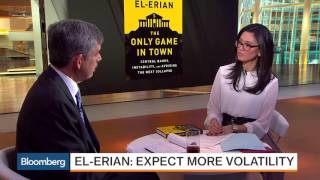
we have been talking to so many strategists in the last few weeks where the markets going right and you've got people who are saying we're in for another ten even maybe even twenty percent decline here in the markets one of them is Doug Ramsey he's the chief investment officer at louth Halloween capital let's listen to what he said we will cover some hedge it's just on the basis that you've taken the second most expensive bull market in history and marked it down to average valuations you know whether we turn bullish at that point really depends on what market action and sentiment and other economic factors look like at that point but I actually think could be a very rapid descent quite frankly that could happen over the next few weeks so if we see that and we go into a bear market here in Muhammad you think the Fed is going to do something so for the Fed to do something two things have to happen one is we have to have a bear market and secondly it has to contaminate the economic fundamentals so far the volatility and the price correction has been a financial market event it hasn't been an economic event so as long as that stays the case the Fed will not do anything but if the Fed senses that there's spill over onto the economy if people become a lot more risk-averse right spend less if somehow companies invest even less then then they will move but so far this has been concerned contained to being a financial market event but what if we see an earnings recession yeah that would have a that would have a huge impact okay if we see an onion recession if we see people not spending their oil windfall because they're worried about all the volatility you know we haven't two things happen yes we having Marcus come down but I think even more importantly isn't getting massive swings on very little data and I lack of liquidity right that's a lack of liquidity and it's a change in the volatility regime we have lost the central banks as our bffs they used to be our best friends forever right the minute there will be volatility we will get a statement out of the Federal Reserve calming things that's no longer happening so we've lost a stabilizer of course other oil has lost a stabilizer a peck the more stabilizers you lose the more volatility you get and the more risk averse people get do you think we're gonna we're headed for a recession so i put the probability of that in 2017 thirty percent a few months ago when we talked and people reacted quite a bit i kept you know the seventy percent is we don't now most economists are getting to twenty twenty-five percent so i would put right next year and next year i think this year's actually quite hard to get a recession unless you get a major global disturbance in what form you know they come on the two forms either get a massive policy mistake out of china mm-hmm oh you get a massive market accident because it turns out that some people had way too much leverage on and they're forced to sell so far the probability of that is not dominant so i don't think you get a high probability of recession next year i think goes up to about thirty percent so this year next year goes up to about thirty percent and then we get closer to the t junction where major decisions have to be made what what factors into your thirty thirty percent probability though where does that come from mohamed so a few things the first thing that factors is we haven't promoted growth so far and the longer you fail to promote growth the higher the chance of what is now called the secular stagnation that your system adjusts to lower capacity lower potential the second issue is we have financial prices that are decoupled from fundamentals and the fundamentals don't approve then it's going to be very hard to retain and the third issues divergence central banks the only thing that's adjusting is the currency markets right and I've been around long enough to realize that when currencies move a lot they tend to break something and it's very hard to predict what they're breaking right now the biggest risk is the emerging world yes right so we can't let the currency markets carry all the burden if we do then there's a waste they're going to break something so when you say you know when I think of breaking I mean you know you could see a rapid evaluation in one of these currencies or several of these currencies I mean could we see some of these regimes totally tossed out in the next 12-18 months so some of them have have if you and Russia you feel like you're funny trade regime has been tossed out right right you know even Mexico which has been doing well has seen a significant weakness and it's in the pencil Brazil the same thing these are unhinged markets and at some stage that they can break something so we already seen it happen it's not happening the massive thing I think the main concern is the potential for currency war that's the main concern that every country then decides that they're going to try and borrow growth or still growth on somebody else is that but that is priced into your outlook then that is yeah that that is part of the thirty percent okay properly


Comments 0