
저자: CathieWood · 외국인
요약 보기
캐시 우드가 스페이스X 폭락 구간(7월 말)에 3차례 약 6천만 달러를 매수하고, 같은 주 테슬라에 약 5천만 달러를 투입했다는 내용. 스페이스X는 분기 매출 92% 증가(약 78억 달러), 조정 EBITDA 약 35억 달러이며 스타링크·콜로서스 임대·궤도 데이터센터·xAI 등 4개 사업이 핵심. 테슬라 2029년 목표가 2,600달러는 로보택시 기대가 약 90%를 차지하며, 로보택시를 제외하면 약 350달러로 낮아진다는 주장. 반면 우드 펀드의 5년 성과 부진, 로보택시 지연, 스페이스X 락업 해제 리스크를 함께 지적.
다듬은 글
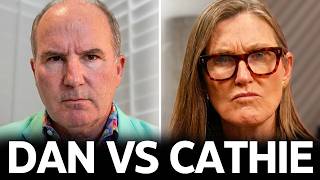
Katie Wood is making a huge bet on Elon Musk. At one point, SpaceX lost over a trillion dollars in value, and Tesla is well below its highs, but Katie Wood continues to actively buy up both companies. And the thing is, it's not a rocket or car company that it seems to be buying . I'll show you four business lines hidden inside SpaceX, as well as one number that its entire bet on Tesla rests on.
So, imagine the last week of July. SpaceX shares just fell below their IPO price. In June, they started near $135, soared above $225, and now, at the end of July, they are dangerously close to $105 per share on the screens. This destroyed over a trillion dollars— roughly the entirety of Tesla disappeared in 6 weeks.
And it is in the midst of this drop, on the 27th, that Katie Wood buys. And the next day, the 28th, she buys again. On Monday, as the price continues to roll down, she enters and buys a third time. Every time the screen turned redder, Katie bought more. And to find funds, she sold Snowflake shares that same week.
It was a rising asset on the very day Wells Fargo said the price would hit 500, just before Snowflake's earnings report. So, in essence, Katie sold a winning stock at its peak and spent over $60 million of client funds trying to " catch falling knives." And this is the third time she has done this with SpaceX since the IPO.
So there is a clear pattern to what she is trying to achieve. Katie's entire approach is based on one belief: price and value are two different things, and a frightened market constantly confuses them. When a stock falls due to a change in fundamentals, that says something. But when she falls because everyone panicked at the same time—that's exactly what she built her career on .
In addition, she has publicly stated that SpaceX could become the most important company in history, and she means it literally. Because, despite the devastating drop in share prices, business has n't slowed down at all. SpaceX just reported its first quarter as a public company. Revenue jumped 92% to about $7.8 billion , and adjusted EBITDA, which is a rough measure of profit before accounting expenses, was almost $3.5 billion.
So, the stock price was falling while the performance was improving, and it is this gap that is the reason why Katie Wood is buying. So what's really inside this company? Let's start with Starlink, because this direction is already bringing in real money. In my opinion, this is the foundation of SpaceX, providing about 61% of the company's total revenue, and it is still growing by 50% every year.
Katie's team believes that Starlink could generate $165 billion a year by 2030, and that amount will almost double once the network is complete . So, while the headlines are focused on missiles and AI, satellite internet is paying for all the other, riskier business projects. Now let's move on to Elon's strangest project and who is secretly paying for its use.
The more you subscribe, the better these videos become, so hit the subscribe button. So , there's Colossus—a supercomputer complex that Elon built in Memphis to train his own AI. He created it to beat competitors like Anthropic and Google at their own game. But what actually happened was classic Elon.
The same competitors are now paying for its rent. Anthropic bought out the capacity of the first facility in full. Google signed a deal worth approximately $30 billion to use the newer complex. So these two contracts bring in over $2 billion a month, which means the missile company is acting as the lessor for two massive AI labs on equipment designed to combat them, which is, frankly, a pretty crazy turn of events.
Elon believes that AI will require more computing power than Earth can actually provide. So his answer is data centers in orbit, powered directly by the Sun, where there is no atmosphere or interfering clouds. And Katie's own research supports this idea. Launch costs have been decreasing for 17 years in a row.
If this continues, orbital data centers will become key infrastructure for AI. In my opinion, these are four separate businesses rolled into one falling stock. Rockets, satellite internet, computing power rental, and a focus on AI and hardware. And that's what Katie actually bought that " red" week.
The market has mostly valued only one story—launches, and she believes the main opportunity lies in the other three. And now the Tesla part of this bet is even more incredible. Tesla itself has fallen significantly from its highs, and Katie took advantage of the recent post-earnings sell-off to invest about $50 million in a single week.
Its target price for 2029 is $2,600 per share. At today's price, that's almost a 10x return, and that figure has almost nothing to do with simply selling cars. Katie's model shows that about 90% of this cost falls on robotaxi. Her logic is actually quite simple. A car is a one-time sale, but a fleet of driverless cars makes money every hour.
This turns Tesla from an automaker into a cash-printing network. Her team estimates the global robotaxi market at around $10 trillion—a market that doesn't actually exist today. In her own words, every car becomes an AI-based cash flow generation machine. And there is a nuance here, and, to be fair, she herself speaks about it openly .
The model doesn't even take into account Optimus, Tesla's humanoid robot project. But it's not because she doesn't believe in him. If we remove the robotaxi bet, the target price for Tesla shares would drop to around $350. So, almost everything is based on a single stake. She buys a Tesla because she thinks Elon will turn every car into a driverless taxi, and she's willing to look wrong while she waits.
Simply selling cars is almost useless here. Although in reality, the quarter in which Katie bought shares wasn't so bad. Shipments grew 25%, the fastest pace in years, but operating profit fell about 57% as Elon continues to invest profits in AI, Optimus, and robo-taxis instead of protecting margins.
So Katie analyzed that same quarter, saw that the stock would sell off anyway, and invested $50 million that same week. And now there's a third part of the Musk universe that Katie is keeping a close eye on . SpaceX acquired Elon Musk's AI company xAI back in February, and its latest model, the Grok 4.5, gave us a clear signal of where the business is headed.
In terms of intelligence, independent tests placed Grok 4.5 in fourth place, behind Fable 5, GPT 5.5, and Claude Opus 5. So this is not a story about Grok being the smartest model on the planet. However, what it does gain is in operating costs. It shows results close to the best using only a fraction of tokens, and tokens are just small pieces of text that the model reads and writes.
So you're getting about 80% of the quality for 20% of the cost, and in an industry that's burning tens of billions on these models, that's exactly the gap that Katie has been trying to bridge throughout her career. Elon himself calls it an Opus-class system, only faster and, importantly, cheaper. Independent testers agree with the cost part of the statement.
They argue a bit about the intelligence part, but this business has to serve a huge number of paying customers, so cheapness may prove to be more important than peak intelligence. So, take a step back and look at the big picture of what Katie is doing. SpaceX and Tesla account for a significant portion of client money, concentrated purposefully, but it also doesn't blindly buy into every downturn.
She sold Snowflake because the stock had already risen. She excluded Optimus from her calculations. She goes from being rewarded to being undervalued , out of fear rather than the reality of the business. Now let me also be frank with you about the other side, because there is good reason to believe that it is simply wrong.
So, what does her track record really look like? Well , in the long run it's pretty disappointing. Its flagship fund has only grown by a few percent over the past 5 years, while the S&P 500 has added between 65% and 90% over the same period. The 2020 rally that made it famous was 153%, and then 2022 wiped out over 60% of the fund's value.
So betting against the crowd works effectively when she's right and is brutal when she's wrong, and her story has real examples of both . This year it has much better results, significantly ahead of the overall market, but that's exactly the pattern, is n't it? Huge swings in both directions, and the 5-year figure is what many of her clients will actually live with.
And SpaceX's position carries one very specific short-term risk. The first major stock lock-up ended on August 6. A lock-up only means that early investors are not allowed to sell shares for a certain amount of time, and that window has closed: approximately 911 million shares became available for sale a few days after the company's first earnings report .
This has nothing to do with rockets or satellites, it's purely an increase in the number of stocks hunting for the same buyers. So what happened? Well, the flood never happened. The stock turned around, rose, and regained its IPO price in a matter of days. More shares will continue to become available until December 8th.
So, the risk of the proposal has not disappeared, but this first test went much better than the pessimists expected. Now for Tesla: almost the entire bullish forecast is based on one unproven business . Robotaxi has been postponed many times. You don't need to tell me about it. I have been a shareholder since 2018.
Elon predicted millions of driverless Teslas in the second half of this year, and those timelines have shifted. If this is delayed again, perhaps the $2,600 target could start to fall apart for Katie, as there is little else supporting the company to be worth $2,600 per share without Robotaxi and ignoring Optimus.
Waymo is already using fully driverless cars in many cities, and regulators are putting this above Tesla's current level of system. So, to be clear, I'm betting on Tesla. I think their technology is much better, but Katie is betting on Tesla to decisively close this gap, and so far that hasn't happened.
So Katie Wood saw two important companies fall at the same time. She decided that panic was a bigger factor than the real problems, and in her numbers she showed exactly how big the stakes were and how much of it depended on what had not yet happened. The first two public tests have already been passed.
Elon reported high profits. The lock-up period passed without the crash that everyone feared, and the shares rose above the IPO price. Slower issues remain: valuation, the launch of robotaxi, Optimus, and shares that will still become available later this year. So, if you've watched the video up to this point, then you probably like our content.
I've been creating content for social media for almost a decade, specifically helping founders, creators, and businesses grow and make money on YouTube. Here , for example, is Jeremy. He has almost a million subscribers. Here's what he said about us. This is a huge help. Um, of course, it also brings profit.
And , uh, David has done an incredible job helping me run this channel overall. And many other creators said the same thing . And then there's Farzad. We helped his channel grow from 40,000 to over 400,000 subscribers. Behind the scenes, the move from 40,000 to 400,000 subscribers is a credit to David Carbot and his team, my wonderful editor.
Without him, this channel would be just a shadow of what it is now. Even Elon Musk shared our work, mentioned me, and followed me on X. We help people grow on YouTube—from those who haven't started yet to businesses that want to grow. Follow the link below for more information or to book a call. Also, if you want to purchase a course on AI or Palantir, the links to those are also below.
Thank you to all the participants who support the channel. They get access to exclusive videos for members and early access to content. If you have n't already, click "subscribe" and we'll see you in the next video. See you later.


Comments 0