원문 보기
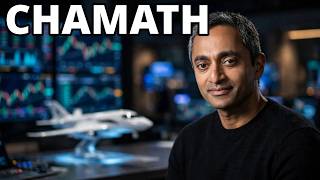
February 2021. The hottest trade on Wall Street is the blank check company and its king is on television. Chamath Palihapitiya has six of these companies trading under his name. He has raised more than $4 billion through them and people are calling him the Warren Buffett of his generation. He does not correct them.
Weeks later, he does something else. As chairman of Virgin Galactic, the space company he personally took public, he sells every share he owns in his own name. 6.2 million shares, $213 million. A month earlier, he had told an interviewer he would not sell a share of anything he bought because he believed in it.
The stock he sold would go on to lose more than 95% of its value. That spring, Forbes put him on its list of billionaires. The next year, Forbes took him off it. This is the story of Chamath Palihapitiya, the kid from the welfare office who learned how to grow things faster than anyone alive and it ends with the question his whole career keeps asking.
Does this man see the future before everyone else or does he simply sell it better? It starts in 1976 in Sri Lanka where Chamath Palihapitiya is born. When he is 6 years old, his family moves to Ottawa, Canada. His father has a posting at the Sri Lankan Embassy office there. Then the posting ends and the money goes with it.
His father cannot find steady work in the new country. His mother cleans other people's houses. The family lives on welfare. As he tells it, he started working at a Burger King at 14 because money was not an idea, it was the problem. What he has is a brain and a way out, school. He wins a place at the University of Waterloo and graduates in 1999 with an electrical engineering degree.
His first job is trading derivatives at a bank in Toronto. It lasts about a year. California is calling. He moves west and lands at Winamp, the music player owned by AOL. By 2004, he is running AOL's instant messaging business, the program millions of people chat on every day, and he is reported to be the youngest vice president in the company's history.
After a few months trying venture capital at a firm called Mayfield, he gets the call that changes everything. It is 2007. A three-year-old website called Facebook wants him to do one thing, make it grow. Here is what Facebook looks like when he arrives, about 50 million users, but not yet inevitable.
His job is to build the team whose only question is growth, not growth as a hope, growth as a measurement. The team's method is unglamorous and ruthless. Test everything. Count everything. Find the moment that turns a visitor into a regular and build everything around it. Their famous rule of thumb, if a new user makes seven friends in 10 days, they stay.
So, Facebook is rebuilt to make that happen. It works at a scale nobody has ever seen. Four years later, when he walks out in 2011, Facebook has about 750 million users. The playbook his team wrote becomes an entire industry's job description. It was not all clean. He also ran the launch of Beacon, an advertising system that tracked what Facebook users bought on other websites and told their friends.
People hated it. Lawyers sued and Facebook killed it. Years later, he will say it out loud, the tools he helped build were hurting people. He leaves Facebook at 34 with the kind of money that ends the story for most people, early Facebook stock, invested well on the side. But the interesting question is not how much he has, it is what he decides to do with it.
He is going to pick the winners him In 2011, he starts a venture firm, Social Capital, with a complaint and a plan. The complaint? Venture capital runs on gut feeling and old-school ties. A room full of people funding people who remind them of themselves. The plan? Do it the way he grew Facebook, with data.
The firm builds software to grade companies by the numbers, not by the pitch. It backs companies like Slack, Box, and Yammer before they are obvious. And an obscure chip startup called Grok. By 2015, Social Capital manages more than $1.1 billion of other people's money. And by the firm's own accounting, the results are spectacular.
It claims a gross return of 997% between 2011 and 2019, more than three times what the stock market returned over the same years. He also buys a stake in the Golden State Warriors basketball team, reported at 10% of the team, for a reported $25 million. Then, in November 2017, the man who grew Facebook stands up at Stanford and attacks his own creation.
The tools of social media, he says, are ripping apart the social fabric of how society works. Facebook pushes back. He softens the words, but does not take them back. A year later, he turns the same knife on his own industry. In a letter in September 2018, he announces that Social Capital will stop taking outside money altogether.
No more investors to please, no more fund deadlines. From now on, the firm invests one person's money on one person's clock, his. Half the partnership walks out the door. Because by then, he has found a much bigger stage. It is called a SPAC, and the trick is the whole story. A SPAC is an empty company that raises money from the public first and go shopping for a real business later.
And here is the part nobody says out loud. The person who sets up the SPAC, the sponsor, typically gets about 20% of the shares for almost nothing. If the deal pops, the sponsor wins first and wins biggest, whatever happens to everyone else afterward. Remember that number, 20% for almost nothing. His first one in 2017 raises $600 million.
In 2019, it merges with Richard Branson's Virgin Galactic, and Chamath adds $100 million of his own money and takes the chairman's seat. Overnight, Virgin Galactic becomes the first space tourism company the public can buy. Then, the flood. Five more blank-check companies, deals for OpenDoor, which buys houses, Clover Health, which sells health insurance to seniors, and SoFi, the online bank.
He calls it IPO 2.0, a faster, fairer way for companies to go public. And for a while, the market believes every word. By the spring of 2021, he has raised more than $4 billion through blank-check companies, and Forbes puts him on its billionaires list at an estimated $1.2 billion. It is the top of the world.
It does not last a year. The turn starts quietly. Interest rates rise, the free money dries up, and the market stops paying for promises. Every company he took public had been priced on a story about the future. Now, the future has to show receipts, and most of them cannot. The stocks fall, and they keep falling.
Virgin Galactic loses more than 95% of its value. Clover Health and OpenDoor lose most of theirs. One of his companies, a health startup called Akili, is delisted entirely. SoFi, the online bank, is the one that endures. By 2022, the SPAC king has become the face of the bust. And the sale from the start of this hangs over all of it.
Between December 2020 and March 2021, filings show he sold about $310 million of Virgin Galactic stock while the people who followed him in were still holding theirs. In February 2022, he gives up the chairman seat. In January of that year on his podcast, he says that nobody cares about the Uyghurs, the persecuted minority in China.
The backlash is national. He says he should have chosen his words better. The Warriors, his own team, distance themselves. And that year, he sells the last of his stake in the team. In September 2022, he winds down his two remaining blank check companies and hands back about $1.6 billion. Forbes quietly takes him off the billionaires list.
Years later, his own verdict on the chapter is blunt. His incentives, he says, were misaligned and the SPAC years are a blemish on his record. Here is the twist nobody predicted. The reputation gets rebuilt by a microphone. In March 2020, he and three friends, the investors Jason Calacanis, David Sacks, and David Friedberg, started recording their lockdown calls.
The show, All-In, now has more than a million subscribers on YouTube alone and its live summits draw arenas. Every week, he explains the world to an audience most fund managers would kill for. And quietly, the investing came back, too. In his latest annual letter, he reports that Social Capital manages about $2.1 billion from $1.4 billion put in, all of it his own money now.
The results since are a tale of two bets. Grok, the chip company he backed with about $62 million across 2017 and 2018, sat at the center of a deal with Nvidia in December 2025, reported at about $20 billion. On the other side of the ledger, he has said on his own podcast that he lost roughly $380 million on the rocket company Relativity Space.
He even went back to the blank check company, the instrument that made him and unmade him. In September 2025, he launched one more, American Exceptionalism, and raised $345 million. But read the terms because the terms tell you what he learned. Almost all of it was placed with big institutions he chose himself, and his sponsor shares pay him nothing unless the stock climbs 50% or more.
He told ordinary investors in plain words not to buy it. But the real bet is the one that brings the story full circle. In June 2026, he took the chief executive job at 8090 Labs, a company he founded in 2024 that sells an AI coding tool to big companies. It raised $135 million led by Salesforce's venture arm with his three podcast friends in the round.
It is his first full-time operating job since Facebook. His words, "Since I left Facebook, I was waiting for a moment like this." So, here is where the story leaves him at 50. The case for the visionary, he saw growth before growth was a job. He saw that venture capital could run on data. He was early to AI chips, and when he could have spent the rest of his life just talking, he went back to building with his own money on the line and his incentives wired this time to pay him only if everyone else wins, too.
The case for the salesman, every single time the pattern rhymes. He arrives early, he talks the loudest, the crowd piles in last, and when the music stops, he has somehow already sold. Both cases are true stories. They are just not the same story. So, which one is he? The man who keeps seeing the future before everyone else or the greatest salesman of the age when money was free?
This time there is no audience to hide behind because at 8090, the product has to work. Which side are you on? Comment below.


댓글 0