
저자: TerrySmith · 외국인
요약 보기
테리 스미스의 장기 가치투자 전략과 Fundsmith 포트폴리오를 소개하는 영상으로, 핵심 결론은 '좋은 기업을 과도한 가격에 사지 않고 장기 보유하라'는 것이다. 전략 요약: 20~30개의 고품질 글로벌 성장주에 집중 투자하고 장기 보유하며, 투자 지표로는 투하자본수익률(ROIC)을 중시한다. 과도하게 비싸게 사지 말고, 시장 소음에 흔들리지 말 것을 강조한다. 선호 기업 특성: 유형자산 기반, 레버리지 없이 자체 현금흐름으로 성장하는 기업, 기술 혁신에 취약하지 않은 기업을 선호한다. 영상에서 언급된 5개 종목(모두 샤리아 준수 언급): IDEXX(시총 약 116.5조원, 주가 약 219달러, 배당 미미), 마스터카드(시총 약 370조원, 주가 약 389달러, ROIC 약 15%대), 비자(시총 약 483조원, 주가 약 241달러), P&G(시총 약 359조원, 주가 약 152달러, 배당수익률 약 2.4%), ADP(시총 약 103조원, 주가 약 251달러, 배당 연 약 1.2%대). 가격 전망: 진행자는 ADP 등 일부 종목이 최근 약세장에서 조정받을 가능성을 언급했으나 구체적 목표가는 제시하지 않았다. 스트라이커는 Morningstar 기준 고평가(약 28% 프리미엄), Seeking Alpha 기준 '보유' 의견이 언급됐다. 포트폴리오 변화: 최근 분기에 P&G, 마스터카드, 비자 비중을 늘리고, 알파벳·마이크로소프트·메타·펩시·나이키 등 일부 비중을 소폭 줄인 것으로 소개됐다. 진행자는 본인 보유 종목으로 ADP, 마이크로소프트, 나이키, P&G, 비자를 언급했다. 리스크: 영상은 자막 품질이 낮고 일부 수치가 부정확할 수 있으며, 투자 권유가 아닌 전략 소개 목적임을 전제로 한다.
다듬은 글
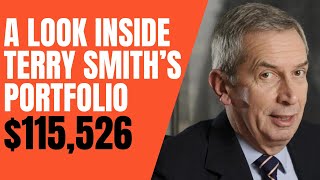
welcome back to another video I hope you're having a wonderful day. So in today's video we're looking at Terry Smith. Terry Smith is a fund manager based in the United Kingdom. He is a super investor who manages a lot of money, and one thing I like about this guy is that he has a very simple strategy.
What I would like to do today is look at his strategy, give you five companies in his portfolio that are Sharia compliant, and then share the rest of the portfolio. The reason I like looking at these super investors is that we are new to investing and don't have a lot of money, while these guys manage a lot of money and try to find quality companies. That's his strategy: find quality companies. So first I'll go over his strategy, then look at the five stocks, and then show you his entire portfolio and check how much of it is Sharia compliant among the 15 or 20 holdings.
Before we do that, as always, please give the video a like. It actually takes a lot of time. In fact, I recorded this video yesterday night and was about to post it this morning, and then I realized the sound was absolutely terrible. I think it's better now, but it might not be perfect, so I apologize if it's all over the place. I'm trying to figure out what's wrong with the mic, I think it's something to do with the computer or the mic, and I'll fix it today. But this research takes a lot of time, to be honest, so it would be really nice if you could just give the video a like. It doesn't cost you anything. Something that costs you a little bit is joining us on the Patreon account, where you get access to all the trackers we have, the Sharia compliant investment ebook, and so on. That really helps the channel, so if you can do that it would be really appreciated.
Terry Smith is basically from the United Kingdom. He runs a company called Fundsmith, and he manages quite a lot of money. So let me go over his strategy first. It is very simple. He says investors should hold a high-quality, concentrated portfolio of 20 to 30 resilient global growth companies, held for the long term. That's amazing. That's what I'm trying to do too: find high-quality companies, 20 to 30 different ones. Global growth companies. Maybe it's not all global, but it is mainly focused on the US. And hold them for the long term.
This is really difficult, especially if you're a new investor. You find a company, and before you know it, it goes down two, three, four percent. It's hard to keep holding that company and keep adding to it. So holding for the long term is really the hardest part. That psychology of just forgetting about it and buying and forgetting is actually very hard.
He talks about three very simple things: buy good companies, and he has metrics he uses to identify them. One of those is return on invested capital. He says don't overpay, and this is really important to us, because there are so many companies out there, for example the Nvidias, where you see the price going up three, four, five percent every single day, and you think, okay, I'm going to buy this company regardless of what it's trading at right now. A lot of us jump on the bandwagon and later lose a lot of money. So don't overpay, because sometimes you're never going to get that money back. I've had companies that I bought when they were really expensive and lost quite a bit of money. I've bought companies when they were really cheap and made lots of money. So it's important to think about that.
And do nothing. Again, that goes back to the long term. This doesn't mean you shouldn't do anything at all, but it is important to ignore the noise. If you want to rebalance your portfolio, that's fine. If there's a stock you no longer believe in, get rid of it. But when the stock market is going down and people ask whether this is going to be a recession, don't listen to the news, do nothing, and don't worry about these things.
A couple more things he talks about: investing in a business with tangible assets, companies with a product we can touch and feel and understand. Invest in a business with growth potential, obviously. We want companies whose revenue is growing. If a company isn't growing its revenues or its cash flows, that won't be good for us, because what you want is a quality company that makes money by selling products and services. Some of that money then goes into cash flow, and that cash flow is used to pay dividends, buy back their own shares, reinvest in the business, pay off debt, and so on. So it's really important to invest in a business that requires no significant leverage to generate returns, one that doesn't run to the bank every time it wants to grow. They grow organically, using their own money and their own cash. He also says to avoid businesses that are vulnerable to technological innovation. There are many companies that lost their business completely because someone came up with software that let people do the same thing for much less, wiping that company out. And finally, invest for the long term.
So he has these simple things that actually make sense. That's why I like them, because I like simple things and don't want to overcomplicate. That's why I use simple metrics when I look at the fundamentals of a business. So: keep it simple. Buy quality companies, don't overpay, and hold them for a long time. If you can do that, he says, you'll be successful.
Now let's look at the five companies he owns. First is IDEXX Laboratories. It has a market cap of about 116.5 billion dollars, a narrow economic moat, and right now trades around 219 dollars per share. It doesn't pay dividends, or the yield is about 1.3 percent with a payout ratio of 29 percent, and the latest dividend increase was about 7 percent. The five-year growth rate is 10 percent, and they have only increased the dividend for about two years, so they are still quite new on the dividend side. Dividend safety is 95 percent. Profit margin is about 18 percent, return on equity about 19 percent, and return on invested capital 13.8 percent. Return on invested capital is something Terry Smith looks at all the time, so it's very important. Free cash flow is about 500 million dollars, which is not bad for a company this size. Total return over the last 10 years is about 15 percent, and next year they expect nine percent growth, then 12 percent after that. At the time of recording, the fair value is around 217 dollars per share, so the price is roughly at its long-run value.
Next is Mastercard, with a market cap of 370 billion dollars and a wide economic moat. Before I continue, Mastercard and Visa are both Sharia compliant. They are not banks. They don't lend money or charge interest. Their job is to provide the technology behind the cards we use and make sure transactions happen. They work behind the scenes and facilitate the transactions. As you can see, their dividend is very small. The payout ratio is only 20 percent, the latest increase was 16.5 percent, the five-year growth rate is 18 percent, and they have a dividend streak of 11 years. The yield is about 0.6 percent. Dividend safety is 99 percent, the highest you can get. Profit margin is 43 percent, return on equity 174 percent, and return on invested capital 15.1 percent. This may be why he invests in this company. Free cash flow is about five billion dollars, and total return over the last 10 years is about 20 percent. Next year earnings are expected to grow about 20 percent, then 17 percent each year after that. At the time of recording, the fair value is around 389 dollars per share.
The next one is Visa, which he also owns, which is interesting. Its market cap is 483 billion dollars, very similar to Mastercard in terms of business and dividends. The payout ratio is quite similar, and the latest increase was about 20 percent, which gives Visa the upper hand on that. The five-year growth rate is 18 percent for both, and Visa has increased its dividend for 14 years. It pays slightly less, about 1.80 per share. Dividend safety is 99 percent, profit margin 51 percent, return on equity 45 percent, and return on invested capital 228 percent. Free cash flow is about 18 billion dollars, and total return over the last 10 years is about 19 percent. Next year earnings are expected to grow about 19 percent, then about 13.5 percent almost every year for the following five years, according to Yahoo analysts. At the time of recording, the fair value is around 241 dollars per share.
Next is Procter & Gamble. He bought this one heavily this quarter, which I'll show you in a second. It's one of the biggest companies out there, with a market cap of 359 billion dollars and a wide economic moat. It trades around 152 dollars per share, with a dividend yield of about 2.4 percent and a payout ratio of 62 percent. That's a bit high for my liking. It means they're using 62 percent of their net income to pay these dividends, so I'm hoping they can bring that down in the next few quarters. The latest increase was about three percent, the five-year growth rate six percent, and the dividend streak is 67 years. Look at that: they have increased their dividend for 67 years in a row, through recessions and wars, every single year. This is why I like this type of business. They are very predictable, they operate in a stable economic environment, and you can rely on that dividend. They give you about 3.76 per share. Dividend safety is 99 percent, profit margin 17.5 percent, return on equity 32 percent, and return on invested capital 18 percent. They have about 13 billion dollars in the bank right now. Total return over the last 10 years is about nine percent. Next year earnings are expected to grow eight percent, then six percent after that. At the time of recording, the fair value is around 136 dollars per share.
The last one is Automatic Data Processing (ADP), with a market cap of 103 billion dollars and a wide economic moat. It trades around 251 dollars per share, and the dividend yield is just below 1.2 percent with a payout ratio of about 58 percent. The latest increase was about 20 percent, which is huge, and the five-year growth rate is 14 percent. The dividend streak is 49 years. That means this company will become a Dividend King if it increases its dividend one more year. Dividend Kings are companies that have increased their dividends for 50 years or more, and Dividend Aristocrats have done so for 25 years or more. Contenders are companies with 10 or more years of annual increases. For every share you own, you get about five dollars. Dividend safety is 97 percent, profit margin almost 19 percent, return on equity 106 percent, and return on invested capital 53 percent. Free cash flow is about 3.64 billion dollars. Total return over the last 10 years is about 15 percent. Next year earnings are expected to grow 10 percent, then 14 percent after that, then three percent. At the time of recording, the fair value is around 244 dollars per share. Given how the market is moving, I'm hoping we might see a drop in the next couple of weeks, since it looks like we're heading into a bearish kind of market. So I'm expecting a bit of a pullback in this company, and hopefully I can add a few more shares then.
Those are the five companies I wanted to share, and all of them are Sharia compliant. As you can see, there are no issues there. Please check the full video for the detailed compliance breakdown.
Now let's look at his entire portfolio. The most recent report, the Q2 report, shows he has added to several positions. He added more Procter & Gamble, more Mastercard, and Visa, plus a few other companies. It was interesting to see that he added to Stryker, because I thought Stryker was really expensive. To be honest, Procter & Gamble is probably cheaper than Stryker. Stryker is quite similar to Medtronic, as they sell medical equipment. He also reduced a little of several other holdings, including Alphabet, Microsoft, Meta, Pepsi, and Nike, and he reduced Automatic Data Processing a bit. I don't blame him for trimming, because these companies have gone up quite a bit. He just sold a tiny bit of these and bought more of the others, which is very interesting. I'll put the portfolio link in the description if you want to check it yourself.
He also holds a company whose stock has gone down quite a bit. I'm not sure why he still holds it, since he probably bought it a long time ago and it's still up quite a bit overall, so he may have taken some profit. Let me look at Stryker, since I'm interested in it. According to Morningstar, it's about 28 percent overvalued. According to Seeking Alpha, there's about 13 percent upside according to Wall Street analysts, but Seeking Alpha analysts say it's not a buy right now, it's a hold. Consensus also sees it as a hold, so valuation is quite rich for that company.
So there you have it: the five companies I wanted to share, and the strategy of this guy, which I think is really important to think about. Buy good companies, don't overpay, do nothing, and hold on to your investments. To be transparent, I don't own Automatic Data Processing. I own 13 shares. What else do I own? I own companies like Microsoft, which I've just mentioned. I've talked about Nike a little, and Procter & Gamble is one of the companies we looked at, and I do own that one. I think I also own Visa. Those are basically the three companies I own that we talked about today in more detail.
I hope you're having a wonderful day. If you're still here, give the video a like, subscribe to the channel, let me know if you have any questions, and definitely join us in the Discord. It genuinely helps the channel. Have a wonderful day, assalamualaikum.



Comments 0