
저자: NourielRoubini · 외국인
요약 보기
사회보장제도 재정 악화 우려와 개혁 필요성(연금 개시연령 상향·payroll tax 인상·급여 삭감 중 조합). 주식시장 투자 기반 재정 방안(Kaine-Cassidy안)에는 회의적, 근본 해법은 아님. AI로 장기 실업 확대 전망 속 보편적 기본소득 필요 주장. AI 혁명으로 성장률이 2→4%(2030년대 말), 2040년 6~10% 가능성 언급하나 장기 낙관. 암호화폐는 화폐·자산 요건을 못 갖춘 거품/폰지로 비판, 본인은 장기 분산투자·매매 자제 강조.
다듬은 글
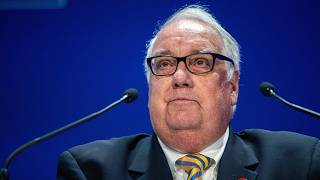
Bloomberg Audio studios, podcasts, radio, news. Norel Roubini is not a fiction. He is a senior economic strategist at Hudson Bay Capital who barely describes his contributions to the Clinton administration, his years of service at New York University, and the books that continue to come out . Regarding one of them, no complaints about aging.
Okay, that's fine. And we...we... we'll look into it. I want to talk about this in a minute. Noral, welcome to the show. Ted Lou was there recently. What's the problem with Social Security? Do we really have to risk losing our Social Security check in the 2030s? Well, we know that the trust fund is going to start running out of money, and so whoever becomes president after this administration in 2028, he or she is going to have to decide together, in a partisan way, what to do with it.
You can, how to say, increase the retirement age, you can increase payroll taxes, you can cut benefits, you can do a combination of all of these, but we definitely have to do something about it. It just popped into my head. He was not selected by the task force to be Walsh's chairman. What an oversight that was.
Let's move on to Nora Roubini, it seems , four years ago. No complaints about aging. In 1960, for every retiree and disabled worker in these United States, there were five active workers . Belt’s ratio reached 3:1 in 2009, and 2:1 in four years. Instead of moving forward, we jumped out of Fortune magazine in 2022 .
So, time is running out. I mean, we're moving on . Do you feel like politicians understand what will happen on the first Wednesday in November 2028 when we start to really fix this? Well, you know, politicians always put things off until something becomes critical. They prefer to avoid this. And, as we know, Social Security has long been the third rail of American politics.
So we will have to deal with this as we did a few decades ago, by creating a commission that was then led by Alan Greenspan. Someone different this time, and they'll come up with clever ideas. We must raise the retirement age. We have to increase payroll taxes , or corporations, uh, winners, pay for workers, or we have to cut some benefits.
So any combination of these things has to happen at some point. Eric Baltinis just pointed out to me that Senator Tim Kaine, Democrat of Virginia, and Senator Bill Cassidy, Republican of Louisiana, have proposed a plan to save Social Security by borrowing a trillion and a half dollars to invest in the stock market, which will grow over 75 years to pay future benefits.
Does this sound like something that could work, or is this some kind of madness? Well, there have been some ideas in the past about privatizing Social Security, without the quotes. And in countries that have sovereign wealth funds, because they have budget surpluses and current account surpluses that can accumulate net foreign assets, like Norway does, like the Gulf countries , they do it to create something like a buffer for the future.
The problem with the US is that we have a budget deficit and a large current account deficit. So if you borrow more to invest in the stock market, yes, you get that margin , some profit, because the return on the stock market will be higher than what you pay for that loan, but that's a trick. Eventually, you'll have to do something else.
This will not solve the problem. This is just one step in one direction, but it won't be enough. OK? Not a solution. Meanwhile, inflation prevents everyone from implementing their best plans. Um, you look at the rising prices of senior care , like home care. Because of immigration restrictions, it is outpacing, well outpacing, the rise in the cost of college.
You can see it. Although, of course, the absolute costs of each of them are comparing apples to oranges. Seriously, will Gen Xers and millennials work until they're 90 because we need to pay for six-figure college tuition and take care of our parents 24/7? Well, in principle, yes. The problem is that with artificial intelligence, we will eventually have long-term permanent unemployment in the technology industry.
This will happen slowly, but over the next 20 years. So even if the retirement age is raised, the problem will be that a significant portion of the population will be replaced by artificial intelligence and robots over the next 20-25 years. So raising the retirement age will not be the solution. Uh, it's true that with higher potential growth this ratio tends to go down because it's debt to GDP.
So our financial situation is not as bad as it would be in a situation where growth is lower. But at some point we will have to do something. But ultimately we need some form of universal basic income for everyone while they work and after they retire. And we are already on our way to this. One evening in Davos, you and I were sitting in a bar, a wonderful old German bar.
Three seats away from us sat a civil servant who was not participating but listening. And you formulated 070809. Can you use 089 or, frankly, 20201 as an analogy for this rampage that we have in the stock market right now? Well, I'm becoming more optimistic. Of course, there is fraud. There will be excesses.
But I think this AI revolution is the most important in human history in terms of technological innovation. But you just told us that we would lose all our jobs . Yeah, but I think growth will increase from two to four by the end of the decade. And by 2040 it will be 6% or 10 % by 2050, because we will reach the UAI.
Then, by doubling growth every 5 years at 10%, you can tax the winner, redistributing everyone among everyone else and making everyone's lives better. So that will be a factor, we will either have open distribution, meaning universal basic income, or we will have it exante exantante, meaning some form of socialism.
Essentially, the government will take on a certain share of the big tech firms, as they are already willing to do 5-10% of it. We create a sovereign wealth fund in this way and create Marxist socialism. We are already actually moving in this direction. Okay, that's a very bleak picture you're painting here, and it sounds plausible, as does your doctor.
Death, no, it is not looming. He is optimistic, with 10% growth and machines doing all the work, we don't need to work. Only in a world of scarcity is the dignity of life grounded. We should...we should go on a break, stay in Argentina or Spain. I support Argentina because there are a lot of Italians in Argentina, and Italy doesn't fit.
I'm curious. Dr. Roubini, do you practice what you teach? That is, do you know all these economic theories inside and out? Do you understand why everything happens the way it does? As an individual, are you managing your finances accordingly ? Is there an element of irrational behavior in your approach to your own finances?
I am quite rational. I have never traded in my life . I have never bought any individual securities. I invest for the long term . I have a diversified portfolio consisting mostly of stocks. If everything went down in a serious recession, I would either move some of it into liquid assets, etc. But I think most people are not experienced investors.
They should just buy and hold until they retire, not day trading, Mimi stocks, cryptocurrency, or other things that lead to losses. So you really like to buy and hold. It's like you don't touch it at all. Absolutely. I've already had 20 seconds in my ear. Talk about cryptocurrency. Young people want to know about cryptocurrency.
We love cryptocurrency so much. 120 to 60. Will it be up to 30? Well , most likely, yes. Most likely, yes. I mean, really, the thing is, cryptocurrency is not cryptocurrency. It is not a means of payment. They are not a unit of account. They are not a stable means of savings. They are not the only numerator.
So calling them cryptocurrency is actually wrong. Whatever they are, they are not really an asset or a currency. It's mostly a bubble, a Ponzi scheme. Paul was sharply critical this week . Oh, he was harshly critical of a lot of things. Was on the verge of Rubini. Good. Dr. Norel Roubini, thank you very much for joining us today.
Thank you. He is, of course, a senior economic strategist at Hudson Bay Capital.


Comments 0