저자: HamishHodder · 외국인
요약 보기
결론: 채널 주인은 마이클 버리의 단기 하락 예측(S&P500 추가 50% 하락 가능성)을 소개하되, 자신은 단기 시장 예측을 하지 않으며 좋은 기업을 장기 보유하는 전략을 따른다고 밝힘. 버리 발언 요약: 2022년 상반기 기준 물가조정 S&P500은 약 25~26%, 나스닥은 34~35%, 비트코인은 64~65% 하락. 추가로 약 50% 하락 가능성을 제시. 주가 구조 설명: 주가 = 주당순이익(EPS) × 주가수익비율(PER). 현재 S&P500 PER은 약 37에서 19로 축소, 이는 PER이 절반 가까이 줄어든 것이며 이익이 그대로였다면 시장은 약 50% 하락했을 것이라는 설명. 버리의 이익 감소(earnings compression) 예측: 현재 하락이 절반 정도 진행됐다고 보며, 인플레이션, 공급망 병목, 높은 임금, 금리 상승에 따른 자금조달 비용 증가로 기업 이익이 크게 줄어들 것으로 전망. 이익 감소와 PER이 장기 평균(14~15) 수준까지 낮아지면 S&P500은 추가 하락 가능. 채널 주인의 반론: 버리 시나리오는 가능하지만 반대 결과도 가능. 인플레 둔화와 연준 긴축 종료 시 이익이 줄어도 PER이 확장되어 시장이 반등할 수 있음. 어느 쪽이든 예측 불가라는 입장. 장기 관점: 단기 거시 충격은 부채 의존도가 높거나 적자 기업, 마진이 낮은 기업에 특히 치명적. 자기자본으로 버틸 수 있는 우량 기업은 장기적으로 영향이 적음. 투자 원칙: 주가 가격 = 기업 미래 현금흐름 대비 지불 가격이라는 관점. 시장 가격은 종종 비이성적으로 움직이므로 저가에 우량주를 더 살 기회로 활용. 단기 시장 예측에는 관여하지 않고 좋은 기업을 보유. 결론 정리: 버리의 하락 전망은 근거가 있으나 확정 아님. 채널 주인은 방향 예측을 하지 않으며, 우량 기업을 싸게 살 수 있는 기회로 활용하는 장기 투자 입장을 강조.
다듬은 글
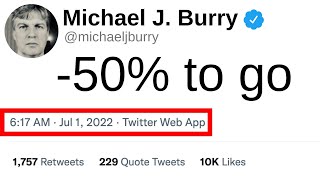
michael brewery is the gift that keeps on giving this week he continued his twitter escapade where he shared why he believes the stock market will fall another 50 from here that prediction would put the s p 500 down about 65 in total from its recent peak and the nasdaq composite of tech related companies would be down almost 70 and hey i know what you're thinking here's just another alarmist video aimed at drumming up fear and generating clicks but that couldn't be further from the truth today i am going to be breaking down michael brewery's latest tweets where he does make short-term predictions however i'm also going to be demonstrating how i invest without caring or needing to care about what happens in the short term so we can sit back and watch the economic fireworks knowing our portfolios are safe over the long term last video i spoke about how 92 percent of you guys are not subscribed and since then a bunch of you have jumped on board so many so that as of today only 96 of you are not subscribed that's about 60 000 people just yesterday that watch my content that are not subscribed if that's you then consider hitting that red subscribe button below this video and helping me get one step closer to receiving my 100 000 subscriber award which will be delivered personally to me by the youtube ceo or something like that so let's start this video straight away with the tweet that you came here for this was a tweet that michael brewery posted on the first of july he said adjusted for inflation 2022 first half s p 500 is down 25 to 26 and the nasdaq is down 34 to 35 bitcoin is down 64 to 65 that was multiple compression next up earnings compression so maybe halfway there what bori is doing here is describing price as the product of an earnings figure and an earnings multiple which you can think of as two factors that fluctuate over time and cause changes in the price of a stock for example let's say we have a stock that has earnings per share from the last 12 months from last year let's say of 10 so 10 per share in earnings and let's also say it's a business that is likely to grow that earnings figure into the future so people are willing to pay a larger amount than average for that business maybe it has a a multiple in earnings multiple or a price to earnings ratio of 25 then the price of that business would be the 10 in earnings multiplied by the earnings multiple of 25 which would be 250 per share and that stock price of 250 dollars can be influenced by either of those two factors changing by earnings going up or down of course if earnings goes down and the multiple stays the same the price will be lower and vice versa is true or earnings could stay the same and the multiple could change and that would also impact the price of the business and as i alluded to future projections of what the earnings growth for that business is likely to be plays a massive role in what multiple that business has because people are willing to pay a larger multiple on current earnings if future earnings are expected to be much bigger than current earnings but it's also influenced significantly by another factor and that is what interest rates are doing and that's because the higher that the federal funds rate goes the higher that rates on bonds on u.s bonds go the higher that rates go on corporate bonds and therefore the higher return that investors demand on stocks and saying that you demand a higher return on a stock is just another way of saying that you're willing to pay a smaller earnings multiple on the business's current earnings and if we look at the s p 500 multiple or the price to earnings ratio in other words over time you can see that it does fluctuate quite dramatically over any you know 10 20 year period but what we can also see is that within all of these smaller cycles there's a clear upward trend since the 1980s and that's because since the 1980s and until recently interest rates have been going down so as interest rates on the federal funds rate goes down interest rates on all risky assets come down and that essentially means they are relatively less attractive to stocks and people are willing to pay more on earnings for those businesses hence a higher s p 500 p e ratio or earnings multiple as interest rates go down over the long term however that trend has now shifted since much of this year and likely to continue interest rates have been rising and if we go back to the s p 500 earnings multiple we can see it's caused the multiple to shrink from 37 all the way down to 19.
that's a halving in the earnings multiple so in other words if the earnings of the businesses in the s p 500 had not changed over that time the stock market would be down 50 percent because if earnings didn't change but the multiple people were willing to pay went half then the price of those businesses would also be half the only reason that the s p 500 isn't down 50 percent from its peak already is because the earnings of the s p 500 businesses has increased during that time but bori believes that this is about to change he says next up is earnings compression and since he says we're only about halfway there in terms of the decline he's expecting that earnings are going to drop substantially and given the economic environment that the us but also other parts of the world are in right now it's not really a crazy prediction to think that in the short term the s p 500 or just businesses in general could very well on average see a decline in their earnings i mean just to name a few we of course have rampant and rapidly increasing inflation and that puts a lot of pressure on businesses which will try to pass on some of the higher costs on the supply side to customers in in the in their prices and that's obviously what we're seeing at the consumer level and the cpi data for inflation but they're not going to be able to in most cases pass on all of the costs without customers reciprocating by switching to alternative products and that inflation is being driven in part from supply shocks from supply bottlenecks shipping bottlenecks there's a very very tight labor market at the moment causing labor to become more expensive for businesses so these are very very difficult circumstances for businesses to operate within and to add on top of all of that it's a rising interest rate environment which means that the cost to get debt to get additional capital to invest or to keep a business functioning is getting more and more expensive a big part of the reason why businesses are able to grow their earnings in a low interest rate environment is that they're able to access debt out of or access capital really at a very very low price and they can use that to invest and grow their earnings but in that environment where interest rates are going up that equation changes they may not be able to grow their earnings with this access to additional capital in the same way that they could before so essentially if earnings decline and the earnings multiple or the price to earnings ratio of the s p 500 stays at 19 or even goes lower towards the long term historical average of about 14 or 15 then the s p 500 would continue to fall in the short term so with this prediction from michael bury am i selling all of my stocks moving into cash and waiting for this big 50 you know 30 40 50 percent drop so that i can invest more money into the market absolutely not and the reason why is because i don't invest based on predictions of what consumer behavior or business behavior or economic the environment is going to do in the short term and while in this video i've laid out how it's entirely possible and reasonable to reach the conclusion that what brewery says could happen it's also very easy to reach to the conclusion that what he says may not happen it's also entirely possible that even if corporate earnings did decline if this was met at the same time as a slowdown in inflation and therefore a slowdown in monetary tightening and the federal reserve may be changing course if that was to happen it would very likely ignite confidence in the market and multiples could actually expand during a period where earnings are declining and just to be clear this isn't my prediction i'm not going against bori i'm really not making an opinion about the short term at all all i'm saying is that there is data or there's there's possible outcomes that we can't predict in both directions that could support the market declining significantly further or the market staying where it is for a long time or the market reviving and going up significantly so what do we do do we just sit back and watch all of this unfold out of our control and just hope for the best well kind of actually this short term macro stuff does tend to impact most businesses most businesses are going through hardship at the moment and may very well continue to if the economic environment stays tough but over the long term this short term macro stuff only hurts some types of businesses and those are typically businesses as a generalization that are reliant on accessing debt and equity markets for capital to survive so thinking of businesses that have high debt already or maybe they're a business that's not profitable so they're burning more cash than they're generating so they need to access access more debt or loans or maybe they need to issue shares in order to raise capital and continue to fund their operations or maybe they are a business that is profitable but they have relatively low margins and in an event of a 20 30 decline in revenue in the short term they will go unprofitable and then need to access debt in order to survive these types of businesses can be affected in the long term by short-term macro because if they can't get access to the capital that they need to survive through the short term period then they won't be around in the long term and it's not just a matter of waiting it out there might not be a business on the other side of this short term period uh for you to own and on the other side of it the short-term macro stuff has pretty much no long-term implications for businesses that are self-sufficient that can go through a one two three year tough period where sales are down and maybe their costs are a little bit higher they can survive through that period it's going to have very very little impact on their business over the long term and then the bottom line really is how much am i paying for this business relative to the cash that it can produce in the future and i've spoken about this simple example if you're buying a house and you're confident that you got a good value for that house you wouldn't care if someone tried to buy your house for less and that's really what the stock market is it's this marketplace where people are bidding for stocks and to be frank a lot of the time people are not thinking rationally especially during terrible economic circumstances people are bidding with their emotions a lot of the time and that means that sometimes you will own businesses and people will be willing to sell or buy those businesses or let's say sell those businesses for far less than they're worth and that's obviously irrational but it does happen and it means you can't get sucked into the idea of trying to predict what stock prices will do and stop being fearful when a great company you own has a stock price that's gone down in the short term i like watching michael bury and hearing his predictions and observing what's happening in the economy because i'm interested by it but it's in no way influencing my investment decisions i own great companies i'm looking to own more of those great companies at better prices if the market offers it to me but i am making no predictions about what the market will do in the future i really at least in the short term i really don't care i just own great businesses and i know that they will be worth much more in the future than they are now because i've done my research into them so i hope you guys enjoyed this video and i'd love to hear your thoughts down in the comment section as i mentioned at the beginning if you haven't subscribed i would love it if you could hit that subscribe button and help me get to my goal of reaching 100 000 subscribers but with that said hope you guys have a great day i'll see you in the next one


Comments 0