
저자: BillGross · 외국인
요약 보기
결론: 빌 그로스는 트럼프 재정 부양의 단기 효과는 인정하나 장기 실질 GDP는 2% 수준에 머물 것이라 보며, 미국채 2.6% 장기 추세선 돌파 여부를 핵심 변곡점으로 본다. 고용·경제 전망: 고용보고서는 일자리 증가는 강하나 임금 전월비 -0.2%, 연율 2.5%로 둔화되어 엇갈린 결과다. 임금 둔화는 기업이익에는 좋지만 소비 둔화로 이어질 수 있다고 우려한다. 실질 GDP 전망: 트럼프 행정부의 3~4% 성장 약속에 회의적이다. 노동력 증가율이 1% 미만이라 생산성이 핵심이며, 설비투자가 부진해 생산성도 약할 것으로 본다. 장기적으로 2% 성장권에 머문다고 본다. 단기(1~2년)로는 성장 낙관론자의 주장을 일부 인정한다. 재정정책 영향: 재정 부양이 1~2조 달러 규모면 향후 수년간 성장률을 약 0.5%p 끌어올릴 수 있다고 본다. 법인세 인하로 단기 부양 가능성이 있다. 단기적으로 주식에는 긍정적, 인플레이션과 채권 금리 상승에는 긍정적 요인이라고 본다. 달러: 최근 달러 강세는 연준이 ECB·일본은행보다 앞서 긴축한 데 따른 것이나, 유럽·일본 성장률이 2% 근처로 올라오며 달러 강세가 지속된다고 가정하지 않는다. 새로운 플라자 합의 같은 달러 억제 상황은 보지 않는다. 채권·금리: ECB·일본은행·영란은행이 월 1,500억 달러 규모로 여전히 양적완화를 하고 있어 저금리 환경이 유지되며, 미국채와 독일국채·일본국채 간 차익거래(약 200bp 이상)가 가능하다고 본다. 그러나 이를 선호하지는 않는다고 밝힌다. 자신의 펀드는 듀레이션 0에 가깝고 독일·일본 채권과의 차익거래에 집중한다. 리스크: 미국 10년물 금리가 장기 추세선인 2.6%를 상향 돌파하고 인플레이션과 금리가 함께 오르면 채권 약세장(bear market)으로 본다. 2.6%는 1984년 이후 하락 추세선을 7~9번 건드린 핵심 저항선이다. 출연자 전망 요약: 미국 실질 GDP 장기 2%, 단기 1~2년 3% 가능성, 장기 금리는 2.6% 돌파 시 약세장 전환 우려.
다듬은 글
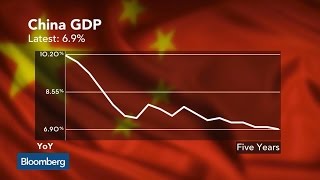
bill this is the final jobs report for President Obama I would suggest you want to step forward this is a constructive jobs report for president Trump as well yes and I I think a little schizophrenic as you just pointed out in the last minute or so U you know jobs grow grow strong but wages Revis down by 0.2% and instead of 2.7% annual now 2.5 I I suppose that's good for corporate profits to keep wages down but ultimately we know that uh it's consumers and consumption that drives the economy and if they don't earn enough money or if their money is only growing at 2.5% then that's a slow growth economy so sort of schizophrenic report and I can see how markets might interpret it one way or the other I want to bring this right over build to the bigger picture this morning again Futures Advanced down Futures up 95 not near the 20,000 level but I like what Bill said there about a schizophrenic tape Bill if we get a reflation from where you it is it a reflation that gives us an inflation boost or can we actually hope that the real economy will boost with the Trump stimulus well sure and that's the hope that real GDP which is now around 2% and uh actually for the quarter with the Atlanta fed above 3% but uh the hope is that we're in a 3 to 4% real GDP economy that was the promise from the Trump Administration that's the Hope in terms of fiscal policy and stimulation deregulation and so on that we look forward to I remain skeptical I guess I I remain you know of the of the camp that uh the productivity is the key to real GDP growth we know labor force growth is less than 1% so it's all productivity and what produces productivity investment investment hasn't been there as you've discussed for the past 30 minutes and to the extent that it remains anemic then productivity will remain anemic and I think we're stuck in a 2% real GDP uh world no matter what the fiscal stimulation and no matter what the deregulation one of the exogenous shocks and folks we have to remind ourselves that Mr gross for decades has had an international perspective where dollar Dynamics really are are there a key conversation bill this week was with Barry iking green of the univers University of California at Berkeley and Professor iing Green was adamant that Mr Trump will lead us towards dollar strength do you show up at every every day at Janice just assuming dollar strength no I mean the dollars had a good rally and certainly against some emerging countries like the Mexican peso a significant one uh so I don't assume continuing uh continuing dollar strength unless you know the FED stays ahead of the ECB or the FED stays ahead of the boj and you know at the moment that's not the case both those central banks are still uh you know stuck on quantitative easing of significant proportions and that's led to the dollar rally and that's led to Stronger growth in the United States but um you know I I think there's some catchup coming uh into the equation from Japan and from euroland their growth rates are close to 2% as well and so yeah dollar growth and dollar appreciation is certainly not assumed I don't think we have a a new Plaza Accord ahead of us in which the dollar the strong dollar threatens the global economy and we have to take some significant measures I don't see that bill gross let me frame uh what keeps surveillance going which is two perspectives we' got your caution with a 2% GDP Peter Hooper the esteemed Economist at Deutsche Bank Securities would suggest a more optimistic Tech what is missing from The Optimist what are they missing about their belief that we do get good if not great economic growth and by definition a higher interest rate regime how will that not happen well I think they have a point you know if if you have a strong fiscal program we don't know what it is but if it's a trillion to two trillion over 10 years you know that that's up plus half a percent over the next several years there's there's no doubt about that and with the corporate taxes being cut there's the potential for a a near-term stimulus I'm I'm talking about real GDP over a relatively longer period of time 3 to five to to 10 years and I think we're stuck in this 2% Zone but uh yeah the the short-term Optimus uh you know I'll grant them three uh perhaps over the next year or two and that's a that's a positive for Equity markets but and and that's a positive uh as well for higher inflation and a positive for higher bond yields and uh I can talk about that in a second well we'll talk about that but you know the inflation the idea of of higher bond yields but critically here I know Bill in your office at Janice you've got a Bloomberg terminal it's a vanity terminal you barely look at it you're still wedded to your Monroe Trader the fact is you're still back looking at the most basic calculator out there does your Monroe Trader tell you you can buy bonds right now whether full faith in credit or foreign or corporate yeah I I think to a certain extent and and the reason is Tom is that other central banks are buying bonds you know that the US went off the Habit so to speak the QE habit about two years ago but the ECB the boj the you know the bank of England are still in there pluging at 150 billion a month that's a that's a lot of money that's basically uh you know1 to2 trillion dollar a year going into the bond market and that provides tremendous support for instance in terms of Arbitrage you can move into treasuries at 245 you know from bonds at 45 basis points and pick up 200 currency adjusted you can even pick up you know 50 to 60 basis points from BNS to treasury same thing with jgbs at the basically 10 to 15 basis points huge Arbitrage there even currency adjusted so to the extent that you got 150 billion coming in a month from these central banks basically it means that central banks are still supporting a low interest rate environment I don't like that but you have to recognize it as an investor and and this is very important folks what you just heard from Mr gross there is a classic long short of what you do Nation to Nation given Divergence are you picking up dimes in front of a bulldozzer are you going to get run over by the Trump Administration doing your cute Arbitrage well I think you have to be careful and that's why Janis unconstrained we we've got a zero duration but we've got the Arbitrage between BNS and treasuries I I'm of the persuasion and I think I talked about this uh last month that you know us treasuries at 2.6 or 2.65 is a a critical area and that's a technical type of interpretation but it's a long-term trend line Tom you know going down from 1984 and it's been hit on the upside by 789 times 2.6 is very critical and if we get higher inflation and higher yields relative to 2.6 then we've got a bare Market


Comments 0