
원문 보기
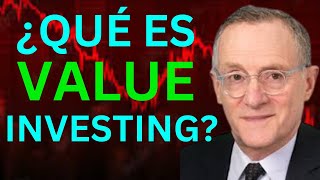
Howard Marx is undoubtedly part of the group of legendary investors. His personal portfolio is worth over $4.2 trillion, and his cumulative return over the last 10 years is 182%. Although the last year hasn't been his best, his ability to assess market sentiment and overcome crises places him among the select group of market leaders.
His written memos analyzing market evolution are so valuable that Warren Buffett himself labels them as required reading for anyone trying to understand what happens in the stock market. Marx is one of the investors who possibly best explains how market cycles work. For him, history repeats itself, and when people are too willing to take risks, periods of excessive optimism are created.
This leads investors to be very keen to put their money to work, and markets are likely to rise excessively. These are bull markets where valuations can reach extremely high levels, and in some cases, excessively bullish markets lead to bubbles, such as... From the years 2000 and 2008, let's review his biography and the most relevant aspects of his investment strategy and philosophy.
Howard Marx was born in 1946 and raised in the Queens borough of New York City. His family is of Jewish origin, and while his education had a significant religious component, it also focused on the study of science and mathematics. From a young age, he showed good academic results and, at just 21 years old, graduated in finance from the University of Pennsylvania in 1967 with a Wharton School distinction.
He also specialized in Japanese studies and continued his education at the University of Chicago, where, at only 23 years old, he earned an MBA in accounting and marketing in 1969, receiving the George Hay Brown Award for his excellent grades. On the personal front, Mark has been married twice; his first marriage ended in a quick divorce, and in his current marriage, he has a son and a stepdaughter with his wife, Nancy.
His professional beginnings were in 1969 at Citicorp as an analyst in the equities department, and thanks to his excellent results, he rose rapidly through the ranks. Reaching the position of director of research for the department between 1977 and 1985, he worked as vice president and senior portfolio manager, overseeing the entire fixed-income operation of convertible and high-yield bonds at Citicorp.
In 1980, he was transferred to Los Angeles, where he was in charge of managing high-yield funds at Citibank. The premise that allowed Marx to achieve good returns with the bonds of distressed companies was the assumption that even troubled companies were capable of raising money and were willing to pay sufficient interest to compensate for the risk.
This proved true, resulting in excellent returns for the investors in the funds he managed, compensating for the risks with high profitability. By 1985, he was already recognized in the sector, and the TCW Group decided to hire him to lead the high- yield and convertible securities investment team at this firm.
Marx became recognized as an investor with the ability to achieve high returns with prudent investments and with strong discipline and emotional control to withstand short-term downturns. In this position, his ability to organize a From one of the first debt funds in a struggling financial institution, with the help of Bruce Carsh in 1988, by 1995 he decided to start his own firm called Oak Tree Capital Management, along with Bruce Carsh and other analysts he trusted completely.
Thanks to the strong performance of his funds, Oak Tree achieved excellent client growth from its inception. The products offered to clients specialized in high- yield debt and private equity funds. The firm's growth was such that by 2024 it was one of the largest in the world, managing more than $80 billion in assets.
In 1999, before the dot-com bubble burst, the market was still rising, and Marx wrote in his memoirs a reflection explaining how, upon reading a book published by journalist Edward Chancellor, *Devil Take the Hindmost*, which analyzed the history of speculation from ancient Rome to the 19th-century railroad bubble, Marx explained in his memoirs how he observed too many similarities in the behavior of stocks.
of the technology companies at that time and the old speculative bubbles. Even in January 2000, Marx published a memo to his clients entitled "bubble.com" in which he warned of the risks two months before the bubble burst. In his opinion, internet-related companies were overvalued and there was a potentially speculative environment for investors.
He warned about how people were looking for easy profits by investing in companies where the business model was unclear. After his predictions, the S&P 500 index fell by no less than 46%, and the Nasdaq Composite, which had a greater weighting in the technology sector, fell by no less than 80% between 2004 and 2007.
Again, Marx was right. He wrote repeatedly in his Memoirs that a slowly developing disaster was approaching. He indicated that the Federal Reserve, due to the bursting of the dot-com bubble, had an accommodative monetary policy, leading to fixed income and safe-haven accounts offering very low returns, which led to Many people made investments that seemingly offered better returns, such as housing, which caused prices to rise continuously, leading to the creation of another speculative bubble like the one in 2000.
Another element that allowed Marx to observe how a bubble was forming was the comments of his partner Bruce, who, upon entering his office in 2006, told him that he had seen how an ordinary company managed to raise astronomical sums of money in foolish businesses, a situation that was becoming increasingly common.
Marx's 2007 memo was titled " It's All Good," in which he warned about the market's excessive optimism, which led investors to ignore risks, and predicted that a recession was possibly imminent. Just five months after the publication of this memo, the global financial crisis began, in which banks like Leeman Brothers and Bear Stearns collapsed, dragging down the entire market and causing the S&P 500 to fall by 53%.
At its lowest point in June 2009, Marx later explained that while he did n't know the details of the subprime mortgage problem that caused the crisis, he had a clear understanding of the market's mood, where investors were incredibly irrational and optimistic. But Marx didn't just anticipate the crisis; he took appropriate measures.
Initially, between January 2007 and March 2008, he accumulated $12 billion in cash in a reserve fund to make purchases, starting in September 2008, of debt that was in trouble that year. In his memos, he opined that the world wouldn't end and that, contrary to what he had seen a few months earlier, there was a certain pessimism that led him to invest with the conviction that companies would make money in the future and that they would have value.
He was also certain that buying at those low prices would work in the long term. In 2012, Marx again considered that market psychology was too pessimistic about the future and wrote a memo titled "Yabu." Once again, in his opinion, there was a positive scenario for investment due to market pessimism.
From that year until 2021, the S &P 500 achieved an annual return of no less than 16.5%, one of the best market cycles in history. During the 2020 health crisis, Marx was initially cautious about what might happen, but after the market crashed and panic was evident, Mark was right again. Taking a stance opposite to most, seeing how corporate bonds were being forcibly sold to obtain cash to stay afloat, he realized that the crisis had possibly bottomed out and it was time to buy stocks at bargain prices.
In 2012, his firm, Oak Tre Capital, achieved another success by going public and raising no less than $380 million. In March 2019, Brookfield Asset Management acquired 60.2% of Oak Capital, but Marx and other partners retained 38% of the firm and control of daily operations. Among his important works are " The Most Important Thing: Uncommon Sense for the Thoughtful Investor," published in 2011, and " Master in the Market Cycle: Getting the Odds on Your Side," published in 2018, an excellent work explaining how investors can anticipate market cycles to map and respond appropriately to the different cycles found in the stock markets.
Among his investment strategies, Marx has also made multiple investments in real estate, with properties such as an apartment on Park Avenue in New York City valued at $ 52 million, a property in Amaganset, New York, and a residence in Beverly Hills, California, purchased in 2015 for $23 million. Other properties include a waterfront estate in East Hampton, purchased for $31 million in 2010.
Marx is a Democrat and has even made contributions to various candidates and causes of this party. Due to his recognition, Marx is... A member of the Society of Securities Analysts in New York, and chairman of the investment committee of the Museum of Art and the Royal School of Drawing in London from 2000 to 2010, he was also chairman of the investment board of the Trust Commission.
Among his contributions to the sector and the academic field is the publication of his famous essays on investments, known as memos, in which Marx explains in detail his investment strategies and his vision of the market. These memos are of such high quality that the great Warren Buffett stated that when he saw Howard Marx's memos in his email, they were the first thing he reviewed and read.
Let's now review Howard Marx's investment strategy and philosophy. One of Marx's investment principles is contrarianism, which is considered a second- level thinking approach that involves the ability to manage risks with a deep understanding of market psychology, depending on the cycles. This market philosophy allows him to go against the dominant market trends, buying stocks when others are afraid and identifying the right moments to sell positions when others are buying.
For Marx, greed in periods of euphoria necessitates distancing oneself from the crowd to take a different stance and be able to maintain it. One must dare to be different and be willing to do things that are unpopular and may seem crazy to others. But for this, one must be willing to make mistakes. Marx believed investors should also study history to try to identify market patterns, attempting to take advantage of economic cycles, which are often predictable, even managing to gauge market sentiment.
Although for Marx the future is unknown, studying the past allows one to find analogies to understand market cycles. If the market is understood in the long term, it is possible to grasp the psychology of the market and its cycles, which seemingly appear unpredictable and volatile, even interpreting market movements as phenomena with fairly reliable behaviors.
Marx considered that markets are influenced by and fluctuate between extremes of very negative and excessively positive sentiment, creating opportunities for disciplined investors who have the ability to act without being dominated by these extremes. The emotions that dominate the market are essentially about identifying the emotional cycles of fear and greed that, in most cases, affect the decision-making of most investors.
For Marx, a strong movement in one direction, whether upward or downward, has a high probability of being followed sooner or later by a correction in the opposite direction. The problem is that sometimes markets can remain irrational for longer than expected, in some cases exhausting the patience of some and jeopardizing the solvency of others.
Marx explains how investing can be seen as similar to that of a baseball operator who doesn't call strikes; they can let pitches go by and wait for the right one to swing hard, ignoring those who yell at them for not hitting the balls. Marx also states that an important component for investors is skepticism.
There are many supposed opportunities that are too good to be true and end up being frauds or speculative bubbles. But without forgetting to have intellectual humility, where in a discussion with another person it is possible that they may sometimes be right. One of the aspects The most important thing Marx explains in his memoirs is his investment philosophy, which aims to help people identify their personal risk tolerance in investments and how this factor influences what's known as investment psychology.
Understanding the consequences of a company's results and data is also key, as is evaluating different market cycles. The objective of his investment strategy is to achieve good returns during bull market cycles and minimize losses during bear market cycles by synchronizing buys and sells to have cash available during recessions to make good stock purchases.
Reviewing Marx's main holdings, it's observed that his top positions don't include companies in the technology sector, nor does he hold positions in ETFs indexed to indices like the S& P 500. On the other hand, his main positions are companies that aren't closely followed by the media and major market analysts.
His top position is Torm plc, a company that transports refined gasoline products such as jet fuel, diesel, and naphtha. Tanker trucks. A good part of Marx's dismal results for the past year is due in part to the company losing more than 50% of its stock market value this year. The second position is Chesa Peak Energy Corp., a company dedicated to oil and gas exploration in the United States with conventional and unconventional deposits.
It also has operations in the marketing of natural gas and gas, primarily in the United States. The third position is Garrett Inc., a technology company that provides solutions for the automotive sector, including turbochargers, electrical boosts, and vehicle software. It will be interesting in the future to analyze how Marx's portfolio and strategy navigated the next stock market crisis, which, while we don't know when it will arrive, will happen at some point.
Remember that in the video description you can find the link to the best course to learn technical and fundamental analysis for investing in stocks. You will also find the link to the best platform to buy stocks on the regulated stock exchange in the United States. If you liked the video, give us a like, subscribe to the channel, and share the content.


댓글 0