저자: DanIves/GeneMunster · 외국인
요약 보기
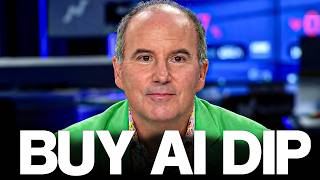
한 줄 결론: 두 출연자 모두 AI 투자 사이클이 아직 초기이며, 최근 기술주 조정은 매수 기회라는 낙관론을 유지한다. [Dan Ives] 중간선거 이후 민주당 상원·하원 장악 시 AI 데이터센터 규제 우려로 기술 섹터에 부정적일 것이라고 인정했다. 다만 이는 정치적 포퓰리즘이며 장기적으로 투자자가 구분할 것이라고 봤다. 미국이 30년 만에 기술 측면에서 중국을 앞서고 있으며 규제가 혁신을 저해한다는 입장이다. 다음 주 하이퍼스케일러 실적이 시장을 안심시킬 것이라고 전망했다. Meta 실적이 다음 주 발표되면 주가가 오를 것이라고 예측했다. 최근 조정은 'SaaS 2.0 아포칼립스'로 보며 매도(exit)보다 매수 기회로 봤다. 미국 증시 시초가가 11월 4일 하이퍼스케일러 전반에서 크게 낮게 출발할 것인지에 대해서는, 블루 웨이브 시 기술 섹터에 부정적이라는 원론적 답변에 그쳤다. [Gene Munster] Meta의 Muse 일일 사용자 약 1,000만명을 AI 확산의 초기 신호로 해석했다. 테슬라 FSD 설치율이 3년 전 약 15%에서 현재 약 70%로 올랐고, 자율주행 주행 비중은 약 1%라고 언급했다. 2025 설비투자(CAPEX): 월가 컨센서스는 전년 대비 +38%로 보며, 실제는 70% 이상일 가능성을 제시했다. 2028년 컨센서스 +11%는 실제로 25~40% 수준일 것으로 봤다. 이 경우 주식이 반드시 좋은 반응을 보일지는 확신하지 못했지만 'probably fine'이라고 답했다. 진행자 질문에 대해 AI 매출 인식 사례는 아직 제한적이며 Meta와 Google 외에는 뚜렷한 성과가 적다고 인정했다. 과잉투자 우려에 대해서는 경쟁 압력보다 각 기업의 신념에 기반한 투자라고 답했다. [Munster 결론] 리더들의 메시지가 일관되므로 AI는 아직 초기 단계이며, 시장의 비관은 과도할 수 있다는 입장. [투자 시사점] 본 요약은 발언 내용 정리이며 투자 권유가 아니다. 설비투자 과잉 및 AI 수익화 지연 리스크는 발언에서도 언급되었다.
다듬은 글
Dan, you mentioned the midterm elections. Is it just about data centers, as dozens of lawmakers spoke out yesterday after an Axios report that AI agents were hacking into people's bank accounts. Most notably, Bernie Sanders says the use of AI should be halted immediately. Is there a greater risk of something happening, given that Democrats are likely to win a majority in the House of Representatives and perhaps even the Senate?
Well, I think the concerns about the midterm elections, and I think maybe this hasn't been talked about as much because we're obviously talking about loans and 10- year bonds, but a lot of the concerns that I see are more political. Because if there's some kind of "blue wave," Democrats are negative about AI, negative about building data centers, like in the case of Holtec or any moratorium that we see, look, it's ongoing.
This is a real threat. Because the reality is this: for every data center that is not built in the US, China wins. So , I think from an investor's perspective, you go from state to state, if something isn't being built in one state, you go to another, but I think right now from an investor's perspective, it's definitely a concern ahead of the election.
So, if there is a "blue tsunami," which some Republicans have told me they are concerned about, do you think we will open significantly lower on all these hyperscalers on November 4th? I will say this: if there is a "blue wave" or a "blue tsunami", it will definitely be negative for the technology sector.
The question now is what will become political populism and what will become reality, and I think eventually investors will be able to distinguish between that. But I think that's exactly the problem right now. Because any regulation or any slowdown in data center construction is what stifles innovation.
The US is ahead of China in technological terms for the first time in 30 years , and this is the main dilemma now. But I believe that next week's hyperscaler earnings reports will reassure the market by showing that we remain the leaders . I need to clarify. Maybe the results of Meta and SpaceX were pretty good, no one expected it.
Yes, and I think the reaction to Meta and SpaceX in the coming weeks and months will be seen more as a buying opportunity than how the market has reacted. I think if Meta reports earnings next week, the stock will go up . I just think it happened at a time when nervousness was present. And right now, look, even taxi drivers in New York are pessimistic about technology.
We're seeing a lot of nervousness, but I view this as the SaaS 2.0 apocalypse, not as a time to, you know, press "exit." Ignore the New York taxi driver. When you become pessimistic, I know it's time to buy. Dan Ives of Yorkville Life. Is the tech stock selloff just a pause or the beginning of a deeper reversal?
We are in touch with Gene Munster, Managing Partner of Deepwater Asset Management . Gene, it's nice to see you. I know you have a habit of saying that we are still in the very early stages of AI development. The market is getting a little nervous about what looks like late-cycle things, at least on the AI capital side.
How do you interpret this? Well, I'm analyzing what we heard this week , and I see it as important context for this big sell-off. We heard from Meta that they have about 10 million daily active users of Muse, and Zuckerberg is building the entire foundation of the company for the next year around that.
This means that something small, in his opinion, will become very big, with billions of users every day in the near future. Of course, we heard about Tesla and FSD today. Autonomy is about 1% of the total miles in ridesharing. The FSD installation rate has increased from about 15% three years ago to 70% today.
Something bigger is happening , but it's still in its infancy . We heard from Jensen today. We heard Jensen at GTC in Berlin, and they talked about the power of physical AI. And of course, we've heard SpaceX and this prediction from Elon that they'll add 10 gigawatts of computing power next year. They will have about three by the end of this year.
So, what do I think about all this? If you consider these leaders competent, then I think it means we are still in the early stages. And specifically what happened, the difference between last week and the last 3 years, are two phenomena: personalized bots and agents using 10-15 times more tokens than a regular chatbot .
And separately—what could happen around physical AI; these two things together are much larger than what we have seen in recent years. So there is a huge gap between what we clearly hear from these companies about the transformational nature and early stage of development, and the willingness of the markets to accept that.
And I think, in the end, the truth will prevail. And I think the truth is that the world is reorienting itself around AI in ways that we can't fully comprehend, that are beyond even the highest current expectations, and these stocks are ultimately a great investment amidst this nervousness, this academic nervousness.
I understand your arguments, Jim. You make a very compelling case, but there's a gap between when we get to, you know, 10 million Muse users, which is a drop in the ocean compared to all the Meta platform users, right ? So, I mean, the potential is there, but it's a very small number. And to get to a billion, which is typically, according to Mark Zuckerberg, the point where you start monetizing.
There is a long road ahead. Meanwhile, the computational costs are very high. So the question is , are you buying stocks with the hope that this transition period will be shorter than we might assume? That this gap will be bridged by the time they move to the monetization stage. You know, I'll answer your question with a question: Do you believe Zuckerberg is competent at predicting how events will unfold ?
I believe that 10 million users is statistically enough data to extrapolate how quickly this will develop. And despite all the talk about these bots, again, very few people use them. I use them, and I can say that it is a real transformation. And finally, the fact that he's willing to say on the call—I forget the exact wording, but something like, the center of gravity of this company in a year's time will be Muse.
I think this shows a level of confidence. If this were in a vacuum, if Zuckerberg said this in a vacuum, and we heard other messages from Elon this week or from Jensen, then we should be concerned. But they all essentially say the same thing . Namely, we have only touched on the topic superficially.
And I understand that this is a cliché, but this is the reality of what is happening. I don't know when the stock sell-off will stop, but I do know that Wall Street expects a 38% increase in capital spending next year. The real figure is likely to be 70% or more. In the 2028 calendar year, Wall Street expects 11%.
The real figure is probably between 25 and 40%. And if that's ultimately the case, I'm not sure stocks will react well to it . I think they'll probably be fine. Gene, I'm not sure we should conclude that Mark Zuckerberg and his fellow CEOs are incompetent, but you can see that all the incentives of capitalism in these circumstances encourage overbuilding, right?
At this moment there is a shortage . Everyone believes that the winner will take the majority or maybe it will be a duopoly, so everyone wants to be the same, and more than one, two or three players claim to be. So I'm just wondering how this will develop further , because if your projections for capital expenditure growth next year come true, the market is already resisting those capital needs.
We spend a lot of time discussing costs. But we don't pay as much attention to thinking about what the potential is here. Eventually, Meta started talking about the importance of commerce, although it didn't give specific numbers. And what other productivity and entertainment applications will there be?
But this is the part we still don't know anything about . What we do know for sure is that the number of very clear examples of AI’s impact on revenue is limited. I think Meta is an example of a company whose growth has been significant over the past few years. Google is also an example, but beyond that there have been many experiments and few significant results.
And I think that's where the gap lies. This is an understanding that I think explains why people are concerned about such costs. To your point: yes, the costs will be high, but don't they ultimately force each other to spend more and more to stay afloat? And the answer is yes, this factor is present.
There is a competitive factor, but it is based on the faith they have. They will not spend money just because their neighbor or competitor is spending. They spend because they have a certain faith. And in the end, that's what will show where it all leads. If they are confident, if they have a good understanding of where the world is heading, then this investment will pay off.
And if they are wrong, then this is the beginning of the end. I think we are still at the very beginning.



Comments 0