저자: Kevin · 외국인
요약 보기
27세에 $5.5M 자산을 만든 과정을 소개. 2008년 무지 상태에서 첫 주택 매수(3.5% 계약금), 임대 전환과 재투자로 순자산을 키움. 부동산 중심 전략을 강조하며 소형 단독주택 매수, 시장가 이하 매입, 아파트 대형 건물의 과대지불 비판. 강의 홍보 포함. 주식·금·비트코인 등 증권 자산에 대한 가격 방향 예측은 없음.
다듬은 글
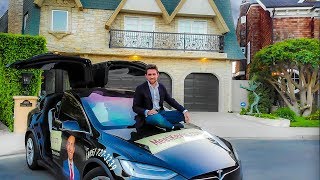
The house behind me is worth about four and a half million dollars. I could buy this house and spend a million renovating it when I'm 27, but I won't. Instead, I'll tell you the story of how I got the money. I just need to change my shirt and remember, see you in Chicago on July 13th. The story begins long before I had even tasted avocado toast.
Oh, and before we get into the video, let's make this very clear. A portfolio of five and a half million dollars means that if the values rise by just 1%, it's as if you've earned $ 55,000 without doing anything. 2%, 3%, you get the idea. It becomes ridiculous. So, people are always worried about, well, I want passive income.
Okay, I want cash flow. Well, you know, I want to be rich, I want to be able to retire and go live on the beach in Mexico or whatever and do nothing. The first thing they need to do is figure out how to build net worth, because once they have it, they can transform all their assets into cash flow quite easily if they aren't already generating a lot of money for them.
In January 2008, just before the biggest financial crisis since the Great Depression, I knew absolutely nothing about, well, capital or real estate and, frankly, not about school either. You see, I went to school, took advanced and honors classes, but ended up being a C and D student and didn't pass a single advanced exam.
Now, one of the reasons I wasn't exactly the best student was because I skipped school to go play The Burning Crusade, Runescape, or Counter-Strike. So, I was basically a truant in high school during my junior year and I decided, "Hmm, what would be a good way to miss more days of school? Oh, you know what?
I'll go on a school trip to Europe." And on that trip, in Paris, France, I met Lauren. You see, I went on the trip from South Florida. Lauren went on the trip from this school. So , after being long- distance for a year, I thought, " Well, I don't have a job. I don't have any money. I'm kind of bad at school.
Um, I might as well try my luck in California and see what happens." At 17, what could possibly go wrong when crossing the country for a girl? Well, this is also the place where one of the first big changes in my life happened and it really helped shape what I am capable of doing now. You see, when I was in Florida, I took all those honors and AP classes, like biology and history and things that I didn't really care about.
I only did it because I thought I had to in order to get into a good university. Well, when I got here I decided, you know what? Just put me in all the easiest classes and I'll study whatever I want, which at that time, especially with the recession, was everything related to finance, economics, money, credit cards , you name it.
Just to understand how so many people were losing so much money and how in my life I could do the opposite. And you see, there were two things I started to learn. I started to realize: "Wow, wait a minute." "There is something very important about credit." So, on my 18th birthday, I didn't have a fancy party.
Instead, I went to Wells Fargo and opened a credit card on my 18th birthday. Besides that, I learned so much about the market and the economy that my economics teacher in the basic college prep class I was taking said, "Hey, Kevin, do you want to get into AP economics?" I said, "No." "I'm going to continue studying what I want to study, not what someone else tells me to study." Now, that didn't exactly help me get into an incredibly prestigious university , but it did help me get into Ventura College.
But right before I started taking classes here, in the summer before I enrolled, I ended up taking my real estate exam to possibly become a real estate agent. Lawrence's family knew about real estate. How difficult could it be to be a real estate agent? The average income is about $54,000 for a real estate agent.
I could probably earn more than the $6,000 I'm making now working part-time at minimum wage. And so, during my first semester at Ventura College, I was standing right here. This was the entrance to my portable classroom for the first class I had in the morning, and that classroom no longer exists. So you can see that this is now a parking lot.
But anyway, I was standing here and I received an email. Oh my God, I officially passed my real estate license exam and I am now a real estate agent. I said, "Wow." I really don't know anything about real estate. I simply stopped selling smoothies. So, what am I going to do now? So, the first thing I did was, you might think, educate myself, and I started to do that, but I bought a car .
I bought a Prius and thought, "You know what? I'm just going to put my face on it." I was always a bit against renting things. I still am today . I simply don't like renting. I like being the owner because in the end it's paid for, it's mine and I don't owe anything to anyone. Now, many people say, "Oh well, then you don't get a new car every 3 years." I don't mind a new car every 3 years at all.
I barely care enough to wash the car. Uh, that's probably not very good for advertising. But it was while I was here at Ventura College that I took my enthusiasm for the market and money and started learning everything I could about real estate and used my car as a way to advertise my services even while parked at Ventura College.
The funny thing about it was that people actually thought I was here teaching at the university, not taking classes. So I said, " Okay, I accept. Sure. Let me help you sell your house." So, while I was in college, I not only started taking on my first real estate clients , but I thought, " Hmm, what's the next best way to start selling real estate?" So, how about owning real estate?
And so, that's where we get to the story of this place. Yes, that house right behind me was actually the first house we made an offer on. The problem was that we knew absolutely nothing about what to do or what to look for. All we did then was search: " Okay, what could we afford?" And in that case, the only thing we could really afford was what we now call a " wedge deal".
In other words, we had to look for places that had horrible kitchens, horrible bathrooms, horrible floors, horrible paint, because that was all we could afford. If the place already had double-paned windows or a newer roof or copper pipes like this place has, well, then that was just a bonus. We just got lucky with that.
So, that's how we had to start, but it also created a lot of fear because this is our first time buying a place and our budget was between $280,000 and $350,000. That was it. We couldn't afford another penny, mainly because Lauren's and my incomes were so insignificant that the lenders told us, "Yeah, you don't qualify for anything." So, when we signed together with my father, we were able to buy this place.
And what was really frustrating was that it seemed like everything was receiving multiple offers. This place even received two cash offers . And we reach a point of frustration where we think, "Wow, are we really going to miss another opportunity?" So , finally, we said, "It doesn't matter." " Let's offer $305,000 for this place that was listed at $287,000." And finally we won.
Well, we thought the challenge was over, but the problem was that we really needed help to qualify for the property. And the way we did it was by asking my father, who was kind enough to sign for us. Except that it made us start thinking about things we had n't originally considered. Like: "What if things go wrong?" "What happens if we can no longer make the payment?" "What would we do?" The first thing we think is: "Okay , if we move and for some reason we can no longer afford it, we'll rent it." So , of course, we ran the numbers .
And thankfully, we realized: "Wow, even with repairs and vacancies, we'd probably be around 2150 and the rent was 2150." At least what we thought we could get on the market. If we needed to sell, we were pretty confident we were getting a good deal, even though it was the first property we'd ever bought.
And if for some reason the market falls, don't say it too loudly, okay? So we figured it wouldn't really matter because we would just keep it. But then, you know, something interesting happened. We moved and that motivated us to work hard to earn more money. And we did it. And so, in one year, we were able to qualify for our own loans, which paved the way for the next.
And you see, the interesting thing is that buying that first property was so overwhelmingly terrifying that I think I got rid of a lifetime of fear. And now I'm excited about real estate. I find that to be very true for almost everyone who has not yet purchased real estate, but who is part of my real estate investment course.
If you don't know it, the link is below. It costs about $250. It also helps you analyze your deals . We receive many people who want to get started and have many questions, many fears, and simply having someone to share those fears with, someone impartial in the situation, is very valuable to many. And now, almost every week someone posts saying, "I'm in escrow ." "I'm getting ready to close." It's so exciting, but I really relate because I went through that same initial fear.
That same "oh my God, the flooring installer just called and says there's asbestos under the old linoleum." And I was like, " Oh, no way." No way. We already have mold. We don't have a kitchen. Now you're telling me there's asbestos? And this is wrong , and that is wrong. All the bad news Lauren and I went through at the beginning of getting into real estate really made us a little desensitized to the idea of bad news in this industry.
And you know, something really crazy came out of that: not only did Lauren and I start getting closer because we were spending all our time making trips to IKEA and Home Depot with U-Hauls to save every damn penny we could by doing the drywall, the electricity, it doesn't matter. Whatever it was, anything I could do to learn is what I did in that first house.
He would do a lot of electrical outlet changes or drywall or whatever , then he would hire a professional and say, "Hey, what did I do wrong?" Just so that he could teach me and I could learn. And what resulted from this was that, after a year of owning this property, I said, "Wait a minute." "This isn't that big of a deal." So that $300,000 house became a $600,000 one.
But, after finishing that renovation, after settling into that first house, guess what I thought next? Well, we need a rental property. If we were able to take a $300,000 house and get it appraised at $450,000 within a year after making repairs, that meant we now had a line of credit on the home's equity and could buy a rental property.
Why not? Now it's just a matter of going and finding the deal. So, it was right here, it was right here where I remember making calls and handing out flyers. I remember leaving flyers at these houses and thinking: I have to find her. I'm going to find a rental business this year. I'm going to make it happen.
I don't know how it's going to happen, but I just feel it. I think I had just seen the movie The Secret and I said, "Sure, if I keep telling myself that, it's bound to happen." And I said, "Okay." So , here's the story of what happened next. Then, while telling myself to keep pushing myself, I made sure everyone knew that I had just bought and renovated properties.
And what did that achieve? Well, it not only let people know that I was interested in buying real estate, but it also showed that I had the confidence to work with those who were also interested. Now, you don't have to be a real estate agent to do these things, but you do need to have some confidence and say, "You know what?" I am a real estate investor.
Saying "I am an investor" took me forever because I thought that to be an investor you had to be, you know , a multimillionaire. That you had to start with 32 units and have $2 million in partnerships and companies to make money in real estate. I thought: You know what? I am not an investor. I'm just a kid buying a house.
That discouraged me a lot, but when I bought that first property and saw what I was able to achieve, with a lot of effort, but a very well-rewarded effort, I was very excited. And look, that's how I ended up on this street. You see, I always told myself that I would only be interested in properties that I myself would be willing to live in.
I would never buy something super cheap or of poor quality where I didn't feel comfortable living. And well, this particular house behind me was for sale. And remember, I used to be a real estate agent, so I decided to hold an open house right here . And while I was making the visit, the neighbor across the street came in.
That neighbor ended up owning this house right here. And she said, " Well, wouldn't it be strange to have two ' For Sale' signs on the same street?" It turns out that not only did she not want to put the property on the market and was willing to sell it to us, but Lauren, my girlfriend at the time, knew the seller.
Ironically, the saleswoman used to work in Lauren's elementary school office and she remembered her because Lauren was getting asthma all the time. And so, our first rental property literally fell into our hands. And I... I do n't know. I mean, part of me thinks: what does it matter, pure coincidence.
Or maybe there's some truth to all that "secret" stuff. But I think it all really started with that willingness to say, "You know what?" It's like we've already covered our worst-case scenarios. Let's get started with the first one and we'll worry about the rest later. There's a reason why my first video that got a decent amount of views on YouTube was about encouraging everyone to get started.
Step one for everyone who just wants to watch 20 seconds is: you have to buy a spot. If you keep watching, you'll learn how and why and all the other tricks I know, who I am and all that. But if you're only going to watch 20 seconds , that's all it lasts. Because it was that first house that really guided me down this path of real estate investment.
And guess what happened after we bought this place and fixed it up with the same experience I had with the first house. Well, we started looking for another house. And now you might be wondering, well, why would we look for these small single-family homes like this instead of large apartment buildings and units, and all that kind of stuff that almost everyone talks about on YouTube?
Well, the reason for that was quite simple. To buy large apartment buildings and units, you have to do what is simply known as overpaying. Many of these apartment buildings basically take the sale price of other similar buildings and add a premium, and that's what you have to pay. Now, you might think that they can't charge more than the market value.
That's true, that could be true, but the thing about multifamily real estate is that you have a lot of investors competing for it. In fact, research suggests that in the multifamily sector, especially in large apartment buildings, 95% of the time you are dealing with people who are solely investors.
They're not interested in "house hacking" or living in one of the units or anything like that. They are direct investors and often try to invest other people's money because they manage a fund or something like that . And when you manage a fund, you don't mind paying more. You care about buying and selling junk so you can collect your commission.
So what happens? Well, those market values are artificially inflated. What did I want to do? Well, I wanted to continue doing what I did with my first house and my second house. That's when I had to make a decision and I realized: "Wait a minute." In single-family homes, for these kinds of things or the most basic ones, only 11% of buyers are sophisticated investors.
That means 89% of people who buy property are probably the same as I was when I bought my first house, only maybe they didn't have the guts to buy a property with a 3.5% down payment that needed mold work, asbestos, didn't have a kitchen or toilets in the bathrooms, all that kind of stuff. I just did it.
I took the plunge because I thought, "Oh, what's the worst-case scenario?" What's the worst that can happen? Maybe it was a little crazy at the time looking back, but what does it matter. That's exactly what gave me the motivation to say, "Wow, this is too easy, man." It's like...it's like free money that people are letting slip away.
Forward. Do you want to buy units? Do you want to start with 32 units? Do you want to make a 35% or 40% down payment? Brilliant. You probably won't buy anything until you're 40 or 50, or you'll get discouraged and give your money to someone else, and then you'll get your marginal returns. I, on the other hand, was able to take some of my money, like $8,000 or $9,000 from Lauren, and turn it into over $200,000 in equity in the first property, which we then used as collateral to buy our second home.
And you might think, "Oh my God, you borrowed over your $200,000 to buy another property." "Well, now you have no capital." But that wasn't true, because we put that money into the other property and were able to generate another $150,000 in net worth above what we paid for the property and our down payment.
So it's not like we lost our down payment. We still have that money there because we bought another good deal. And suddenly it was like, "Oh my God, we went from a net worth of about $8,000 or $9,000 to one of around $450,000 in 2 years, thanks to real estate." You do n't see anyone doing that investing in index funds or funds in general .
And note that most of that net worth didn't come from doing amazing business as a real estate agent. In fact, my first 2 years in real estate I earned $35,000 and $55,000, and I also had business expenses, so it was probably even less. But what did I do? I kept looking for deals. Because now, when you have this net worth in properties that generate cash flow when rented out, what can you do?
You just keep going to the bank and asking for more money. You say, "Look, I did really well with these." They generate cash flow. We can qualify those rents and let us buy another one." So we went out looking for a short sale, and, well, in another really nice neighborhood, here's the third property we bought using money from the other businesses we acquired to buy margin opportunities and build massive net worth again.
This property, because it was a short sale and also sold below market value, probably boosted our net worth to over half a million dollars the day we closed. And look, I get it . You might all be thinking, "Oh, Kevin, does that mean you 're all debt and no equity ?" "No. In fact, just because I bought my first house with a 3.5% down payment doesn't mean there's no equity.
In fact , that first house we bought with a 3.5% down payment probably has 40% equity now, and it's worth $600,000. Something similar is happening with all of our properties, especially those where we put down 25% and bought at a profit. It's amazing what you can do with residential real estate because there's a huge lack of competition and financing is so good.
But keep in mind that I'm a big proponent of not overleveraging. In fact, something I talk about on my channel quite frequently is that I'm not a fan of constantly refinancing and having too much debt. I'm a big proponent of, you know, once you have a good foundation or something you can retire on, not losing it in a recession, you know what I mean?
Now, another principle I'm a big fan of is doing what's known as buying the median. The price The average price of real estate in my area ranges from $580,000 to $610,000, depending on when you look. The first three properties we bought are worth $600,000 each today. So, when I give advice on this channel, know that I follow that advice, too.
The next house is the one we live in. Oh, yeah, and one more thing. Please make sure to, uh, you know, do this. This is my house. I'm super happy because these maple trees are finally blooming. But anyway, we bought this place for $600,000. It's probably worth around $720,000, and we got a loan for way less than that.
Okay, sorry, folks. My mic just broke, so I have to use this handheld one. Sorry, I know it looks kind of funny, but it's just you and me, don't worry. Nobody else is watching. It 's still just us, even though it looks like I'm a reporter now. News. Anyway, here's something else I wanted to talk about.
I get these comments all the time from people who say, "Oh my God, well, if you invest in a single-family home, when it's vacant, it's 100% vacant." Yes, and that's true. But when you own multiple single-family homes, it's like having a 10-unit apartment building , only maybe you have 10 single-family homes.
They're just spread out, and yes, it might be a little more work, but I'd rather put in a little extra effort and get below-market deals, which is exactly what made Warren Buffett rich, rather than tell people it's okay to overpay for real estate. And don't fall for arguments like, "Oh , what about scale?
Oh, one roof instead of 10 roofs?" "What about paying below market value and building massive net worth every time I make a purchase instead of overpaying when buying, hoping it will appreciate? Also, on the vacancy factor, do you see this house here behind me? Yes, we bought that house too, and this one just came up for lease renewal, and we got it back on the market within a week.
It was the first vacancy it had in three and a half years. Some people say, 'Oh, what if you can't rent it for two years or whatever?'" "And I say to him, 'Hey, do you think if you lowered the price by 50% you'd rent it tomorrow?'" "The answer is always yes. In fact, you'd probably have a line of people outside the door.
Hello. Who would be willing to rent the property. So the question isn't whether there's someone willing to rent it. There's always someone willing to rent. The price just has to be right. And then things rent. We're never worried about empty properties. It's never a concern of ours because we simply re-let things.
And if you're having trouble doing that, just involve a property manager, which I recommend anyway. Now, another good idea is to minimize your monthly expenses that are debts that don't matter. Look, for every dollar of debt you have, you have to earn $2.30 to qualify for the same amount of real estate.
So it makes more sense to pay off a car lease, credit card debt, or student loans so you can qualify for more. The other mistake a lot of people make in real estate is that they wait to be pre-approved or wait to get started in real estate. They suggest, 'Oh, well, I'd rather wait until I have kids or a family to buy a home.
I don't want to settle down yet. I don't want to be tied down by a 30-year mortgage. I am not tied down. If I want to move, I pack and move. And you know what I can do? I can rent the place I was in before. And in the place I'm moving to, do you know what I can do? I can buy it back with occupant-owner loans, cheaper financing, 30-year fixed-rate loans.
Why not? For me, it's like free money. You know, a lot of people jump for joy over all the returns they get and all the different investment vehicles or whatever. But for me, it's simply mind-blowing when you can get into real estate and turn, you know, a 3.5% down payment or a $150,000 down payment (because you're putting down 25% or whatever) into an instant increase in net worth of $100,000 or $200,000, and over time , even more.
Because, can you guess the other beautiful thing that happens with time? Tenants pay off the loan, prices and rents rise over time, it becomes easier to pay off the loan, you can take on more debt if you want. Then you can go out and buy more real estate, as long as you do it safely. The good news is that if prices fall, I don't really care because they generate cash flow, so I'm never worried about going bankrupt.
Now, when it comes to buying real estate, I almost always recommend buying within 30 minutes of where you live, because that's the best way to know which neighborhoods are good, when they stop being good, and which bad neighborhoods are becoming good. It's a great way to get good deals and the best way to stay local and be able to communicate with agents and say, "Hey, I'm a local buyer." I am not an investor from outside the area.
"And what a surprise, you'll get better deals by doing that." The next property we bought was just within that radius. It's about 29 minutes from here and I'm too lazy to drive there. So instead, I'll show you the before pictures of this property when we bought it. You can see that everything is wrecked inside.
We had started removing the tiles, but the floors seem to be full of mold. The kitchen is a disaster. The upstairs floor is a disaster. The floor plan was fine, except that, you know, I didn't like this post in the kitchen, which ended up being much more difficult than I thought. There were many things I liked about the house and many things I didn't like.
The fact that it was less than 29 minutes away was the icing on the cake. It was like, "Ah, it's still okay." I guess that's okay. I was still within my period. "So we bought it, and this is what we turned it into." You can see the new kitchen, all the walls have been repaired, and the bathrooms are new.
We even added an extension to it. We did all this with permits, architects, everything wonderfully. And we bought that place for much less than $700,000, and it was just appraised starting at a nine. Now, I'm going to tell you about a big mistake I made. This one here, and this is a house I came into with the intention of reselling it, and we not only replaced the drain line, but we replaced every single drain inside the property.
We replaced all the plumbing in the house. We did everything with permits, a very high quality job. We ended up selling this house here, which, to be honest, I wish we hadn't done. And even after they had signed the contract, the buyers said, "We want $16,000 for repairs." " We hadn't fixed the roof at that point.
It was the only thing we hadn't done, and we revealed that. And that was because the market started to cool down a bit. We said, 'Okay, before we start on the roof and spend more money, let's sell it.' The only thing missing was the roof." So, even though we told them, they said, 'Well, now we want money for the roof.'" So what did I do?
Well, even though I liked them and thought, " Well, you know, they're probably really nice and cool people." I didn't want to spend money on a new roof because, at that point, we probably would have lost money. We had already spent money on new concrete and everything else. So we went there, I put up a "for rent" sign and said, "Take it or leave it." I'm not going to give them a single dollar.
"Well, I think I gave them a few hundred dollars or something like that." And, very cleverly of them, they ended up accepting the house because they got a really beautiful house. But to this day, even though I didn't have to pay to sell it, I still regret having to pay the deposit fees, the title fees, the other real estate agent, and now I don't have the house.
I do n't have a tenant there paying my loan every month. In other words, he left. He's out of my life. It's not mine anymore. Whereas if I had a tenant there, he could be standing outside looking at her and saying, "Every month you're paying $500 of my loan. Thank you very much." So I know at this point you might be thinking, "Okay, we've already passed the $4 million mark in portfolio and, well, you don't have a crazy amount of debt." Where did the other parts come from?
Okay, here's the next one . Look, this particular house was on the market for $650,000. In fact, I tried to sell it to some of my clients and they said, "No way, it needs $150,000 in repairs. We're not interested." Well, despite having 10 offers, mainly from home buyers and some resellers, I arrived and offered more money than the resellers were paying, because I'm not going to resell it; So I don't need to pay as little as they do, and I can outperform them.
And then I offered better terms than the home buyers were offering, because they were all thinking, "Well, I need to inspect this." Meanwhile, I was saying, "Are you kidding me? The house was built in 2003. I can inspect it by walking around and that's it." And that's exactly what I did. So I wrote the seller a check for $20,000 and said, "If I don't buy it, keep the $20,000." I closed the deal and got it appraised.
The place is now worth more than $770,000 after we made about $25,000 in repairs. Thank you so much. I suppose the people I showed it to the first time must have bought it. Now, the other thing is that I'm going to put an arrow, because the tenants are outside right now , but do you see that house over there on my shoulder?
Yes, that's actually the first house we converted into a rental, the one we bought first, that first house to remodel that I showed you pictures of. It seemed they'd been home most of the day, so I didn't want to walk up to them with my camera. Anyway, let's almost close the loop here and move on to what is the last property in this $5.5 million portfolio that we're sharing.
It's right here. It's worth $600,000. Take a look. Here it is. You'll notice it's literally four houses away from the one we bought first. In fact, it's exactly the same floor plan as well. So here it is. We are finishing the remodeling. We have new concrete, new landscaping, and new paint inside and out.
So, folks, what are some of the main takeaways here? I think the most important thing is not to be afraid to start. Educate yourselves a little. Honestly, it doesn't have to be my course , which is linked below. There's a course there for real estate agents too, and remember that you get private live streams twice a week.
You can also meet me in person. The next stop is Chicago. But seriously, what are some of the important takeaways? Okay, let's begin. Educate yourselves. Enter the game. Once you're in the game, it becomes much easier to take the next step, and the next step, and the next step. I ...don't feel like I'm someone super special.
I feel I was lucky to have the courage to take the plunge with the first one. And after that, everything was a piece of cake because I got so used to everything that, why not? Yes, I am also a real estate agent who has helped hundreds of clients buy, sell, and invest, and that's why I have a course, because I know enough to help them.
But anyway, enough of that. Think about it, what are you going to do next? Be sure to catch me in places like Chicago, Austin, Seattle, or San Francisco, the next stops on my "I'm over it" tour. Oh, and in case you're wondering what I mean, it's that I'm fed up with the lack of education in the real estate world, because everyone tells you nonsense like: "Oh, you need to find 32 units." "You don't have to figure out how to get partners and create an LLC because otherwise, it's stupid to even start." Ironically, the same people who tell you that are usually the owners of the house they live in; they started by buying single-family homes, made a lot of money with them, and then moved on to larger properties.
Think of it as a stepping stone. Where do we go now? To the mansion. Yes, let's go.


Comments 0