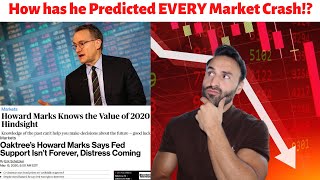
저자: HowardMarks · 외국인
요약 보기
결론: 하워드 막스는 2020년 5월 시점에서 시장이 사이클 중후반(높은 위치)에 있다고 보고 방어적 자세를 권하지만, 구체적 폭락 시점이나 가격 목표는 제시하지 않는다. 사이클 위치 판단: 경기 회복과 강세장이 10년째 이어져 역사적으로 긴 편이며, 주가는 대부분의 객관적 지표상 높은 수준이라고 평가한다. 낙관론, 낮은 위험회피, 투자하려는 과잉 자금이 보이면 사이클 말기 신호라고 본다. 투자 태도: 사이클이 높을 때는 기회 상실보다 손실을 더 걱정하고 방어적으로 움직여야 한다고 강조한다. 다만 너무 일찍 빠지는 것은 틀린 것과 다름없다고 경계한다. 과거와의 비교: 이번 사이클은 과거와 비슷한 점도 있지만 금리와 연준의 전례 없는 대응 때문에 다르다. 과거 버블 붕괴(IT, 서브프라임)보다 이번 상승은 덜 극단적이며, 조정 폭도 과거만큼 크지 않을 것이라 봤다. 그래도 고통스러울 수 있다고 덧붙인다. 통화정책 리스크: 연준의 금리 인하와 양적완화가 자산가격을 떠받쳤지만, 경제 과열과 인플레이션 위험이 있다고 지적한다. 시장을 뒤흔들 요인으로 유가 급등, 달러 약세 등을 열거하고, 예상치 못한 변수가 항상 존재한다고 말한다. 확률 관점: 미래를 알 수는 없지만 현재 사이클 위치를 알면 수익 확률분포가 내 편인지 아닌지는 판단할 수 있다는 것이 핵심 메시지다. 확률이 유리할 때 공격적으로, 불리할 때 방어적으로 투자하라는 입장이다.
다듬은 글
Howard Marks is one of the greatest investors of all time as founder of oaktree capital which manages over 120 billion dollars he has beat the market multiple times and is a strong advocate of market cycles he believes everything is governed by cycles the economy the stock market and even life in general he has predicted many of the previous stock market crashes and his iconic memos are read by the likes of legendary investors searchers Warren Buffett in a previous interview he stated we cannot predict what will happen tomorrow but by knowing where we are in the market cycle can help us to predict the probability of future outcomes his whole investment strategy is being a contrarian investor which is observing the masses and doing the opposite so in this video I've compiled together informative clips from interviews in 2019 and late 2018 where he effectively predicts the 2020 stock market crash he also includes investment tips on how you can best take advantage of these opportunities let's dive in welcome back it's a motivational to invest before we get started go ahead smash that light was for the YouTube algorithm that allows us to continue providing you with free valuable content like this I post videos every week on stock market investing tips and strategies in addition I post stock tip videos on stocks I personally I've invested in myself so if that's something that you want stated on be sure to hit that subscribe button and make sure the notification dollars turn on that way you'll get updated when these future stock picks up tremendous prices now let's get into the video if I look at the summary of the books you are making a strong point that history may not repeat itself but it certainly rhymes and the biggest truism of capital markets is that they follow a cycle of boom and bust so according to your assessment where are we on the cycle well I think that we're certainly not below the midpoint I think we're above the midpoint I think that we've we've we're in the middle of an economic and market recovery which has gone on for a long time and to great lengths there's you know until the last few days there's a lot of optimism around a lot of risk tolerance and a lot of money trying to make its way into into investments and if you put all that together I think it's clear that that we're in the later innings when the economies have been doing well as it has the companies have been doing well as they have the psychology is positive as it has been the stock prices have been rising getting everybody very excited and the prices are high by most objective measures that is the time when you shouldn't worried that much about missing opportunity and you should worry more about losing money and when we're high in the cycle it's time to be defensive in my opinion so it's a relative thing it's a rolling adjustment that you should make obviously the higher the market goes in its cycle the higher prices go I would think the less you would want to have invested but that's just me it oaktree we think and and and one of them one of my mottos is we never know where we're going but we sure as hell or don't know where we are what's going on around us what does that imply about the future and if we conclude that the present developments justify a more defensive position then there's no time like the present so we start and we do what we can and hopefully we do enough before this stuff hits the fan and you talked about you know sort of the pain associated with going to cash and then if you engage in abstention and the market keeps going up then obviously you underperform I know and let's point out the most important one of the most important added is investing that being too far ahead of your time is indistinguishable from being wrong absolutely early is wrong the the particular is very the speed of the movement the the amplitude of the movement the duration of the cycle the immediate causes the immediate effects are different and everybody says to me nowadays which cycle is this like and the answer is that this cycle has similarities to some of the past ones I've seen and it's totally different in other ways as you indicate the involving interest rates and it also the Fed actions are unprecedented so there are differences from each cycle to all the others but there are some common threads and and that I love that quote history doesn't repeat but it doesn't rhyme there are themes that rhyme from cycle cycle and when I think back over my fifty years and I've lived through half a dozen substantial cycles what are the common threads and in the booms or booms that I've seen there have been common threads primarily to much optimism to little risk aversion to much money in the hands of people who are too eager to put it to work now if you think about it that's a pretty good recipe for a boom and if you think further it would be hard to imagine having a boom with those ingredients missing so I think we can state that we want to be on the watch out for high optimism low risk aversion a lot of money and eagerness to put it to work I believe that we always will have cycles the interesting thing yet you if you pay attention is that when things have gone very well for a long time people start to say well maybe we won't have any more cycles maybe it's going to go straight up forever and of course that is the exact time when the probability of a decline is the greatest we're seeing that now we are more cautious than usual today you're right about that because we think the market is elevated in its cycle and because we think there has been optimism risk tolerance and and money eager to get to work mr.
marks to your mind what perhaps could crush this market will it be fed will it be oil or something which we don't know it could potentially pop up after some time well let me just say that I particularly like the fact that your list includes that last one and I made my own list in one of my memos back around oh three oh four I talked about the things that could hurt the market at that time I talked about $100 oil I talked about a falling dollar I talked about a few things and then the last thing on my list like yours I said or something else because we should never deceive ourselves into thinking that we have anticipated all the issues and that we know what's going on the market thinks about certain ones it anticipates those that may reflect those in prices the market really has the is that they're always at the risk of being knocked for a loop by something that nobody has anticipated the significance of the number ten Jenya since the Lehman bankruptcy 10 years since low interest rates etc what happened in the 11th year I know it that you don't know but I'd still want you to give us some sense of you know just a timeline to the cycle and what happened in the 11th year from us from a stance perspective you're cautious right now would you be more cautious how do you see things unfolding well 2019 what most people do is that when things go well for a long time they get more excited generally speaking what I do is that when things have gone well for a long time I get more cautious as you've said Tanveer we're in the tenth year of an economic recovery there has never been a recovery in the US that went more than 10 years we are in the tenth year of a bull market and in stocks by some measures we are in the longest bull market in history so the point of the book is that where we are shifts the odds and when you're in the tenth year and tenth years historically is a long time you can't say well we're likely to go another ten years the odds of it extending decline the subtitle of the book really holds the key getting the odds on your side I don't know what's gonna happen in the 11th year but I do know that based on history based on norms we are less likely to have a strong economy then usual old saying on Wall Street that bull markets don't die of age but when they end they end badly so whenever this market cycle will end do you think the endgame could be bad and what do you think would happen because in 2008 money rushed back into US dollar a US Treasury received bulk of the inflows from emerging markets so whenever the cycle would end what do you think the shape of the world could look like well there you go again as Ronald Reagan said trying to get me to make a forecast but I commend your perseverance look I don't I don't describe what we're having now as a bubble people have gotten used to the concept the bubble and crash bubble and crash it happens that if you lived through the last 20 years the last two cyclical episodes were bubble and crash we had the internet tech bubble which crashed we had the subprime mortgage bubble which crashed that doesn't mean that every upswing becomes a bubble which is an extreme upswing and crashes and I don't think that this upswing has been as dramatic as those two and I don't think the correction has to be as dramatic as those two that doesn't mean it's going to be fun because in those two I'm gonna roughly speaking say stocks went down fifty odd percent maybe in the next one they'll only go down thirty percent doesn't mean it's gonna be fun but I don't think that we are as levered as a society today I don't think our essential financial institutions are as levered I don't think that we have anything in the mix which is as shall I say fraudulent as subprime mortgages the central banks and the Fed turned their attention to stimulating the economy and they engaged in massive rate cutting and interest rates went to zero negative in some places and we had massive stimulation in the form of quantitative easing which meant the central bank's buying securities which has the effect of number one raising their price and reassuring people about risk and number two putting money in circulation because when the central bank buy securities it pays for them with money and that money when it circulates in the economy lifts the economy so in the last ten years we've had an unusual emphasis on stimulation of the economy but that it brings risks as well because it brings the risk of the economy overheating and thus of hyperinflation it's a complex what I say is we never know where we're going but we sure as heck or to know where we are and that's why the essence of the book is to predicate your investment decision on an understanding of where we stand in the cycle today it is possible not easy possible to know where we stand in the cycle today it is not possible to know what's going to happen tomorrow having said that where we stand in the cycle Herrmann's the probability distribution of the returns that that investors face in the cycle they should know where that what that probability distribution looks like when it is in their favor and when it is against them and that really is the greatest theme of the investment performance in particular for me is like a bowl full of lottery tickets you never know which tickets going to be chosen sometimes the bowl has 70% winning tickets and 30% losing tickets sometimes it has 77 losing tickets and 30% wouldn't think it's wouldn't it be nice to know the difference I think it's possible but you want it when when it's 70% winners and 30% lose you want to go all-in you want to invest heavily in aggressive securities and you reach into the bowl or maybe the gods of fate reach into the bowl and they pull out a ticket and it's a loser so you know as my best friend Bruce Newberg says out in California when we play backgammon which is a game that's dominated by dice there are probabilities and outcomes we can get the crub abilities on our side that does not ensure a favorable outcome but it's it's the only thing we can try to do so coming down yeah I just wonder way as a baby Ruby's brother bed yeah yeah yeah coming down yeah I just wonder way


Comments 0