
저자: JeremyGrantham · 외국인
요약 보기
결론: 그랜섬은 현재 미국 주식시장이 세 번째 거대 버블(2000년형 붕괴 초기)에 있으며, 본격 하락 후 1970년대형 디플레이션 장기침체로 이어질 것이라고 경고한다. 시장 상황: 영상 당일 나스닥은 고점 대비 약 27.5%, 러셀2000은 약 23%, S&P500은 약 15.5% 하락했고, 비트코인은 약 32,000달러대로 고점 대비 약 75% 하락했다. ARKK는 2018년 수준으로 복귀했고 AMC도 고점 대비 75% 하락했다. 버블 판단 근거: 그는 1929년·2000년 등 네 차례 대버블의 특징인 광적 낙관과 가격 급등을 기준으로 삼는다. 특히 지수 상승 중 고위험 성장주는 하락하고 우량주만 오르는 괴리가 나타나면 붕괴 임박 신호라고 본다. 현재 S&P가 러셀2000 대비 20~25%p 우위를 보여 이 신호가 켜졌다고 주장한다. 시장 전망: 초기 하락은 2000년과 비슷하게 전개되다가 이후 1970년대처럼 자산 가격 전반이 현재보다 크게 낮아지는 디플레이션 국면으로 진입할 것이라 본다. 하락폭은 매우 클 것이라고 전망한다. 인플레이션 관점: 단기적으로는 과거 30~35년간 연준의 과잉 부양, 전쟁, 코로나가 인플레를 고착시켰다고 본다. 장기적으로는 중국 등 주요국의 생산가능인구 감소로 노동 부족이 구조화되어 인플레 압력이 될 것이라고 주장한다. 자원 관점: 그가 만든 36개 주요 상품 동일가중 지수는 1900~2002년 약 70% 하락했으나, 이후 20년간 약 3배 상승했다. 중국 성장뿐 아니라 자원 고갈에 따른 본질적 희소성이 원인이며, 기술이 희소성을 앞섰던 시기가 끝나고 이제 희소성이 기술을 앞서는 국면이라고 진단한다. 식량 지수도 50년 내 최고 수준이라고 언급했다. 투자 조건 및 리스크: 구체적 매수·매도 종목 추천은 없고, 주식시장 전반의 하락과 장기적 자원 희소성을 강조했다. 주요 리스크는 버블 붕괴, 디플레이션 장기화, 공급 병목과 가격 급등이다. 출연자 전망 요약: 장기 약세(주식 하락, 1970년대형 디플레이션) 및 자원·식량 가격의 구조적 상승을 주장한다.
다듬은 글
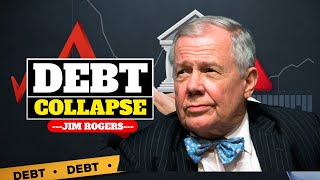
I must say I'm in my old age reaching a point where I have a little trouble convincing myself that the stock market is that important and that we live in an age where some much more important issues are playing out but I view the stock market now really as a hobby and the one thing that I have kept going is resources and climate change related investing and also For Old Times Sake investment bubbles since I've been doing that for 40 or 50 years and since I find myself unexpectedly in the third great investment bubble of my career basically in the US so I can't avoid it and this is a wonderful day to be having this discussion it's not only victory over Hitler in Russia day but it's also a day where the market is showing signs of breaking down through yesterday it's the worst opening of a idea for the s p since I was one year old in 1939 I am a pre-warf baby and of course the NASDAQ is down as we speak 27.5 from its high and the Russell 2000 about 23 s p about 15 and a half so it's getting to be interesting and as we were saying before Bitcoin from some point in the last 24 hours is down 10 to 32 000 and change so that is getting interesting an arc Kathy Woods wonderful instrument is back to it where it was in 2018 I'm not kidding you it is back below this entire event now which is quite remarkable down 75 from its peak as is AMC down 75 from its peak and the other mean stops are in ragged disarray so this is The Real McCoy seems to be playing out pretty close to 2000.
always considered myself a fairly serious amateur historian what I've done in bubble territory is I I don't try and build models to explain every day I focus on the four Great bubbles which are characterized by nearly hysterical Behavior really seriously weird over optimism which is very rare which are characterized by accelerated price moves on the upside and by a weird deviation on the upside between the Blue Chips going up and the risky stocks going down and that is rare as hence teeth it happened brilliantly in 29 it happened during the year 2000 again in Spades with the s p x growth continuing to go up through September of 2000 and the growth starts basically going down 50 and the internet stops dropping maybe 60 70 by then so that was spec calculate and we saw a very handsome deviation between the s p Rising last year and the Russell 2 for example dropping quite handsomely so there was a 20 25 point spread on the upside and that for me is a pretty good indicator and I tell you what it describes it describes Mr Prince's I've got to keep dancing because the music's still playing and we understand that completely the enormous commercial imperative of the industry to play up to and over the edge but they're not complete idiots and so they say well I've got to keep dancing but I don't have to keep dancing with Puma Tech the most advanced stock in 99 I'm going to transfer to Coca-Cola and I'll keep dancing off the edge but I'll go off with Coca-Cola and it works the Coca-Cola's maybe handsomely overpriced but in 1929 and 2000 2001 and so on they always go down a lot less as the bubble breaks and that's the phenomenon that causes this very rare indicator of impending doom which we saw last year and so by early this year it seemed clear to me that this was not only The Real McCoy bubble which had been clear for a year or so in terms of pricing and enthusiasm but it had triggered this very rare indicator of impending doom in other words now and so our piece of a year and a bit ago was called waiting for the last dance and our equivalent follow-up this January was let the wild rumpus begin I.E We're In It dudes and I do believe we are and I believe the declines will be very substantial we have a market today which builds superficially like 2000 and I think it's going to play out initially like 2000 and then unfortunately it's going to phase As He suggests into the 70s where the deflationary effects on the economy and the stock market will result in a world rather like the 70s where all assets are simply much lower price than they are today a word on on inflation too I would summarize is monetary and general Federal Reserve over stimulus for 30 35 years the war and covid all of those three influences guaranteeing that we have uh relatively intractable problem in the short intermediate term what worries me is the longer term Arguments for inflation which is one we are running out of people in China where the 500 million extra Farmers precipitated globalization they have now had diminishing cohorts of 20 year olds for 20 years and they are guaranteed since they're alive now we know the baby cohorts are dropping like a stone they are simply going to have a shortage of Labor as is the developed world together that is not a trivial block the developed World Plus China all of them will be squeezed for labor after the Bubonic plague they had a hundred year honeymoon period in which wages went up so much it wasn't reached for another several hundred years in the industrial revolution and we are entering a period where labor is simply scarce which feels to me inflationary and at the same time we have a scarcity beginning in resources and we keep an original unusual index it's 36 equal weighted important than most important Commodities so it's not dominated by oil and it showed a declining pattern for 102 years from 1900 to 2002 and yes it was interrupted by World War one and World War II and OPEC why wouldn't it be but it wanted to go down it went down 70 it took the index down to 30.
today 122 years later the index is down 10 it has gone to 90. the average important commodity has just spent the last 20 years going from 30 to 90. it has tripled the reason is of course the growth of China but I believe fairly passionately looking at the data that it also represents the intrinsic scarcity the war between deeper wells worse iron ore Etc the best go first the struggle is always between technology which for a hundred years got ahead of scarcity it was two paces down for deeper and three and a half Paces up for technology and now we've reached a phase where we've gone through that stuff and now we have two paces up for technology and three Paces down for scarcity the data is screaming at us now for 20 years that we're beginning to run out and a war of course and covert were so fragile all you have to do is cough now and it ricochets around the world in price spikes and shortages and bottlenecks and that is the world we better get used to living in we're going to have a world of increasing number of bottlenecks and shortages and the same applies to food the UN food index is higher today than any time in its history of the last 50 years


Comments 0