저자: TheSwedishInvestor · 외국인
요약 보기
결론: 인플레이션 시기 최악은 통화 자산, 최선은 자기 소득력과 가격결정력 있는 저자본 고수익 사업이라는 워런 버핏식 프레임워크 설명. [투자 등급 피라미드 - 하단부터] - 통화 표시 자산(현금, 예금, 달러 표시 채권): 인플레이션에 가장 취약하며 구매력이 계속 잠식됨. 1980년대 10% 인플레 사례를 예로 듦. - 비생산 자산(금, 미술품, 주택 등): 실질 가치는 유지되지만 구매력을 늘리지는 못함. 버핏의 '전 세계 금을 큐브로 만들면 한 변 약 67피트' 비유 인용. [생산 자산 - 평범한 유형] - 지속적으로 추가 자본투자가 필요한 사업은 인플레 시 실질적으로 불리함. 저마진 예시(껌 장사)로 설명. - 가격결정력이 없는 기업은 비용 상승을 전가하지 못해 불리함. - 금융자산을 많이 보유한 은행·보험·저축은행은 인플레 시 취약하며 미국 1980~90년대 저축대부 위기 사례 언급. [생산 자산 - 훌륭한 유형] - 저자본·고자산수익률, 가격결정력, 현금 필요가 적고 적당한 레버리지가 있는 기업이 유리. 코카콜라, 씨즈캔디, 대부분의 소프트웨어 기업 예시. - 다만 좋은 사업이라도 과도하게 비싸게 사면 손해이므로 가격도 중요. - 농지·임대부동산은 중간 범주로 볼 수 있음. - 레버리지는 양날의 검이며 독일 바이마르 시기 채무 조정 사례 언급. [최상단 - 자기 소득력] - 의사·변호사 등 전문성에 투자한 자기 자신의 소득력이 인플레 대비 최고의 방어수단. [최종 정리] - 통화 자산 회피, 비생산 자산은 보존용, 가격결정력 있는 저자본 사업과 소득력 투자가 핵심. 특정 종목에 대한 가격 방향 예측 발언은 없음.
다듬은 글
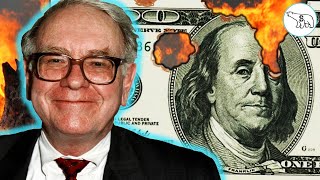
In this video, you’ll learn which the worst and the best investments for an inflationary economy are, according to Warren Buffett. These investments will be divided into five categories and presented in chronological order in a framework which shall be called “The Investor’s Protection Against Inflation Pyramid”.
Yea, the name is a work in progress. This is the Swedish Investor, bringing you the best tips and tools for reaching financial freedom through stock market investing. Alright, at the bottom of the pyramid, the worst of the five investments to own during times of inflation are these ones: Assets denoted in a currency Perhaps this didn’t come as much of a surprise.
In an inflationary environment, the worst asset you can own is of course the currency which is being inflated. Money that is sitting in a bank account or is hiding under your mattress is going to get eaten away. Month after month, week after week, day after day. You’re gonna need a bigger boat. So if we expect inflation in the dollar, we don’t want to hold dollars in our portfolios.
It become like a game of Old Maid if you’ve played that, no one wants to sit on the losing card. Bonds issued by governments or by corporations with coupons in the inflated currency will have a difficult time too. If I lend you $100 and I say that you’re going to get $10 per year for that and your full $100 back in year 10, it may not sound like such a bad deal, that’s a 10% annual return!
However, if we make this deal and there’s 10% inflation in the dollar, which isn’t impossible at all by the way, it happened back in the 70s and 80s, then you’ll make no returns on the deal in real value. If we dropped $1 million of cash into every household in the United States today, everybody would feel very good, except the people that invested in things that were denominated in dollars.
Next up on our list we have: Unproductive assets This includes assets such as art, a house, gold etc. These assets are not useless to own during times of inflation, as, everything else equal, they should keep their real value. However, they won’t increase your purchasing power either, which is why they don’t end up higher in the pyramid than this.
Warren Buffett explains: [BUFFETT] … if you take all of the gold in the world — don’t get too excited now— and put it into a cube, it will be a cube that’s about 67 feet on a side. So you could have a cube — if you owned all the gold in the world — you could have a cube that would be 67 or 68 feet on a side, and you could get a ladder and you could climb up on top of it, and you could say, you know I’m sitting on top of the world.
I’m the king of the world! [BUFFETT] You know, you could fondle it, you could polish it, you could do all these things with it. Stare at it. But it isn’t going to do anything. [TSI] It's the same with any of the unproductive assets. 10 years from now that rare painting is still going to be just one rare painting.
It’s never going to multiple, which the investments that appear higher up in the pyramid can do over time. If you want to do more than just to persevere your purchasing power with unproductive assets you are going to have do something which is very difficult – you are going to have to foresee how scared people will be of inflation in the future.
Actually, it’s even more complicated than that. A little game will help you realize why this is a difficult endeavor. Here are pictures of 5 different, I’d argue, quite attractive people. I’m going to ask you for a favour. I want you to scroll down to the comment section (without cheating!) and state whoever of these 5 that you think that most people will comment is the more attractive.
You win if you say the number whic most other people agree with. So, comment a number from 1-5 on whoever you think that most people will comment is the more attractive Please pause the video and do that now. Magic mirror on the wall, who is the fairest one of all? You’ll realize that this is much more difficult than it first appears to be.
You can’t really comment who you think is the most attractive, because that’s not what’s important, it’s the average of what the other people think. And it doesn’t end there either. The famous economist John Maynard Keynes highlights the problem, which Warren Buffett has said that he agrees with: "It is not a case of choosing those [faces] that, to the best of one's judgment, are really the prettiest, nor even those that average opinion genuinely thinks the prettiest.
We have reached the third degree where we devote our intelligences to anticipating what average opinion expects the average opinion to be. And there are some, I believe, who practice the fourth, fifth and higher degrees." This is quite meta. And it’s the same with trying to anticipate peoples’ feelings about inflation in the future and relating that to current prices.
Certainly not a game that I myself think that I’m smart enough to conquer, but luckily, there are better alternatives which you'll hear about soon. Productive assets: Mediocre type Okay, unproductive assets are great for maintaining their real value in inflationary times, but what we want to do is to increase the real value.
Enter: Productive assets. Productive assets are assets which produce valuable services or products. You know that Warren Buffett loves to invest in stocks, in businesses. However, all businesses are not all created equal. The first type of business that you should stay away from during times of inflation is the one that requires tons of additional investment just to stay afloat.
Unfortunately, most businesses will not come out well in real terms during inflation. Their earnings may go up a fair amount overtime, but they’re compelled to put more and more dollars into the business just to stay in the same place. You know, the worst kind of a business is one that’s — makes you put more money on the table all the time and doesn’t give you greater earnings.
Here’s an exaggerated example that hopefully will prove the point. Johnny is selling chewing gums at his local school. Each year he puts in a big order from Alibaba of $1,000 of chewing gums that he will sell in school during the ensuing 12 months. His profit margin is 10%, so after a year of selling, he has $1,100 in his pocket.
He decides to put in a new order of the same number of chewing gums for $1,000 the next year while giving himself $100 in returns, nice. Now let’s see what happens to Johnny’s business if there’s a 10% inflation each year. For simplicity, this devaluation will happen overnight, between 31st December and 1st of January.
At the end of the year, Johnny has $1,100 again from his sales. However, when he decides to order from Alibaba in the next year, he realizes that the price have increased! Gums are now 10% more expensive and to buy the same number as last year, Johnny must put up the full $1,100. Bummer, he thinks, but decides to order anyways.
The next year Johnny increases his sales, thanks to inflation, to $1,210, but again, he must invest that full amount just to restore his inventory in the next year. Notice that if this continues – Johnny will never be able to take any money out of his business. SHOW ME THE MONEY! In the real world – these are often the businesses with low returns on tangible assets.
You can calculate this by taking the earnings of a business and divide it by the sum of the balance sheet items called receivables, inventory, other current assets, and net property, plant and equipment. Next up on the list of businesses to avoid are those that do not have any pricing power. The companies that cannot afford to raise their prices even in inflationary periods.
Wait … shouldn’t inflation make everything more expensive? Well, the answer is yes, but it can often do that with a great deal of time lag. For example, people may decide to get a haircut at home if they see that the barber is increasing his price by $10 per year, forgetting that they have had the same increase in their own paycheck.
If costs rise with inflation while sales do not, it can mean bankruptcy for businesses with financial difficulties. Finally - and this one is fairly obvious - if you own a business which itself owns a lot of the assets further down in this pyramid, you are not going to do well during times of inflation either.
This is not just a hypothetical situation – banks savings and loan and insurance businesses all have lots of cash and bonds on their balance sheets. The savings and loan crisis was partly caused by inflation. According to Wikipedia: “The savings and loan crisis of the 1980s and 1990s was the failure of 1,043 out of the 3,234 savings and loan associations in the United States from 1986 to 1995.” Now we’re getting to the good stuff.
Let’s call it: Productive assets: Great type Here’s another exaggerated example for you: Johnny’s classmate, Wendy, creates a song and publishes it on Spotify. She had to spend $1,000 for renting the studio and hiring the DJ who mixed the sound for her. Now she is receiving $100 from Spotify in royalties each year.
In other words, when there’s no inflation, she is earning a 10% return just like Johnny did. What happens if there’s a 10% inflation? The first year Wendy earns $100, just like expected. Then inflation hits. What’s good about Wendy’s “business” is that she doesn’t have to put up additional capital for it to keep on running.
The next year, she will enjoy a profit of $110, thanks to inflation, then $121 the next year and all of it is free cash flow. It’s money that she can take with her and spend elsewhere, or perhaps reinvest to expand her music library and create additional songs. If you take the exact opposite of the three characteristics presented under the “mediocre type” of productive assets, you’ll get what you are looking for in a company which will perform well during times of inflation.
You are looking for the following: - Low capital requirements & high returns on assets Businesses with strong brands such as Coke or See’s Candy belong here. Also, pretty much any software company, where you have huge economies of scale. - Pricing power Estimating pricing power is a fairly difficult endeavor but it’s useful to know about competition, substitutes and the power of customers – you can analyze this using the Porter’s Five Forces framework.
- Little or no need for cash and preferably some leverage on the balance sheet You can argue that if you own some business that required very little capital investment and had real flexibility of price during an inflationary period so that people would continue to give up a half an hour of work — of their own work — every month to buy your product, and you leveraged it, then you might even beat inflation to some extent.
Unfortunately, not even this category of investments is a sure bet, especially if everyone starts to think it is. You can overpay even for businesses with little requirement for capital investment and great pricing power. A good business is not always a good purchase – although it’s a good place to look for one.
By the way, other productive assets such as farmland and rental properties, which Buffett doesn’t talk about too often, probably place somewhere in between these two categories. There’s typically some capital requirement for keeping these assets in business, but at the same time, you can leverage them quite a bit.
Charlie Munger elaborates on what happened to debt in the German Weimar Republic back in the 1920s: If you own a home, though, with a very large mortgage and you have incredible inflation that wipes out the mortgage, then you’ve still got the home. In Weimar, Germany, they gave you the mortgage back at the end.
It was very interesting. That’s the one thing they did right. Essentially, some of the mortgages were reinstated to compensate creditors. Always remember that leverage is a double-edged sword. So what do we find at the top of the pyramid? It’s: Your own earning power And, you know, the best investment at all— of all — I mean, if you’re the leading brain surgeon in town or the leading lawyer in town or the — whatever it may be you don’t have to keep re-educating yourself to be that in current terms.
You bought your expertise when you went to medical school or law school in old dollars, and you don’t have to keep reinvesting. And you retain your earning power in current dollars. Yes, the best protection against inflation is actually to invest in yourself, to make yourself valuable to other people.
Then you will always command a given portion of peoples’ production of goods and services, and you don’t have to care about where the currency stands, whether that is bitcoin, seashells, reichsmarks or dollars. And if you’ve leveraged yourself to the teeth to go to an IVY League school, you’ll do even better in times of inflation as that debt will get eaten away.
Here’s a super-fast recap: -Anything denoted in a currency will take a huge hit during times of inflation and you should probably stay out of those assets. -Unproductive assets just sit there, and, while they should keep their value, there are better alternatives. -Owning a business isn’t a great protection against inflation in and of itself, you must look also to its characteristics.
-Businesses with pricing power without the need for heavy capital investments are excellent investments during times of inflation. If you add a little bit of leverage to that you are probably even better off. - Real estate and farmland should do fairly well too, for those reasons. -The best protection against inflation is your own earnings power.
If you do something valuable to society you will always command a given portion of other peoples’ production of goods and services. I realize that the intro of this video might have been quite depressing so let’s try to end on a high note: I’m optimistic about life. If I can be optimistic when I’m nearly dead, surely the rest of you can handle a little inflation.
There were some financial lingo used in this video, such as return on tangible assets. If you want to learn more about financial statements you should check out this summary of the book Warren Buffett and the Interpretation of Financial Statements. Cheers guys, see you soon!




Comments 0