원문 보기
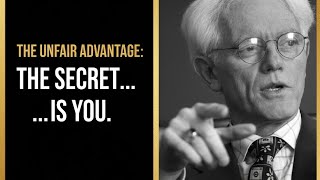
There is a secret in the world of investing. A secret that the professionals on Wall Street in their glass towers and expensive suits don't like to talk about. It isn't a complex algorithm. It isn't a secret government report. This secret is a person. And that person is you. Welcome to the Everyday Edge, the channel that teaches you how to turn your life, your observations, and your experience into your ultimate investing advantage.
In this first foundational episode, we begin with the master who proved this idea. The man who managed the best performing mutual fund in history, Peter Lynch. We will deconstruct his core philosophy to answer one question. Why did he believe that you, the everyday person, have an unfair advantage that Wall Street is genuinely afraid of?
For decades, you have been told a convenient lie. The lie is that investing is for experts. That the stock market is a private club and you're not a member. You are the dumb money. You are the retail investor. A polite term for the person who is expected to lose. You're told to give your money to a fund manager.
A professional who will take care of it for you. But let's look at that professional. That professional lives in a bubble. They live in New York or London or Hong Kong. They talk to other professionals. They read the same reports from the same analysts. They're judged not by being right, but by not being wrong in a way that gets them fired.
If a professional buys IBM and it goes down, he can say, "Look, everyone bought IBM." He keeps his job. If he buys a small unknown restaurant chain called Taco Bell, and it goes down, he's fired for being a fool. The professional is incentivized to stay with the herd, to buy what is known, what is safe, what is already discovered, and that is their weakness.
That is the Wall Street lag. Now, let's look at Peter Lynch. From 1977 to 1990, 13 years, Peter Lynch ran the Fidelity Mellan Fund. When he took over, it had $18 million in assets. When he left, it had 14 billion. His average annual return was 29.2%. A single dollar invested with him would have turned into $28.
How did he have a supercomput? No. Did he trade on secret inside information? No. He did something revolutionary. He paid attention to the world around him. Lynch's entire philosophy is built on a single powerful observation. The average person is exposed to interesting local companies and products years before the professionals.
This is your unfair advantage. Lynch called it the everyday edge. Let me tell you a story. In the 1970s, Lynch's wife, Carolyn, came home and told him about a new product she'd bought at the grocery store. It was called Legs Panty Hose. She told them the quality was excellent, but more importantly, they were sold in a convenient egg-shaped plastic container right in the supermarket.
Before legs, you had to go to a department store to buy panty hose. This new product made by a company called Hannes was a revolution in convenience. Did a Wall Street analyst in a skyscraper discover this? No. A regular shopper, Carolyn Lynch, discovered it. Peter Lynch, heard this. This was the tip.
But the tip wasn't by Hannes. The tip was investigate Hannes. So he did his homework. He checked the stores. He saw the legs display. He looked at the company's financials. He realized this single product was about to generate hundreds of millions of dollars for a relatively small, sleepy company. He bought the stock for Fidelity.
It went up sixfold. He didn't find that in a report. He found it in a supermarket. That is the everyday edge. Another story. Peter Lynch lived in Boston. He was a regular customer at a local coffee chain. He liked the coffee. It was consistent. It was good. He looked around. The stores were always clean and they were always busy.
The company's name was Dunkin Donuts. At the time, Wall Street viewed it as just another New England company, a local phenomenon. But Lynch, as a customer, saw the potential. He investigated. He found it had a brilliant business model and a plan to expand across the entire country. He invested. The stock was a 10bagger.
It went up more than 10 times his original investment. His edge, it wasn't a spreadsheet. His edge was being a loyal customer. Lynch said the person on the ground in the field has a 6 to 12 month lead on the analysts. The analyst in New York will be the last to know. Think about your own life. The Wall Street analyst is forced to wait for the official data.
You You're the data. You're the first to see the data. When you walk through a mall, you don't need a report to tell you which store is empty and which store has a line out the door. You can see it. When you are at your job, let's say you're a doctor, you see that one new medical device from a small company is actually working.
It's better. It's cheaper. It's saving time. You know this months before a financial analyst in New York ever hears of it. That is your edge. If you're a software engineer, you see your entire industry suddenly adopting a new obscure and highly efficient cloud platform. You know its name long before it becomes a hot stock.
That is your edge. If you're a parent, you see that one toy, that one snack, that one brand of clothing that every single kid at the playground is suddenly wearing. You saw it. You bought it. You know that is your edge. This is what Peter Lynch meant when he said, "Invest in what you know." It was not a dumb phrase.
[snorts] It was the key to his entire kingdom. But, and this is the most important part of this video, knowing a product is not knowing his stock. Lynch didn't just buy Dunkin Donuts because he liked the coffee. That was step one. He didn't just buy Hannes because his wife liked the legs. That was the invitation to do the research.
Liking a product is the tip off. It's the starting gun. The homework is step two. You may have discovered the best hamburger in the world, but if the company has $500 million in debt and no plan to expand, it is a terrible investment. You may have discovered the worst tasting soda in the world. But if the company owns the distribution rights to 50 other brands and is drowning in cash, it could be a brilliant investment.
Your unfair advantage is that you're the first to know where to look. You find a story. The Wall Street professional sitting in his office has to read 500 balance sheets hoping to find one good story. You You just have to live your life. So why is Wall Street afraid of you? Because you are the great unknown.
You're the variable they cannot control. You're the customer who stops buying. You're the employee who sees the waste. You're the local shopper who sees the trend beginning or ending. You, the everyday person, are the engine of the economy. The professionals are just the people in the caboose drawing charts of where the train has been.
You are in the engine room. This channel, the everyday edge, is not about get rich quick schemes. [snorts] It is a master class in the Peter Lynch philosophy. We're going to teach you how to do step two. We will teach you how to take your everyday observations and connect them to the numbers. We will teach you how to read a balance sheet in 5 minutes.
We will teach you the six types of stocks Lynch identified and why you must know the difference. We will teach you when to buy and most importantly when to sell. The professionals want you to believe you're the dumb money. Peter Lynch proved that the smart money is just the money that pays attention.
It's time to stop giving your advantage away for free. It's time to start using it. Subscribe and let's begin. It's time to unlock your unfair advantage.




댓글 0