
원문 보기
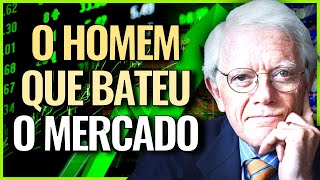
Warren Buffett, the world's greatest investor . A true living legend. The 92-year-old American is the great reference point of the financial market. Famous for his "value investing" philosophy, the billionaire created a fortune of over $100 billion , with time as his greatest ally. And in this video you will learn the story of Warren Buffett, the greatest investor on the planet.
Born in 1930 in the small town of Omaha, Nebraska, USA, Warren came into the world shortly after what is considered the greatest financial chaos in history, the 1929 crash. The event severely affected the American economy and especially his hometown, which saw agricultural market prices plummet and take with them the livelihood of the inhabitants.
To make matters worse, his father, Howard Buffett, was a stockbroker who, at the same time, saw his wealth and his job immensely affected by the crisis. Even so, Buffett's father managed to recover in the following years, as did the American economy, to the point of becoming a popular figure in Omaha and being elected deputy 12 years after the Great Depression.
The position caused Buffett's family to move to Washington, and there the country boy was already telling his friends that he would become a millionaire by the age of 30. However, unfortunately, in addition to the promise of wealth, he accumulated a great sadness and stated that when he got there, he would jump from the tallest building he could find.
His stubbornness was so great that it started three habits that would change his life. The first was reading, which brought him valuable lessons about business and mainly about the stock market, and it is something that occupies most of his time. According to him, between books, newspapers and financial statements, he reads about 500 pages a day, which takes up more than 80% of his day.
Look closely, my job is basically to accumulate more and more facts and information and see if they eventually lead me somewhere. The second was the fact of doing any activity to obtain some income, even at a very young age. Among them was buying packs of Coca-Cola bottles to sell to her friends with a small profit margin.
At 14, he already had his first job, delivering newspapers in the neighborhood. With his salary, he bought a bicycle and increased his newspaper delivery capacity. Then, with his savings, he bought pinball machines which he began to rent out. With the money he received, he bought other machines that were rented to cafes in the neighborhood where he lived.
And so, while still a teenager, he already had his own business, which generated an interesting passive income. And the third habit was investing in stocks, something he started at the age of 10 under the influence of his father. In 1948, his father failed to win re-election and so they returned to Omaha.
Because of this, Warren had to sell his pinball machines, thus raising his first big capital, close to $1,000 at the time. The money was reinvested in the purchase of a farm in his homeland, which was soon rented out, again providing him with a passive income. With that income, he financed his studies in administration at the University of Nebraska, which was not his first choice , but was possible after not being admitted to Harvard Business School.
Even so, after graduating, she managed to get into Columbia business school, where she would pursue a specialization and where her life would change completely . There, he met Professor Benjamin Graham, who became his mentor and taught him the philosophy of value investing. Through it, instead of worrying only about the price of shares, the purchase of securities is carried out according to their intrinsic value and not according to their nominal price.
Graham is also the author of the bestselling book, The Intelligent Investor, where he shares his investment philosophy in detail . And together with his professor, Buffett developed a methodology for analyzing stock security that guaranteed him, over the years, the knowledge to buy stocks in the right way and at the right time.
In addition to his studies, Buffett also put his teachings into practice alongside his professor while working in Graham's investment office . The experience lasted two years until his mentor's retirement . It yielded him the first hundred thousand dollars in securities of the time. Then he returned to his hometown and began making investments on his own.
But over time, his specialty was not only using his resources to invest, but also attracting capital from other interested parties to multiply his operations. And that's how he met his right-hand man, Charles Munger, whose exciting story we already told on our channel. This eventually created a mix of stock investment and, at the same time, the execution of business operations that gave it a huge competitive advantage.
The first big success was in 1958 with the purchase of shares in the Sanborn Map Company, a company that had a kind of monopoly in the market for maps used by insurance brokers. Despite this, the company had been accumulating poor results for about 10 years and its fragility caught the investor's attention, since it made no sense for it to be in trouble, being practically a monopoly.
At that time, the company's shares had a relatively attractive price, but the real value was not in the company itself, but in the investment portfolio built up over time, which was much more valuable than the company itself. During the previous 20 years, the company had made various investments in smaller businesses, a portfolio that added up to about 50% more valuable than the equity of the main company.
In other words, by buying Sunborn shares, the investor would receive a portfolio full of shares from other companies as a gift. Buffett's big move was to raise a large amount of capital to carry out a hostile takeover, to the point of buying controlling shares of the company by becoming the majority shareholder .
With the transaction, he assumed control of Sunborn and decided on the complete liquidation of the company's investment portfolio, which injected a huge amount of cash into the business and yielded the investor a 45% return on their shares. And that was just one of his operations that made him a millionaire at the age of 32 in 1962.
Despite this, fortunately he only fulfilled half of his promise and, in addition to getting married, had three children. Even with his fortune, he maintained a life considered simple, living with his family in the city of Omaha, to the point that his children only discovered that he was immensely rich after seeing a report about their father when they were already adults.
And you can learn about the investor's modest routine in the video that will be in the description of this video. But even with that goal achieved, he remained strong in the financial market, until he found what is considered his greatest achievement: the purchase of a struggling textile factory , Berkshire Hathaway.
The company had been in a huge decline for decades and had already closed nine of its 11 factories, which had caused its shares to plummet. However, while their shares were being sold at a low price, their assets were worth at least 30% more. Given this opportunity, Buffett began buying small lots of shares in the factory with the intention of selling them later.
However, he ended up choosing to become the majority shareholder of the business after a personal disagreement with the business's controllers, the Stanton family. Initially, the idea was to buy the company's shares and resell them back to the company itself, which made periodic repurchases of its shares, with a considerable difference in their price.
The problem is that there was an agreement between Buffett and the shares to be bought back at a fixed price after a few months. However, when it came time to do business, the Stantons lowered the price by 7 cents, which deeply irritated Buffett, to the point of buying a controlling stake in the company just to get the family out of the business.
An emotional reaction that Buffett himself describes as a big mistake, since he put emotion over reason and, in the end , bought a business he didn't want just for the pleasure of getting rid of his enemies. Even so, he decided to grit his teeth and take over the business to restructure the factory.
not only in its main activity, which exists to this day, but also with the aim of gradually turning it into an investment company. In this way, he began to look for good companies at fair prices, thinking about long-term returns. This marked a change in his approach up to that point, as in his early years he sought to profit quickly from his actions.
His first major purchase was American Express shares, which remain part of his portfolio to this day. Overall, he increased positions he already held in his personal portfolio, such as shares of Coca-Cola, a company that has been present in his life ever since , and of which he is the largest individual shareholder.
In addition to being a shareholder and former seller of the beverage, the investor claims to consume five cans of the soft drink every day. Along with actions considered predictable, it also made a strong bet on the insurance segment, mainly because it noticed that there was a high demand for policies and that people rarely activated insurance companies.
However, although not very active, the insurers recorded large liabilities annually, which left the value of their shares much lower than the real value of the company. This was illusory, since even if the liability was large, it did not represent a major problem for the insurers' cash flow . In other words, it was a highly capitalized and promising business that , in practice, functioned for Buffett like a small bank.
In this way, he built a portfolio that included companies with perennial consumer goods, such as Coca-Cola, which maintained consistent growth over the years. With this mix, by 1983, Berkshire's portfolio was already valued at more than $1 billion , the result of the investor's own capital and that of others who believed in Buffett's ability, earning him the nickname Oracle of Omaha.
The nickname encapsulates the billionaire's investment capacity, who, in addition to multiplying his invested capital, betting mainly on the insurance market in 1996, fully bought his own insurer, GEICO, which today provides coverage to more than 10 million vehicles in the United States and bills more than 25 billion a year .
With the purchase, GEICO became a privately held company. Interestingly, almost 50 years earlier, the company had received an investment of 700,000 from none other than Benjamin Graham, Buffett's mentor. The $700,000 invested in 1948 became $400 million in 1972. Imagine how much more after that. But the insurance company was not the only venture that Buffett bought part or all of.
Over time, the oracle distinguished itself by its ability to operate in the financial market from start to finish. He not only buys good stocks , but also acts effectively in the markets, both with complex financial operations and by fully assuming the operations of some of the companies he buys. In other words, the term investor falls short of describing the way he operates.
Over the years, he has invested in various businesses, among the best known being Bank of America, Wells Fargo, Goldman Sachs, Apple, Moody's, Mastercard, Visa, General Motors, Verizon, General Electric, Gillette and the aforementioned Coca-Cola, American Express and GEICO. He also owns the Dairy Queen fast-food restaurant chain, the Nebraska Furniture Mart furniture store chain, and several other less famous businesses.
And to give you an idea of the strength of its holding company, in 2021, Berkshire had revenues of more than $276 billion. In addition, he also made a large investment together with the Brazilian Jorge Paulo Lemann to control Kraft Heinz, which is considered to be the investor's biggest failure to date and which you can learn about in detail in the video that is in the description of this video.
To complete the coincidences, the holding company also has an 18% stake in The Washington Post newspaper. The same newspaper that Buffett used to hand out as a teenager and which is controlled by tycoon Jeff Bezos. When Tony Robbins asked him about the secret of his wealth, Buffett replied that his success was mainly due to three factors: having good genes, which allowed him to live for so long; living in the United States, which gave him access to great opportunities; and finally, compound interest.
According to the book The Psychology of Money, the time factor was the main element of the billionaire's success, something that actually makes a lot of sense. To give you an idea, at age 53, Buffett's fortune was $620 million . Five years later it was $1.4 billion. Twenty years later it had already exceeded 20 billion.
And today, at 92 years old, he has accumulated 107 billion dollars. And according to Suno Research, Buffett's investments have historically grown at an average annual return of 20%. To give you an idea, those who invested just one dollar with him in 1950 would have more than 143,000 in 1993. And despite having a fortune of over one hundred billion dollars, the investor remains active, maintaining his routine and his appetite for investments.
It is speculated that Berkshire Hathaway has no less than $147 billion in cash. This record could be a sign that the company is waiting for a major market downturn before going on a buying spree. However, is a crisis looming? Share your opinion with us in the comments. In any case, the story of Warren Buffett's entrepreneurship shows how time is also a valuable asset and that it is necessary to literally give time to time.



Comments 0