
원문 보기
We live in unprecedented times as earnings growth is accelerating—something many would have a hard time believing in their lifetime, but even third- quarter earnings are likely to grow by nearly 30%. And earnings per share (EPS) revisions from the beginning of this year to now for 2027 figures have increased by more than 20%, while the S&P has not even increased by 20%.
So, the multiplier actually went down. If anyone thought the market was expensive at the beginning of the year, it actually became cheaper. And also, I think that, paradoxically, high oil prices actually strengthen the US economy, because it is an exporter. I know this is a very complex situation, but I think there is excessive pessimism, because not only is the earnings visibility good, we are also seeing a leadership in stocks that are ahead of the easing of inflation , namely the technology sector and, you know, cryptocurrencies.
I think you are also ready for a market decline at any moment. It could still happen, and you've been talking about it for some time now. In fact, there was a point when you even allowed for the possibility of the S&P falling to 6,000 before the end of the year, and then returning to perhaps as high as 7,000 or 8,000 points.
So it would be some kind of pre-election stress, or what exactly could have caused it? The midterm elections are indeed getting closer. How many do you think are left? What is 35 days? Has another week passed? It's 28 days, like in that zombie movie—28 more days. Is that only about 28 days left? I think there is an expiration date for the correction, partly because the midterm elections will be the event that clears the market.
This will likely be a very powerful signal to risky trades in the markets regardless of the outcome. And since June 30, I think the markets have been difficult. So in part I think we went through a gradual correction, and we saw a lot of different groups in a state of decline. But as for a deeper downturn in the markets, I still believe that there could be some kind of “speed bump ” from mid-October until the midterm elections.
I don't really want to make big statements because the sentiment has been negative and I think when people are bearish it's hard for markets to get too far ahead because we know that people are actually guided by their sentiment and remain cautious. You are also a contributor. I wanted to know your opinion on this matter.
How should our viewers perceive this? Is this just empty talk? Is this... is this just an accounting error? What's the matter? Well, I don't think it's worthless at all. Yes, it's a simple accounting error, but there's also some negligence on OpenAI's part . The fact that the figure got into the press, the Financial Times noted in its article that OpenAI did not deny the higher figure, and now a lower one is emerging.
OpenAI needs to be more proactive. If you see a figure that is $20 million higher than your revenue, even as a private company, it makes sense to get ahead of the game and disclose accurate data, given your close ties to public companies. As for the market in general, I think we're seeing some nervousness around the AI sector, because even though this story is small , we're seeing companies like Nvidia and AMD get hurt.
These two companies and others we've talked about are doing pretty well this year, but it seems investors are looking closely at what's happening in AI. They understand that companies have started to reduce their spending on these technologies. They see that some of the funds are being redirected to standard AI models, rather than to advanced or cutting-edge ones.
And I think the market is just waiting for the moment: if they see something going wrong, they will retreat much more decisively than they are today. That's how I see it. This shows the fragility of trade itself, and I mean technology trade. How vulnerable or " credited" —call it what you will— is this entire sector, and if we're talking about trading, which is over 40% of the market, the entire stock market is now heavily dependent on OpenAI and Anthropic.
This is true. Well, the breadth of the market is really bad right now. You see a lot of action concentrated at the top. You know, the rest of the S&P 500, that is, 493 companies, do not show the same results as the seven leaders. So I think right now, if you see a pullback, it could significantly change the whole market situation.
You are right. What we see today in the S&P 500 and the market as a whole really depends on the successes of OpenAI and Anthropic. We will see Anthropic IPO, most likely within the next few weeks, and OpenAI next year. Um, and any hitch in this story, any complication, and we could see what we saw today, or even worse, and that's quite worrisome to me, when you look at where the market is going to go next.
But it seems like, you know, the headlines that have been coming out over the last, let's say, a few weeks have raised more questions about OpenAI than they have answered, right? I mean, we talked to you not long ago about a series of layoffs, thinking about what that means for the path to an IPO. The people who left raised questions about safety and security.
And now we are discussing real numbers. Yes. Ultimately, these companies will show big losses, right? They will show significant revenue growth, but losses will outpace it . We saw this in Anthropic's S1 data leak last week. So a lot will depend on whether investors and the market in general believe the narratives these companies are offering them.
This will be as much a story as a balance sheet , but the balance sheet should support this story. And I think you're right. When we see a message that the balance sheet may not look as good as expected , even if it is minor news today, if it becomes widespread or other unknown problems arise in the future, it will complicate the situation.
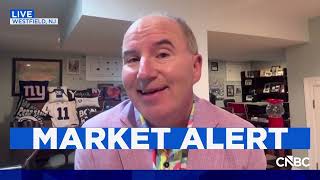
And if you think that could be the trigger that would cause a fall, then today we saw an example of what that could look like. But it will be on a much larger scale. Tom Lee just laid out something that should alarm every tech investor. Profit growth is accelerating. The S&P 500 is no longer expensive.
In fact, it is cheaper than at the beginning of the year. Third- quarter profits rose 30%. Revised EPS forecasts for 2027 increased by 20%, while the index increased by only 20%. The market should show growth. But Lee notes that all this growth is hanging by a thread. That's what's important. The market is over 40 percent dependent on OpenAI and Anthropic.
Not from Nvidia. Not from the broad tech sector. From two private companies that could go public next year. From two companies with layoffs, safety issues, and accounting issues. This is the foundation of the entire " bullish" trend. And he is fragile. Lee spoke about the drama with OpenAI's revenue figures.
The Financial Times reported a higher figure. OpenAI did not deny this. Then they released a lower official figure. Lee said it shouldn't be a "dummy." This is an accounting issue, of course, but it is also negligence. If you were OpenAI and the press published a figure that was 20 billion more than your revenue, you would have to act proactively.
This cannot be ignored. But OpenAI did just that. This is exactly what undermines investor confidence before an IPO. And this is the real risk. Anthropic's IPO is likely to take place within a few weeks. OpenAI is planning for next year. These IPOs are already priced into the market. Investors are already assuming that these companies will become public and profitable.
But if any of them stumble—through accounting errors, layoffs, safety issues, or losses that exceed expectations—the entire narrative falls apart. Lee notes that the market has n't really corrected. A "moving" correction occurred. Different groups were hit at different times. But there was no real large-scale rollback.
And he believes he is still ahead. He expects difficulties from mid-October until the midterm elections . Elections as an event that determines the future path. Markets reduce risks regardless of outcomes. But here's what's more important than time. Lee says the market coverage is terrible. It's overloaded upstairs.
Seven top stocks are pulling the entire market. If you look at the S&P 500 without these seven companies , the other 493 are not doing so well. This growth is a game of concentration. This is a game about technology and artificial intelligence. This is literally a bet that OpenAI and Anthropic will successfully IPO and prove the viability of their models.
This is an extremely shaky structure. Because if even one company fails, you will not get a normal correction, but a revaluation of the entire technology sector. Companies are already cutting costs on advanced AI models . They direct their money towards cheaper, standard models instead of overpaying for the best.
This is the first sign that the AI spending boom may be stabilizing—not collapsing, but stabilizing. But if stabilization goes too far, the narrative will change. If companies start saying, "We're going to create our own models." or " We will use open source." the demand for advanced AI will change.
Lee says that it will all depend on the narrative. Anthropic has just released reports showing huge profits, but losses are outpacing them. OpenAI will show the same. These will be loss-making companies that ask the market to pay for their growth. The market will pay for it if the growth story is compelling.
But if something disrupts this narrative—layoffs, security concerns, slowing growth, accounting problems—the entire trade will collapse . And it will fall apart completely. Lee said OpenAI's performance today was insignificant, but he showed what a small hitch looks like. He believes a bigger hitch could trigger a downward spiral.
Here is the tension outlined by Tom Lee. Earnings fundamentals are strong. The market is actually cheap. High oil prices strengthen the economy. The technology sector is leading the way amid declining inflation expectations. Everything should indicate growth. But the market is so focused on two companies with so many questions that one bad piece of news could sink everything. This is fragility. This is narrative addiction.


Comments 0