원문 보기
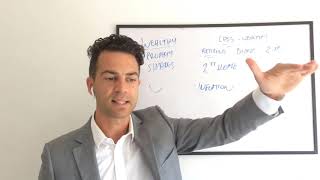
in the last video we saw the debt peak we saw that over time as we go out and we spend what we earn and then we go and borrow more money eventually we buy things and hit a peak where the bank says no more lending also it's not just us as individuals that hip is debt peak companies also do the same and the government after where you go into a declining phase where we pay back our loans and we reduce our spending after the government saves that enough times and comes in and starts spending itself to save us and keep the economy going after does that enough times the government also runs into a debt P what that means is with no more avenues the government spent all its money we've spent all our money companies have spent all their money interest rates have also fallen really really low after multiple times of this occurring we get to a point where the last resort is money printing today we're gonna talk about money pretty at that debt peak there are four ways you can reduce the debt and one of them is to spend less which no one wants to do the other one is to take from the rich and give to the less rich the other one is to also default you can not pay your loan back and the bank loses money none of us really want to do that and then there's the money printing so when they talk about money printing they also often refer to the central bank which is the bank of the country they refer to that as the lender of last resort because they're the last ones have got the money to be able to lend to everyone else you can print money printing money is not just a free thing you can do you can't just print money and just print endless amounts of money there's always going to be a consequence and one of the biggest consequences is that when they print money what they do is and if you do look at the link below in my comments you can learn more about this but they reduce the long term interest rate so when you bring the long term interest rate down you often increase the value of certain things right so when you bring the the interest rate down you've got the short term and the long term interest rate when you bring the long term interest rate down you increase price of houses the prices of shares longer-term things and the wealthy people are wealthy they're pretty happy because it's the well thing that have property and shares and businesses and all these things and the prices of those go up when you're printing money so they're pretty happy over here the wealthy people but the less wealthy the less wealthy not always so happy so often you'll have people who are retiring and let's say big not that wealthy they're retiring ILIT that's a certain amount of money maybe few a couple hundred thousand or a hundred thousand dollars in the bank and they have to live off that in their retirement and it's only earning think of what interest rates are now let's say two and a half percent two point five percent so they're now earning two and a half thousand dollars on their hundred thousand dollars in their bank and they're thinking well I've got to live off this for the rest of my life how can I get a higher return in two and a half percent now they might not necessarily have been thinking that way if they're getting five percent or seven and a half percent in the bank like we were getting once upon a time if you go back ten years ago or so so these people aren't happy these people are happy and so these people get upset at these people and that's what we call some sort of social unrest and ray talks about that if there's social unrest developing you've also got first home buyers if you think the first-time buyers have seen prices of houses go up not recently but in the last 5-10 years go up so much that they don't that they've might have stopped buying houses and have in fact often lived with their parents is a big trend about living longer with their parents or moving back in with their parents which a lot of people don't want to do but they do do that because there because the the house prices have gone up so much so there are facts when you when you print money and they're just a couple of them those those effects there now you've also got this issue where if you print too much money you might get inflation so you can also get inflation which is really bad for the less wealthy because if you double the money supply so if you put double the amount of money into the economy in theory everything the like property and shares should double in price just because you put double the amount of money in the economy not just the shares and the property but also things like food go up in price petrol all these things are the less wealth you have to pay for so to the wealthy but then put the asset increase these guys don't have as many assets so they don't get that benefit and this becomes starts becoming a bigger number of people who start getting upset at these people over yeah and so what happens is these people have all the votes these people and they might vote in governments that favor what they want and all of a sudden is that social unrest and things become a less safe and that's the problem when you have a big divergence in in people and wealth and money printing can create that divergence now radio talks about something called a beautiful deleveraging a beautiful deleveraging is quite interesting concept whereby before I mentioned the debt peak the debt peak really the only way to solve a debt peak is to get to the core of the problem which is the debt and we want to pay down that debt now the problem with paying down debt is what I've spoken about many times is that you reduce your spending and when you reduce your spending companies giving less profits and they and they suck their workforce and then the workforce has less money it becomes a bad deflationary spiral and you really don't want that either because then you have lots of unemployed people that really unhappy so you start to print money and races if you print enough money to make up for the fact that the banks have stopped lending money to these very indebted people companies individuals in government if you print enough money just to satisfy their need and fill the gap you can get a beautiful deleveraging where the economy doesn't head down doesn't necessarily go up a lot either he's calls it a slow growth economy but then you do get the ability to reduce the interest rates that's what the money Green does introduces interest rates a long term you've got the cash rates low the interest rates and so you can pay off your debt you pay down your debt while maintaining your employment and your your income growth just enough to be able to pay down the debt and then come out of the whole issue of too much debt and that is the best-case scenario often what will happen is it won't work so well you get either a downturn or recession potential depression situation or you overprint to really of that situation or you overprint and you get an inflationary situation and that's also a terrible situation to be in if you go back to the u.s.
in the late 1970s through the 50s and 60s the u.s. had Wars and in 71 they broke the standard for the gold standard and they were printing and printing a lot of money and so on and so they got an inflation also with an oil shock and together they got a really high inflation and the average person went to the supermarket mysore prices going up you know every time they go the supermarket i started getting really upset you know the money they worked so hard to earn in their bank account was now buying them such a little amount of of items and foods and goods and services they got upset and they said to the government with their voting power they said hey guys fix this inflation problem and the government put pressure and the central bank over there finally got the ability Federal Reserve got the ability to increase interest rates without getting kicked out of power they increase the interest rates all the way to 20 percent Paul Volcker put it up to 20 percent just to be able to calm the inflation now now if you think of what a 20 percent interest rate would do house prices fell share prices fell the economy went down you into that more recession depression period and and it was still okay by the people I mean they were happy they were okay because they knew that the inflation they were willing to put up with the recession because they knew how bad the inflation was and that there was a trade-off there so it's a few circumstances you don't want a depression recession you don't want to have too much inflation you try to get that beautiful deleveraging situation and that's the the most you can hope for in a situation like that but I hope that explaining this now makes you understand how it all kind of works together when you're listening to these different concepts in the economy

Comments 0