저자: 미상 · 외국인
요약 보기
조엘 그린블랫의 마법공식(Magic Formula)을 소개. 이익수익률과 자본수익률을 순위화해 저평가 우량주를 고르는 단순 가치투자 전략. 2003~2015 백테스트 연 11.4%로 S&P500(8.7%)을 약 3%p 상회했으나 초기 30%대 수익률은 재현되지 않음. 인기로 인한 효과 감소와 무형자산 증가로 전략 효력 약화 지적. 핵심은 공식보다 사고방식(독립적 리서치, 애널리스트 불신, 기회 선별, 안전마진)이라는 결론.
다듬은 글
Hello. Today let's talk about a very famous and interesting idea in the world of investing. The name is Magic Formula. Yes, the name itself makes it seem like it is a magic wand? Absolutely, created by renowned investor and professor Joel Greenblatt. Today we will get to the bottom of this. We have an article from Investopedia as well as Green Blade's own books.
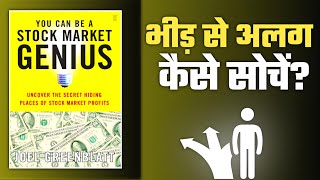
The Little Book That Beats the Market and You Can Be a Stock Market Genius. Hmm. So our mission is to understand whether this formula is really magic and if its magic has now diminished, then is there any secret behind it which is still useful today? That's correct. So let's open it up a bit. So first of all, what is this magic formula ?
I wish it were really magic. It is actually a very simple strategy based on simple rules. Based on rules. Yes, Green Blade said that if you get just two things – a good company and that too at a cheap price, then you can easily beat the market in the long run. Good. This formula is simply a way to find those two things.
Just these two things, it sounds very easy to hear. So can we really judge a multi-billion dollar company by just two numbers ? There must be something missing in this. Your doubt is absolutely justified and we will discuss this further. But its beauty lies in its simplicity. Let us understand those two things.
The first is high earnings yield. High Earnings Yield. Yes that is the way to find the cheapest price. This earnings yield sounds a bit technical. How to understand this in simple language ? See, the easiest way to understand this is to take the example of a shop. Ok? Suppose the total cost of buying a shop, i.e.
its loan etc., is ₹1 crore. This is his enterprise value. Ok. Now if that shop earns ₹1 lakh in a year before paying taxes and interest, then this is its EBT. Good. So here the earnings yield is 10%, which means you are earning 10% on the total cost of that shop. The higher the yield, the cheaper the deal.
Well, this is simply a way to see how much a company is earning relative to its price. It's straight and what was the other thing? How to find a good company? For that we use green blade. Higher return on capital. Higher return on capital. It measures how much profit a company is making on the money invested in its business.
For example, imagine there is a chef who makes a dish worth ₹500 from ingredients worth ₹100. We and another chef can make a dish worth only ₹150 with ingredients worth ₹100. We obviously think the first chef is making better use of his capital. Isn't it ? Yes absolutely. That is a good company. What we mean is find a company that is adept at making more money with its money and buy it at a price that is low compared to its earning power.
perfect. So what is its process? Should we just buy the top companies that have these two things? Almost the process is very systematic. You make a list of all the companies. We then rank them separately on both these scales. The company with the best earnings yield is ranked one, then two, and so on.
The first thing we do is look for return on capital. Well, both have different rankings. Yes. And finally both the ranks are added to form a final rank. You create a portfolio of 2030 companies from the companies that have the best final rankings. And it keeps changing every year. Yes. You buy two-three stocks every month so that your money is not invested in the market all at once and after a year you sell the old stocks and buy new top ranked stocks.
We also have a clever tax saving strategy in this. Sell loss-making stocks just before the end of the year and profitable ones just after the end of the year to reduce tax. But this does not apply to everyone. Isn't it ? Our sources also mention some limitations. Absolutely. This is a very important thing.
This formula works only on large companies whose market cap is above a certain level. Good. And it doesn't touch banks and utility companies like electricity. Why so ? Meaning, are banks and electricity companies bad? No, it is not bad. It's just that their business model is very different. Good. For example, it is not a bad thing for a bank to take out a loan.
In fact, that is his job. Debt is its raw material. Isn't it ? That's correct. That is why general rules like return on capital cannot be applied to them, their accounting is different. We have similarly excluded shares of foreign companies, known as ADRs. Ok. So now let's come to the biggest question.
We do this magic really work? We Greenblatt claimed in his book that this formula gave an average return of 30% annually for 17 years. 30% means this is unbelievable. Absolutely. And this claim has made this formula so famous and those figures were true for that period. For that period. Yes. But if we look at recent data as described in the Investopedia article, the story changes a bit.
A backtest conducted between 2003 and 2015 found that the magic formula generated an annualized return of 11.4%. 11.4. It's not 30%, but how does it compare to the market? How much did the SNP500 deliver during that time? The SNP 500 returned 8.7% during that same period. Good. So it beat the market by about 3%, which is a huge achievement in itself.
Very few fund managers can do this consistently. Correct. But yes, that earlier magical return is no longer there. There may be reasons. The first one is very easy. When a recipe is no longer a secret, its taste also does not remain the same. Isn't it? Yes. When Green Blade's book came out and this formula became famous, thousands and millions of people started buying those stocks.
Now when there are more buyers of something, its price increases and it no longer remains cheap. Meaning the formula's own popularity diminished its effectiveness. Absolutely. And the second reason is even deeper. The face of the market has changed. How? This formula was perfect for an industrial economy.
Where the value of companies was determined by their factories, machines and land. But today's big companies like Google or Microsoft earn their money not from factories but from things like code, data, brand value etc. Correct. These are intangible assets. Meaning intangible assets. These are not captured properly by old formulas like return on capital.
So if the magic of the formula is no longer the same, should we forget about the Green Blade ? Does this discussion end here? No, not at all. Rather, this is where the story gets more interesting. Good. Because the real treasure is not the formula but the thinking on which this formula is based. The formula is just a result of that thinking and we get that thinking in his second book.
You can be a stock market genius. Oh wow. So you are saying that the real magic lies not in the formula but in the philosophy behind it. perfect. The biggest and in a way revolutionary idea of Green Blade is that a common small investor can beat big fund managers and Wall Street giants. Whereas all the theories, all the books say that this is impossible.
This is a courageous thing. Big fund managers have much bigger research teams than us. There are computers. There is information. How can we defeat them ? His strength is his biggest weakness. Good. In his book, Greenblatt gives the example of a hypothetical fund manager named Bob who is handling $1 billion.
$ billion dollars? Yes. Now think what he has to do to invest so much money ? He ca n't invest all his money in one or two great ideas. No. He has to spread his money across 50, 100 or 150 different stocks. That's called diversification, right? This is a good thing. It has less risk. Yes. But after a certain point, it becomes diversification.
Diversification means you buy so many stocks that even your best ideas have no effect. Even if one of Bob's stocks doubles, it will have only a negligible impact on his $1 billion portfolio. That's correct. On the other hand, a typical investor can build a strong portfolio by selecting just five to eight of the best stocks.
So because of the large size, his hands are tied. Not only this, a big fish like Bob can swim only in a big pond. That means big well-known companies. We ca n't invest $200 million in some small, unknown company. Because by doing so he will become the owner of that company which is legally difficult.
Good. Yes. So they have to ignore the smaller or overlooked places that often have the best deals. And this is where the opportunity arises for the common investor. He can go to secret places where Wall Street does not see. This is precisely the essence of Green Blade's philosophy, and from this thinking emerge some of their fundamental principles.
First of all, we do our own work. Do your own work. Especially in places that others are ignoring. It is right because no one else will do the research there. Exactly. I really liked the second theory. Do n't trust analysts. Don't trust analysts. Every day we see experts on business channels giving buy or sell advice.
We Green Bloods clearly say that do not pay attention to what they say. This is not a bit strange. This sounds strange. But there is a solid reason behind this. Most analysts are always inclined to give a buy recommendation. Why so ? What happens is that if they give a sell advice about a company, that company may get angry and stop giving them information.
Secondly, they think in groups. In the herd. Yes. It is safer to be wrong with a crowd than to be wrong alone. If everything goes wrong, no one will lose their job. The point about unity is very correct. What is his third principle? The third principle is to choose your opportunities. Pick your spots.
We treat it like cricket. Good. You don't need to swing the bat on every ball. There are no strikeouts in the stock market. We can wait for months or years and when that one easy perfect ball comes along that you can hit. Only then swing the bat. Meaning patience is the biggest weapon. Absolutely. And the last principle is perhaps the most important.
Look down, not up. Look down, not up. What does it mean? This comes from the principle of margin of safety by legendary investor Benjamin Graham. We mean this before looking at any investment to see how much you can earn. Always consider the maximum you can afford to lose. Good. If your chances of loss are very low, the profits will take care of themselves.
Oh wow. And if we link this back to the magic formula, the high earnings yield part of it is just a way of applying this principle. You got it absolutely right. Buying a company with a high earnings yield is essentially buying with a margin of safety. We are paying a lower price for the earnings power of your company.
Due to which your risk of loss automatically reduces. So you can see that that formula wasn't created out of thin air. He was a product of this deep investment thinking. So what do we learn from all these sources ? The magic formula appears to be a value investing strategy based on simple rules. Correct.
It focuses on two very powerful ideas. Buy good companies and buy them at affordable prices. Yes. And while its magical 30% returns may no longer be a reality, the principles behind it remain just as powerful today. Maybe even more than before. We teach this discipline. It removes emotions like fear and greed from investing and guides investors towards a proven investment philosophy.
So the real advantage is not in the formula but in the mindset. Absolutely. The real benefit is perhaps not the formula itself but the mindset it fosters. Rational, patient, and looking for opportunities where others are not looking. As I leave, a thought comes to my mind. Yes. In his book, Greenblatt described situations like spin-offs, mergers and bankruptcy as intelligent investment destinations.
Correct. This was a place where big investors did not pay attention due to lack of information and uncertainty. Correct. And ordinary investors could have got great opportunities. We live in today's technology and high-speed trading market where information reaches everyone in a moment. Where can a common investor find such unseen opportunities?


Comments 0