저자: WarrenBuffett · 외국인
요약 보기
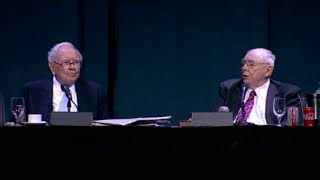
장기채권은 현재 금리 수준에서 형편없는 투자라는 결론이다. 버핏은 채권시장과 금리 향방을 예측할 수 없다고 말한다. 다만 장기채는 현재 금리 수준에서 매력이 없다고 보며, 자금은 평균 만기 약 4개월 수준의 단기 국채(T-bill)에 두고 있다. 단기 국채 금리 상승으로 2018년 버크셔의 세전 이익이 작년보다 최소 5억 달러 늘어날 것으로 본다. 다만 이는 대기 자금을 굴리는 것일 뿐 채권을 선호해서가 아니다. 연준 목표 인플레이션 2%에 비해 장기채 수익률은 3% 남짓이고, 세금을 떼면 실질 수익률은 0.5%대에 그친다. 그래서 주식과 생산적 자산을 선호한다고 말한다. 과거 사례로 1942년 전쟁 채권은 10년간 연 2.9% 복리로 묶여 있어 매력이 없었다고 회상한다. 1980년대 초 제로쿠폰 국채로 30년간 연 14% 수준을 확보할 기회가 있었다고 언급한다. 연준의 저금리 정책은 노인 저축자에게 불공정했지만 자산가격을 밀어 올려 버크셔 주가에도 도움이 됐다고 평가한다. 금리가 이례적으로 떨어지는 시기에는 준비뿐 아니라 행동이 중요하다고 강조한다.
다듬은 글
good morning I have a question related to the bond market US Treasury bond market my name is Ollie Larsen I live in the San Francisco Bay Area and I never worked in the financial industry I started out buying any mining stocks on the Vancouver Stock Exchange and then decade later dargah married and my wife convinced me to buy Berkshire shares there were probably a good decision so so my question is and I read that I read the newspapers about them the Federal Reserve and the inflation numbers and there must be an increased supply of Treasury bonds that must go to to auction and my question is how would what do you expect that to impact the yield or interest rate the answer is I don't know and the good news is nobody else knows including members of the Federal Reserve in every way it there are a lot of variables in the in the picture and the one thing we know is we think that long-term bonds are a terrible investment and we add at current rates or anything close to current rates so basically all of our money that is waiting to be placed is is in is in Treasury bills that I think have an average maturity of four months or something like that at most the rates on those have gone up lately so that the in 2018 my guesses will have at least 500 million dollars more of pre-tax income than we would have had last year but they still it's not because we want to hold up more waiting to do something else but long-term bonds that they're basically at these rates it's almost ridiculous when you think about it because here the Federal Reserve Board is telling you we want two percent of your inflation and the very long bond is not much more than three percent and of course if you're an individual and you pay tax on it you're going to have some income taxes to pay and let's say it brings your after-tax return down to two and a half percent so the Federal Reserve is telling you that they're going to do whatever is in their power to make sure that you don't get more than a half a percent a year of inflation adjusted income and that seems to me a birdie I wouldn't go back to penny stock since it but I think I would stick with it I would stick with productive businesses or productive certain other productive assets by far about what the bond market does in the next year's you know you've got trillions of dollars in the hands of people that are trying to guess which maturity would be the best own and all that sort of thing and we do not bring anything to that game that would allow us to think that we've got an edge Charlie well really wasn't fair for our monetary authorities to reduce the savings rates paid mostly or old people will savings accounts as much as they did but they probably had to do it to fight the Great Recession appropriately but it clearly wasn't fair and the conditions were weird in my whole lifetime it's only happened once that interest rates went down so low and stayed low for a long time it was quite unfair to a lot of people and it benefited the people in this room enormous Lee because it drove asset prices up including the a Berkshire Hathaway stock so we're all a bunch of undeserving people and I hope that we continue to be so at the time this newspaper came out in 1942 that it was the government was P appealing to the patriotism everybody as kids we went to school and we've bought saving stamps to put in well they first call them US war bonds and they call them US defence Poznan they call them US savings bonds but they were called war bonds then and you put up a $18.75 and you got back 25 dollars in ten years and that's when I learned that that four dollars for three in ten years was 2.9 percent compounded B if they had to put in small print that and even the 11 year old could understand that 2.9 percent compounded for 10 years was not a good investment but we all we all bought them it was it was but you know it was part of the war effort basically and the government you mean you knew that significant inflation was coming from what was taking place in finance in World War two we actually were on a massive Keynesian type behavior not because we elected to follow Keynes but because war forced us to have this huge deficit in our finances which took our debt up to 120 percent of GDP and it was the great Keynesian experiment of all time and we backed into it and it sent us on a wave of prosperity like we've never seen so he gets some accidental benefits sometimes but the United States government then was earning every citizen to put their money into a fixed dollar investment of 2.9 percent compounded for 10 years and and I think Treasury bonds have been unattractive ever since with the exception of the early 80s that was something at that time I mean you really had a chance to buy you had a chance to invest your money by buying zero-coupon Treasury bonds and in effect guarantee yourself that for 30 years you were getting a compounded return you know some something like 14 percent for 30 years of your lifetime so that every now and then something really strange happens in Markinson and the trick is to not only be prepared but to take action when it happens


Comments 0