
저자: KenGriffin · 외국인
요약 보기
켄 그리핀이 하버드 기숙사에서 시작한 차익거래·헤지 전략이 Citadel로 성장한 과정을 다룬 영상. 2008년 위기 때 투자자 환매를 10개월 중단해 생존했고, Citadel Securities는 미국 주식 거래의 약 25%를 처리하며 시장 구조 집중 우려가 제기된다. 특정 자산에 대한 앞으로 1~3개월 가격 방향 예측 발언은 없고 과거 역사와 구조 설명 위주다.
다듬은 글
Imagine Wall Street in the 1980s. The trading floors were deafening, filled with thousands of screaming brokers rushing to fill orders. Capital allocation was a game of intuition and whispers. Traders reacted in real time, making split-second bets driven largely by fear, greed, and adrenaline. But relying on human emotions creates a huge structural flaw.
When millions of dollars depend on how one person feels on any given Tuesday, the market stops behaving like a rational, predictable system and instead begins to act very much like a high-stakes casino. 200 miles away from this chaos, in the quiet confines of a Harvard dormitory in 1987, a very different approach was quietly taking shape.
A 19- year-old economics student named Ken Griffin approached the market as a rigorous engineering challenge . Instead of predicting stocks, he focused entirely on calculating structural inefficiencies using strict mathematical rules. To implement this strategy, he abandoned the intuition and connections that experienced traders relied on.
If he could somehow completely eliminate human impulse from the equation, he would be able to build a trading system that wouldn't panic. The first hurdle for Griffin was getting real- time information to his bedroom. He installed a huge satellite dish right on the roof of Cabot's house to intercept real-time stock quotes directly from the exchanges.
Then he circumvented campus rules by laying direct phone lines directly to a cluster of vintage personal computers. These machines were loaded with special software that he wrote himself to process incoming data. With the flow of data, he deployed a strategy called convertible arbitrage. Instead of trying to guess which companies would succeed and which would fail, Griffin looked for tiny mathematical discrepancies in pricing between related financial instruments.
This animated diagram illustrates how the strategy works. In a classic convertible arbitrage scheme, you start with two components: a corporate bond and the company's common stock. A convertible bond is a special type of debt that gives you the right to exchange that bond for a certain number of shares in the future.
In this example, one bond can be converted into 40 shares. Because this bond has this built-in conversion right, its price is directly related to the value of these 40 shares. If the stock price rises, the bond becomes more valuable because it can be converted into shares that are now worth more. If the stock price falls, the bond loses value for the same reason.
To make money on this, you buy a bond and simultaneously sell 40 shares of the same stock. This creates a balanced position where your risk is hedged. If the stock price rises, you lose money on your short position but gain an equal amount on the bond, so the net change is zero. The same thing happens in reverse if the stock price falls .
The real magic happens through something called credit risk. If people are worried about a company's financial health, they sell the bond, which lowers its price. When this happens, the bond becomes undervalued relative to the stock. To preserve this value, you adjust your hedging. Buy more bonds at the new lower price and sell more stocks.
You are essentially betting that the market's fear of the company is greater than the actual risk. When the market eventually calms down and the bond price returns to its fair value, you close the position. The profit does not come from the rise or fall of the stock, it comes from the bond moving from an irrationally undervalued level back to its proper correlation with the stock.
This is a way to profit from market nerves, not from the direction of the market. On one side of the scale, we place a convertible bond, a type of corporate debt that can eventually be converted into shares of the company. To protect this investment, he took the second step by selling a short position, or placing a bet against the common stock of the same company.
By holding both positions simultaneously, the two investments balance each other out. If the overall market collapses, the profits from shorting stocks will offset the losses from the bond. It is this hedging mechanism that eliminates the need to predict the future. The broader economic weather no longer matters, leaving only the purely mathematical difference in price between the two assets to generate a guaranteed profit.
The final stress test for this prototype dorm room took place in October 1987. On the day known as Black Monday, the stock market went into free fall. The Dow Jones Industrial Average fell 22% in a single trading session, wiping out billions of dollars in value. At the bottom of the trading pits, systems based on intuition completely broke down.
Experienced traders succumbed to mass panic, selling everything as their portfolios were destroyed. But in Massachusetts, Griffin's automated hedged positions absorbed the shock. His machines performed the math exactly as intended, without human stress. When the dust settled, the most experienced Wall Street professionals had lost their fortunes, while the 19- year-old student had actually made a profit.
Survival from this particular crash provided empirical evidence for Griffin's thesis. It demonstrated that rigorous algorithmic modeling and risk controls can outperform human judgment during times of extreme volatility. This early success under intense pressure immediately caught the attention of local investors, who recognized the value of a system that refused to panic.
Frank Meyer, founder of Glenwood Capital, approached the graduate in 1989 and gave him $1 million in seed capital to manage. By 1990, 22-year-old Griffin had founded Wellington Management, a firm later renamed Citadel , with $4.6 million . From day one, he built the entire corporate culture around the same principles he used in college: lightning- fast execution, empirical data, and rigorous mathematical risk control.
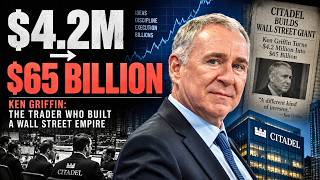
Today, this operation has grown from a single computer at Cabot House into a financial empire worth $65 billion . The massive expansion of Citadel demonstrated the strength of the original dormitory concept . By replacing relationships and intuition with cold, hard code, Griffin has successfully built an institution that fully views capital allocation as an engineering discipline .
In the 1990s, the trading floors on Wall Street were loud, crowded, and incredibly chaotic. Brokers tracked prices on clunky monitors and performed complex financial maneuvers, shouting over each other. The entire system ran on the shoulders of star stock pickers. These were people who made huge discretionary bets based entirely on personal beliefs, human emotions, and instincts.
But young Ken Griffin looked at that screaming crowd and saw a huge responsibility. He realized that human intuition was inherently imperfect, and decided to replace it with cold, calculating mathematics. Citadel quickly moved away from its initial strategy of trading convertible bonds. Instead, the firm aggressively created specialized quantitative departments focused on statistical arbitrage, global macro trends, and energy markets.
The goal was to systematically institutionalize the entire trading process. Citadel was developing a machine where human ego no longer played a role in deciding where the money went. To create this mathematical mechanism, Griffin realized that he could not rely on the usual set of financial insiders and recent business school graduates.
So he began recruiting exclusively from outside the industry. He sought out mathematicians with doctoral degrees , astrophysicists, and top software engineers from elite institutions. He brought them to Chicago, offering compensation packages that could compete with California's largest technology firms.
Citadel began to view software development and data infrastructure as its primary weapons . This influx of new talent immediately changed the way the firm operated. Instead of storing data in isolation on separate tables, information was strictly centralized across the company. Each trading model was constantly tested on historical data.
Signal processing, the ability to mathematically filter market noise to find profitable patterns , has become a high-tech science. Most importantly, they optimized the physical infrastructure to execute trades faster than anyone else. They have compressed the time it takes to buy or sell stocks from seconds to milliseconds.
All this brainpower and hardware served one specific function – to make a tiny, mathematically predictable tiny fraction of the profit in thousands of global markets day in and day out. Citadel protected its mathematical edge by implementing a rigorous institutional approach to risk management that set it apart from the rest of Wall Street.
Griffin created a central risk management committee. This group had a real overview of every position held anywhere in the firm. This chart visualizes how one trader's capital pool was controlled. As long as human traders have existed, they have been constrained by absolute drawdown limits. A hard mathematical limit that dictated exactly how much money they could lose.
If the strategy violated its risk parameters, the system took over . The positions were liquidated automatically. There was no room for discussion. Even if the trader firmly believed that the market was about to recover, the algorithm would still turn off the trade. By removing the final say from the trader, Citadel has created a system that is completely insulated from the everyday dangers of human error, panic, and emotional attachment.
The engineering paid off. By the mid- 2000s, Citadel's assets under management exceeded $13 billion. This diagram illustrates the mechanical reality of their strategy. Extracting tiny fractions of a percentage of profit only works when you operate on a huge scale . To make billions at this supposed limit, the machine needed extraordinary volume , fueled by leverage.
Leverage is the practice of borrowing huge amounts of capital against your existing assets to artificially increase your profitability. You trade with borrowed money to turn a tiny percentage gain into a huge dollar profit. Griffin justified this huge pile of borrowed money by conducting thorough stress tests.
The firm constantly simulated past market shocks to ensure that their highly leveraged structure could withstand whatever history threw at it. But this created a clear vulnerability. If models were based entirely on past data, what would happen if the financial world were hit by a systemic shock that exceeded all recorded models?
The same tools that Citadel used to eliminate daily trading risks – massive scale and significant leverage – created systemic vulnerability. If the underlying market structure were to collapse in an unprecedented way, the sheer size of their leverage would strain the firm's foundation. When the 2008 housing crisis began, historical models were faced with an event they had never encountered before.
The firm had developed a machine that was perfectly suited to weathering market shocks, and it was ready to absorb a shock that wasn't in the data. At the end of 2007, the global financial system collapsed. Subprime mortgage defaults began to cause a cascading collapse in the broader credit markets.
The contagion quickly spread to the pillars of Wall Street. Institutions with a century-old history, such as Bear Stearns and Lehman Brothers, faced sudden collapse or forced liquidation. For Citadel and its CEO Ken Griffin, the crisis has become a very different problem. The technology firm has built a formidable reputation for skillfully maneuvering through complex market data.
But the freeze that has now gripped the world was indifferent to their algorithms. The very market volatility that normally benefited Citadel turned into a complete lending freeze that actively threatened the very life of the firm itself. When the freeze began, Citadel had deep loan portfolios in both the credit and convertible markets .
Under normal circumstances, Wall Street relies on diversification. If one asset class falls, another usually remains stable or rises, balancing out the risk. This is a chart that tracks asset class correlations. In 2008, the mathematical concept of diversification completely failed . When liquidity disappeared overnight, correlations converged to unity, meaning that every asset type crashed, falling sharply in complete synchronization.
For flagship hedge funds Citadel, Kensington and Wellington, losses were mounting daily. By the end of the year, these flagship funds had suffered massive declines, wiping out approximately 55% of their value. Risk models offer zero protection when buyers simply cease to exist throughout the global economy.
To understand how Citadel survived this period, we must separate their severe trading losses from their actual solvency problems. This diagram illustrates the basic concept of solvency. Insolvency occurs when a firm owes more than it owns. Despite the collapse, Citadel's underlying assets remained greater than its liabilities.
But the immediate threat was a serious liquidity shortage. Billions in paper assets are useless if those assets are frozen and cannot be converted into cash. Citadel's cash flow was being actively choked on three fronts. Prime brokers have increased their margin requirements. Trading partners demanded a larger advance deposit.
And frightened investors rushed to exit the funds, demanding to immediately withdraw their capital. This created a death trap. If Citadel had sold its frozen assets in a panic market to pay off these investors, they would have received the sale price at distressed prices. These realized losses would instantly trigger the very insolvency they were trying to avoid.
Griffin faced a huge number of ransom requests, which led to a localized influx of funds into his bank accounts. Faced with a complete collapse, Griffin exercised a special contractual right to immediately suspend all investor redemptions, locking up client capital inside the fund, prohibiting withdrawals for approximately 10 full months.
Behind those closed doors, the firm conducted an aggressive corporate sortie. They cut operating expenses and systematically reduced their overall debt. Externally, Griffin approached banking counterparties directly, negotiating line by line to manually stabilize their financing. Depriving investors of access to their own money was a cruel, highly unpopular maneuver.
But closing the gates stopped the immediate cash outflow and protected the firm's foundation. The pressing question on Wall Street was whether any firm could survive the alienation of its customer base during a complete credit freeze. By sealing the vault, Citadel removed the pressure of short-term outflows and refused to liquidate its portfolio at the market's lowest point.
The strategy worked. Citadel successfully preserved its capital base and was able to survive the worst months of the global freeze. To survive the freeze, Citadel had to artificially extend its terms until the market panic finally subsided. As the calendar turned to 2009 and 2010, frozen global markets finally began to thaw, and asset prices slowly resumed their upward trajectory.
Because Citadel's assets were preserved rather than sold for pennies, the firm's portfolio recovered significantly along with the broader market recovery. During a systemic collapse, owning high-quality assets matters less than controlling one 's own liquidity. Ken Griffin secured the future of his firm by imposing a 10- month lockout on investors.
In the fall of 2008, the global economy collapsed. Trillions of dollars of wealth evaporated as the financial system completely collapsed. Citadel was a titan of the hedge fund world, but even they couldn't avoid the implosion. Caught in the middle of a market-wide crash, the firm began losing capital at an alarming rate.
However, they survived. They scaled back their operations, restructured the firm, and by 2012 had fully recovered all the capital their investors had lost in the crash. But the near-death experience revealed a deep structural vulnerability. By making huge long-term bets on whether stocks will rise, they carry an inevitable existential risk .
Surviving the crash forced strategic implementation. To protect its firm from another crash, Citadel needed a business model that could generate profits regardless of whether the stock market as a whole crashed or boomed. To achieve this, they divided the company into two separate structures. On one side is Citadel , a hedge fund that manages billions by making calculated directional bets on asset prices.
On the other hand, there is Citadel Securities, which operates as a market maker with a liquidity model that requires no guesswork about stock prices. By structurally dividing the empire, they could pursue high-yield investments with one hand and with the other, quietly dominate the mechanics of global trade, completely isolating risk profiles.
Citadel Securities doesn't care whether a company succeeds or fails. Their whole purpose is to act as a liquidity provider. They stand right in the middle of the market, instantly buying shares from anyone who wants to sell and selling shares to anyone who wants to buy. This chart visualizes how they profit from the golden mean.
Buyers pay a slightly higher asking price. Sellers accept a slightly lower asking price. The market maker captures this gap, the spread between the ask and ask price. For a single share, this difference is a microscopic fraction of a cent. For a retail trader at home, a fraction of a penny means nothing.
But when you apply absolute scale to this math, these tiny gains add up to a highly efficient revenue stream. Citadel Securities executes billions of these automated transactions every day. Achieving this scale requires replacing human decision-making with absolute mathematical precision. They created a distributed, high-speed algorithmic infrastructure for processing the workload .
They are reinforcing this network with low- latency microwave towers that transmit financial data between cities faster than traditional fiber optic cables could . And they've put it all together with automated pricing engines that constantly analyze global market conditions to adjust their quotes in microseconds.
This automated technology allows them to offer tighter spreads and execute trades much faster than traditional investment banks. It's a stark departure from the physical reality of the old trading floor, where brokers had to shout to match buyers and sellers. Backing up pure technological advantage with vast capital, market making has transformed from a human service into an automated, relentless system.
This chart reflects the current daily trading landscape, showing 100% of US stock volume. Today, Citadel Securities independently handles 25% of this huge pie. If you isolate ordinary investors , the numbers go up. They capture approximately 30 to 40% of all retail order flow in the US. Processing such a volume of data gives them a cost advantage that directly impacts their algorithms, creating a competitive moat that traditional firms cannot bridge.
This level of volume centralized control of the market, moving it away from traditional banks and localized trading platforms . The firm operates on a completely different axis than a typical hedge fund that looks for daily stocks. They built and maintain the servers, data channels, and quantitative algorithms that physically process the world's financial transactions .
Citadel positioned itself at the center of the exchange, ensuring that a quarter of the United States stock market had to pass directly through its own infrastructure to function. Every day, millions of shares change hands on the US stock market. At first glance, it looks like a huge decentralized network of buyers and sellers meeting in a public square.
But look at this pie chart. It illustrates a completely different reality. Approximately one in four stock transactions in the United States does not go through a public network. It is handled by one private organization, Citadel. The architect of this large-scale operation is Ken Griffin. His ownership of these dual financial structures has created a personal net worth for him estimated at over $35 billion.
However, 35 years ago, this large-scale financial transaction did not exist. It started as an experiment conducted by a 19-year- old from a Harvard dormitory. Long before the advent of sprawling server farms, Griffin was constructing hedged trades, balancing potential profits with calculated risks, manually entering them into an early personal computer.
To gain an advantage over market data at the time, he installed a satellite dish right on the roof of the building , receiving real-time price signals faster than his colleagues . This rudimentary one-man operation has grown into a global financial giant. To understand how this happened, we must dissect the two separate engines that keep this company running.
The Citadel empire is divided into two separate businesses. The first is Citadel, a hedge fund that invests capital for profit. We see here the financial weight of this multi-strategy fund, which manages assets worth up to $65 billion. Effective management of this capital allowed them to make huge profits.
In recent years, they have outperformed older firms, generating the highest aggregate net returns for investors of any hedge fund in history. Maintaining this leadership requires fierce daily competition with highly capitalized, multi-manager competitors such as Millennium Management. They also compete with other legendary heavyweights like 0.72 to attract the best mathematical talent and execute the most profitable deals.
Mastering the art of investing certainly makes them a dominant player. But trading stocks alone doesn't give you control over the financial system itself. This level of control comes from their second engine, Citadel Securities. This unit operates not as a hedge fund, but as a market maker. A market maker doesn't just guess whether a stock will rise or fall.
It acts as a vital intermediary, constantly offering to buy shares from sellers and sell shares to buyers, which facilitates actual transactions, keeping markets moving. This flowchart illustrates what this looks like. One out of every four retail trading orders in the US goes directly to the Citadel processing hub.
Processing this firehose of volume requires lightning-fast algorithmic software that instantly matches buyers and sellers with high mathematical precision. Because speed and data are everything in this space, they are locked in a continuous technological arms race with other quantitative giants like Jane Street and Virtu Financial.
Managing a high-yield hedge fund alongside large-scale market making creates a unique dual advantage. They possess the investment capital to significantly influence market prices, while simultaneously possessing the data channels necessary to process everyone else's trades. Operating on such a huge scale inevitably leads to tight regulatory oversight, especially with regard to the growing danger of market concentration.
Citadel pays retail brokerages to have trading orders sent directly to them , a practice known as paying for order flow. This channel puts them directly under the sights of financial regulators. This network diagram highlights the underlying fear–systemic risk. Critics question the centralization of a quarter of U.S.
stock trading within a single private organization. If Citadel's algorithms encounter unexpected volatility, the resulting errors could spread throughout the economy. Additionally, a major technological failure could instantly freeze the stock market. Serious time slowing down. This raises a critical question for financial regulators.
What are the consequences of allowing a single private firm, seeking to make a profit, to own and operate the basic infrastructure of the American stock market? The 35-year- old dorm room experiment has disappeared. In its place stands a massive, inevitable processor. For the millions of retail investors who click the “Buy” button today, their orders live, are executed, and settled entirely on Citadel’s servers.




Comments 0