저자: DanVerona · 외국인
요약 보기
파월 연준의장 임기 종료, 워시 취임 예정. 4월 CPI 3.8%(이란 전쟁발 유가 상승)로 금리 인하 어려움. 시장은 6월 FOMC 금리인상 확률 65~70%로 보나, 화자는 임금-물가 악순환이 없어 인상은 실수이며 워시는 현 금리 유지 쪽으로 합의를 만들 것으로 봄. 워시는 연준 역할을 물가 중심으로 좁히고 예측가능성을 강조할 것으로 기대됨. 중소기업 신뢰는 금리 예측가능성에 달려 있다고 주장.
다듬은 글
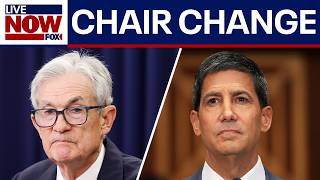
Jerome Powell's term as Fed chair ends today and incoming chairman Kevin Warsh has a balancing act to do from day one with the president demanding those lower interest rates even while those high gas prices send inflation skyward. Fox's Caroline Shively has the latest on this from Washington. I've held back firing him.
I've wanted to fire him, but I hate to be controversial. Jerome too late Powell, he's always too late. And he's very late with interest rates. President Trump has been pushing for Jerome Powell to step down as Federal Reserve chair for more than a year. If he asked you to leave, would you go? No. Now it's finally happening.
Not under pressure from the president, but because Powell's second term is up. I'm confident that that the Fed will continue to do its work with objectivity, integrity, and a deep commitment to serve the American people. President Trump handpicked Kevin Warsh as the Fed's next chairman hoping he would cut interest rates.
The Senate confirmed Warsh Wednesday. The nomination is confirmed. But that follows April's inflation rate coming in at a higher than expected 3.8% driven in part by soaring gas prices stemming from the Iran war. Warsh now faces the same dilemma as Powell has. Lowering interest rates can push inflation even higher.
I do think it's a test though and all chairs get tested within in their first six months. But high interest rates cause problems of their own. Part of the reason they can't cut rates is because of the war and prices. And what does that mean? Higher mortgages, higher credit card interest rates, higher student loans.
And then you see the cost of food and the cost of gas and the cost of farmers of urea, ammonia, and nitrogen in their fertilizers. Powell plans to stay on as a member of the Federal Reserve. His term on the board expires in 2028. In Washington, Caroline Shively, Fox News. Thanks for that, Carolyn. And I'm going to put up this X post on your screen coming from The Washington Post saying Jerome H.
Powell steps down Friday as chair of the Federal Reserve after running the world's most powerful central bank through a pandemic, the worst inflation in 40 years, and an unprecedented assault on the Fed's independence. So, today marks that major shift for the US economy as Kevin Warsh officially takes the gavel as the new chair of the Federal Reserve.
The Senate confirming Warsh on Wednesday in a narrow 54 to 45 party-line vote. Outgoing chair Jerome Powell did not leave the central bank entirely. He remains on the Federal Reserve Board of Governors where his term will run until January of 2028. That fresh data showing inflation is still running hot and speculation is already mounting over whether the Fed will be forced to hike those interest rates when they meet next month.
what does this leadership change mean for everyday businesses? Joining us now to break it all down is Dan Verona. He's the author of Rethinking Economic Growth. He just published a brand new op-ed titled Fed's next challenge, Main Street Confidence. Dan, thanks so much for joining us. Pleasure being with you today.
Of course. So, you know, Dan, today is a massive day for the economy. Jerome Powell's term as Fed chair expires today. Kevin Warsh officially taking the helm. You just published this op-ed about this exact transition. How will a Warsh-led Federal Reserve tackle inflation maybe differently than Powell did?
So, I think it's going to be a tackled considerably differently. Kevin Warsh's background as as member of the Fed Board of Governors and as a highly successful business executive brings a different focus. And that focus is around narrowing the mission of the Federal Reserve. And what I mean by that is that the Federal Reserve has been expansive in its focus.
It's gotten into quantitative easing in in dealing with shocks to the economy. What Kevin Warsh wants to do is narrow the focus of the Fed to what he sees as predictability and certainty and focus it around inflation. Now, for small businesses, I talk a lot about small businesses all the time. Certainty means everything.
For Kevin Warsh, he wants to deliver that certainty. Right now, he sees the Fed as having its fingers in too many pies and wants to narrow the focus. So, you had mentioned that Warsh's framework is fundamentally different citing it's maybe more disciplined and less interventionist. What's the immediate ripple effect of this leadership change on the markets versus the reality for businesses on Main Street?
So, I think we're not going to know the immediate effect on the markets until he officially takes over as chair and I believe he'll be sworn in sometime late today. So, we'll start to see some of that next week. The Federal Reserve doesn't have its first open market committee meeting until the middle of next month in June, but he'll be working behind the scenes.
He'll be looking through all the data, all the numbers. He'll be meeting with the Fed Board of Governors getting soundings from them and begin to chart his path. So, you had mentioned to me that even though the Fed of course doesn't meet again until June 16th and 17th, we should be preparing for those serious discussions about that potential rate hike.
With those prices still high, do you think Kevin Warsh's first major move is going to be raising those rates or do you think their hands might still be tied? Well, so there's there's two issues on the actually three issues on the table, three ways they could go. They could keep the rates us where they are and say, "We're going to continue to watch the data." They could cut rates or they could increase rates.
So, let me talk to the increase rates piece. Now Now they're all the markets are saying that there's a 65 or 70% chance that the Federal Reserve will increase rates. So, here's the issue that if we're going to look at an energy price shock and compare it to what happened in the 1970s, it's a big mistake because we're not comparing apples to apples, right?
We don't have any wage price spirals going on. We only have an energy or oil price shock. That's what's going on. Before this happened, prices were coming down throughout the economy. When the Iran conflict started, the Strait of Hormuz closed, we started to see prices going up. It would be fatal mistake for the Federal Reserve to do that.
Now, on the other side, there will be pressure for the new Fed chair to cut rates. Now, in the middle of an energy price shock, that will also be different or difficult for him to do. My sense is is that he will build a consensus around let's stay in the course for now and let's ride out this energy price shock and not create any other problems in the economy because if we raise rates, the stable employment situation could deteriorate.
Businesses like small businesses will stop borrowing, will stop hiring, they'll stop investing. So, for the time being, let's leave things as they are and see how this energy price shock plays out. So, you know, you mentioned the 1970s whenever you talk about that stubborn inflation and those high interest rates, people immediately panic.
They think back to then and you believe that's not the case. What would you say are the key differences between those inflation drivers of the '70s and maybe what we're facing right now? So, what was the interesting to me when I researched back on it over the last couple weeks is that we saw wages going up at outrageous numbers.
So, you had inflation that was going up dramatically and you had employers that was looking to to match it and we had what was called a wage price spiral and it kept happening. So, now what we have is you've got wages and inflation not even anymore. You've got inflation that is surpassing wages. Inflation is is somewhere now at around 4% and wages are at about 3.7%.
So, we're not seeing the same thing happen again. And because we're not seeing the same thing happen again, why would we raise rates? Why would we want to send a shockwave through the economy and send that message to the economy? It would be a huge mistake. You wrote that for small businesses, the predictability of borrowing matters almost as much as the rate itself.
Are local business owners maybe sitting on their hands right now because they just have no idea what the Fed is going to do next month? They've been sitting on their hands for years. When I conducted my book interviews, what was significant to me, clearly, a lot of unpredictability and uncertainty around federal policy.
But when we talked about the Federal Reserve and interest rates, they weren't quite sure what was going to happen the next week, the next month, or next year. That caused a lot of hesitation for them. And I believe that small businesses right now are absolutely uncertain. And if if we make the mistake of raising interest rates, we will be sending the wrong messages to the to the part of the economy that represents 99.9% of the country's businesses.
The Fed has two big jobs, of course, fighting inflation, maximizing employment. Kevin Warsh is widely viewed as an inflation hawk. Do you think small businesses are worried that his strict discipline on inflation might trigger a contraction in the labor market, or are they actually welcoming maybe a cool-off in that hiring competition?
Uh in the latest uh National Federation of Independent Business Survey, uh small business optimism is up a bit. I believe it was up a bit because they knew that Jerome Powell was leaving and and Kevin Warsh was taking over. I think it's a very positive sign. Uh I shared my op-ed with the small businesses who were in my book, and I got positive feedback uh around it's about time, and we're very excited to see Kevin Warsh as chair of the Federal Reserve.
I think they're energized and pleased with Kevin Warsh in that role. You call inflation a hidden tax that compresses margins for small businesses. If you're a local contractor or manufacturer right now watching Kevin Warsh take over, what is the number one signal that you are looking for to regain confidence?
So, I think the big thing is is Kevin Warsh going to stick true to his word and deliver certainty? Is he going to narrow the Fed's focus and mission as he promised? Are we going to have predictability and certainty around interest rates? Those will be the key indicators for small business owners all around the country.
Let's look at the calendar. Kevin Warsh is President Trump's pick, and his term as Fed chair will outlast the current presidential term. If the White House, let's say, flips in the next election, then a Democrat president will inherit Trump's Fed chair for over a year. What happens to market confidence and Main Street if we get, you know, a new administration that completely clashes with Warsh's monetary policy.
Well, there is still independence of the Federal Reserve. It will be up to the Federal Reserve chair to manage monetary policy as he and and the Federal Reserve and the Federal Open Market Committee see fit. If there are differences, differences are fine. Uh the new president will have an opportunity at the end of Kevin Warsh's term to either reappoint Kevin Warsh or to appoint someone else.
All right, Dan Veronis joining us here on Live Now from Fox. Thank you so much for your expertise. We always appreciate it. It's a pleasure. Of course. All right, I'm going to put up this ex post there on your screen coming from the Federal Reserve saying as Chair Jerome H. Powell's term as Chair concludes and with the swearing in of Kevin M.
Warsh as his successor pending, the Federal Reserve Board on Friday named Powell as Chair pro tempore. The temporary action to name the incumbent as Chair is consistent with past practice during similar transitions between chairs. Powell will serve as Chair pro tempore until Warsh is sworn in as the new Chair. That ex post there coming from the Federal Reserve.


Comments 0