저자: JeffreyGundlach · 외국인
요약 보기
Gundlach은 금리가 약 40년 주기의 장기 상승 사이클에 진입했다고 보며, 부채 부담으로 장기금리가 수백bp 이상 오를 수 있다고 주장한다. 1월 CPI가 예상보다 뜨거워 연내 6회 인하 기대는 과도하다고 평가하며, 3개월 연율 근원 CPI가 4%로 상승한 점을 지적한다. 연준이 인하에 나서기 어렵고, 2년물 국채금리가 연준을 이끈다고 본다.
다듬은 글
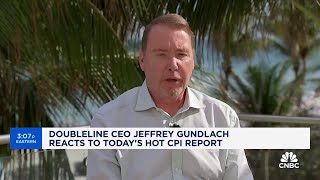
I want to hear from Jeffrey gunlock double line of course who joins us exclusively now on closing bell from the ETF exchange conference in Miami with our very own Bob Pani and Bob what a day to have Jeffrey gunlock with us today take it away and Scotty uh it is a big day of course Jeff joins us here speaking of course at the ETF exchange conference Jeff you just uh addressed a thousand people in in the uh in the audience your basic message today interest rates at Bottom I want to talk about CPI but get to that message right now interest rates have bottomed what's the implications for that for investors well interest rates have very long Cycles historically for whatever reason they tend to move in a broad trend for about 40 years and we all know that interest rates kind of rolled over at very high levels a little over 40 years ago and now interest rates are up over the last couple of years so it's almost exactly 40 years and I just think that interest rates were absurdly low particularly real interest rates and now real interest rates are reasonable but I think that we have a problem with the amount of money we need to borrow uh and that will cause a strange movement that we're all used to thinking that the economy gets soft and interest rates are uh taken way down by the fed and long-term interest rates also go down by a couple hundred basis points at least but I got a feeling that when the economy weakens enough so that the Fed really does cut in Earnest I think we're going to be having a real big problem with people understanding how much debt expense we have and they might start thinking that longer term interest rates need to be at well they were 10% real yields in 1984 so it's not at all implausible interest rates could go up into the high single digits and it's part of this long-term uh long-term Trend now one thing I think that the economy is more vulnerable under a rising interest rate regime than it is under a falling interest rate regime under a falling interest rate regime companies that are in trouble and maybe marginal credits they even though uh they might have to pay more on a spread basis they're they're paying lower interest rates so they can refinance and take money out and reduce their interest expense that prevents defaults that supports all of the risk assets uh they're Reliant upon financing of marginal companies but when interest rates are rising maybe they'll have to default so maybe it adds volatility of to the economic cycle and certainly that was the case when interest rates were rising in the 70s and 80s there was tremendous economic volatility so I think interest rate volatility and higher interest rates as a theme create more vulnerable markets yeah know Scott was mentioning it's a big day to have you on January CPI was hotter than expected on almost every level how does this play into the expectation for interest rates cuts the market was expecting six where where are you at and what how does this data today change those expectations you need I think the market has had tremendously overpriced the amount of cuts this year it was down to almost a certainty of six and it seemed that the FED since they weren't going to move in March per the words of the chair chairman that that means they're getting started in in May and then there's this thing called the election that I don't know they probably aren't primarily focused on that but to have six rate Cuts between May and the end of the year always seemed like a lot to me absent some very substantial Improvement in inflationary data which did not happen today does the FED care about elections of J pal if he was sitting here would say we don't make decisions based upon elections Is that real or is the Fed actually influenced by election I think I think they don't want to be blamed for anything so weirdly uh it doesn't matter if they intend to uh be be political even if on a secondary variable which is where I would place it they they just they care about the Optics of things and they would prefer all things being equal to be a little bit less aggressive I think uh in in an economy like this now the CPI today it's funny how the inflation discussion has changed over the past year and a half or so uh we went we went from uh it was going to be uh this super core pce was going to be the inflation metric and that was rolled out of Jackson Hole I think it was in 2022 and they don't talk about that at all anymore but instead back in November when it seemed like they had a radical change in tone on November 1st it seemed like all of a sudden we were talking about picking and choosing different inflation indicators and not focusing exclusively on year-over-year but doing things like six-month annualized three-month annualized and as of and today's report came back to bite him on this because the three-month annualized core CPI is going up now it's 4% it's 4% the 12 month number is 3.9 so it's no longer well we can look at the 3-month annalize and take comfort because that's what's really the trend is and maybe it'll stick because it's not sticking anymore it's going up so what really matters though is not the C the CPI although it's it's important it's the it's the pce that comes out on the 29th and we have PPI coming out I think on Friday if I'm right and that will give us a pretty good idea of what pce is if P pce cannot go up uh and have the FED talking about cutting interest rates and we've all been trying to figure out what's the leading indicator to look for here and you had a fascinating discussion here at this conference about the two-year treasury as the leading indicator we we tend to think the FED leads the two-year and moves things around and your position was that's actually not true it's the two-year that leads the FED around so what is the two-year the two-year telling us right now the two's sort of telling you that you're going to get about 100 basis points of on average over that 2-year period


Comments 0