원문 보기
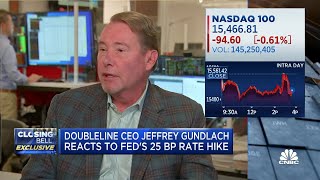
and Jeffrey gunlock joins me now for a CNBC exclusive interview it's good to be back here in Los Angeles with you indeed welcome back it's been a long time it has we continue our streak of fed days with you your reaction to the decision when you were with me in June you said quote I don't think the FED is going to raise rates again yet here we are yep they raised again and obviously the bond market was way ahead of this I mean the warp function which gives you a probability from the shape of the short and the yield curve was over 99 and I don't think we've had uh one a meeting really since this all started where there's a unanimity of opinion that a there's going to be a hike but that there wasn't even any debate there was going to be 25 or 50.
so they're obviously slowing down the yield curve remains inverted it de-inverted there in the aftermath of the regional banking problem with svb and that was a real recessionary sign that was a element where the markets were getting pretty nervous because the recessionary signals really you get on a watch when the yield curve gets very inverted but as was brought up in some previous guests on your your network today it's when it starts to de-invert that you really get worried and that stopped happening once the the bank crisis calmed out so the D inversion is what you have to have to look for and it hasn't really happened I mean we're back out at about 100 basis points twos tens and we're really inverted from the three-month Bill to the 10-year Treasures we're watching for that we're also watching for the gap between consumers views of the present start to deteriorate and meet up with sort of the what they have the view of the future which is almost always on the pessimistic side it's kind of weird they always think it's going to be a little worse in 12 months that has started to narrow a little bit but not not enough yet so uh the other thing that's really important I think why I thought that the FED shouldn't wouldn't raise rates and I think they shouldn't have I kind of agreed with David Kelly who was on right before I think the statement was was announced that they've the right to be uh a reason to be careful here and we've been talking about this the last few appearances I did with you that inflation is coming down and you know the headline CPI went from 9.1 to I mean people say it's three but amazingly it actually has a two handle if you go to the two decimal points it's 2.98 and there's big numbers rolling off for uh the pce particularly the core pce in the next three to four months it's possible the pce could go down to a three handle on the core level uh really the this coming month because there's a big number rolling off and that the headline pce which no bigger like talks very much about but it could go down into the twos uh fairly soon so we believe that the inflation rate is pretty much where the FED should really be happy with where it's right now no I I did a funny study I said how what is we keep getting this rhetoric of the two percent average inflation rate over time do you know what the uh the core CPI average or the last 20 years per annum 2.0 percent it's exactly there so we're exactly there and and if you took headline CPI and replaced the owner's equivalent rent which is a big slug of the headline CPI if you replaced it with a actual home price movements from these indices the CPI would not be 2.98 on the headline you know what it would be zero if you replace owner's equivalent rent with home press appreciation so I think the FED uh should take David Kelly's advice and try not to uh you know just be on a pro programmatic sort of situation because the data seems to be getting a little bit better what I hear you saying is that the FED should declare victory in a sense out of this whole thing and go home that that they shouldn't hike anymore because they don't need to I don't think they do if that's kind of my point of view when we spoke last time


Comments 0