
원문 보기
We've got good news for you as Bloomberg's Ed Ledllo with the CEO of Nvidia, Jensen Wong, as well as the president CEO of Seaman's Roland Bush. They're at the CES right now and we want to hand things out to Las Vegas. Ed Ledllo, you have the con. Thank you, Joe. Over 175 years, Seammens has been at the forefront of, I'd say, several industrial revolutions.
Nvidia is at the forefront of the latest AI industrial revolution and it's it's a pleasure to have you both here with us, gentlemen. Roland, I I want to try and understand how real this is. You call it um an industrial AI operating system. We're going to talk about how you're joining forces on the software side and the hardware side.
But I think the most useful place to start would be could you outline a timeline for when Semens goes beyond its own footprint around the world using this operating system to customers actually doing things at scale because I think when you're on stage that's the kind of sense I was getting you want to accelerate to scale
well I mean this technology is already in place and it's working. I mean we see many examples I brought some on stage today where you have customers um starting with a digital twin of a product they want to manufacture a digital twin of the manufacturing side and bring that all together and not before that you have it optimized then build it in the real world and AI is already working on the shop floor they call it machine learning but the point is with the new models you can bring that to the next level that means you go away from giving an advice to somebody with techn technology but really act on your behalf.
This is when things go more autonomous or adaptive. Um and you see that already starting the big thing is how can we scale it because it requires a lot of skills from our customers, a lot of technology and it's still not that easy to implement. We are working on it to make it easy to deploy and easy to use but you see picking up momentum uh with each step we do and we saw some great examples.
Is it ship building? Is it food and beverage? Um but even startups using our technology like comic post fusion systems you know Jensen you um we've discussed the five layer cake often you know with with Nvidia it started with the GPUs but it's now software uh the element of simulation on stage you talked about integrating uh the software side in particular into EDA again similar question for you more of a timeline what is it you think you'll do first in how you guys work closer together
well the first thing that let me just uh say very quickly we're announcing a big partnership between uh we've known each other for a long time, but this the partnership we're announcing is really a big deal. Uh one, we're accelerating their EDA software. We're accelerating their simulation software.
We're integrating AI technology, physical AI and Agentic AI into their team center and their factory automation operating system. And so we're working together across this entire spectrum. When we accelerate the software, then we'll get to use it to design our chips and systems. When we accelerate their simulation software, we'll use it in our AI factories to simulate the thermal um uh uh properties of our AI factories.
Uh when we integrate our automation and agentic systems into their AI industrial operating system, we can then use it in our factory floors with our partners, for example, Foxcon. And so we're working across this entire spectrum together and we're going to put the technology to use basically as soon as we can.
What's the net effect for you Jensen? Is it improves margins, efficient capital allocation? I know that might sound a bit dry, but that actually right now that's the answer everyone's searching for. How is this investment in AI and use of the technology actually changed things in the real world for me?
Well, we announced yesterday Vera Rubin. It takes se six different chips to integrate into this incredible system called Vera Rubin. And when you're done, each one of these Vera Rubin GPUs is 240,000 watts. And it is 10 times more energy efficient than the last generation. It is 10 times more costefficient than the last generation.
But it's still the technology is insanely complicated. 100 uh 15,000 engineering years came together to build this system and so when we accelerate EDA tools when we accelerate simulation tools and when we can eventually and I'm hoping very soon design entire Vera Rubin systems inside of Seaman's digital twin
the chance the ability for us to create much much more complex systems will scale will do it much more efficiently and so this is really about being able to do the impossible and being able to do it imposs the impossible right the first time and and let me add and and um once we they realize that AI creates real world impact this is where it really deploys the full power and also the economic power it's not only in the data centers for AI factories which we see but also on the edge because once you start inferencing with low latency you bring this technology to the edge there's a huge potential for our customers too uh to deploy this technology and this includes of course it includes hardware where we come from from the JITS.
Um it goes into the controllers some of our controllers run on GPUs. Um and then it goes all the way to industrial PC. Exactly. And and we and we are AI industrial wecharge it and they can now run algorithms trained in the cloud. they can run it on the shop floor and do all that trick what we talked about it in real time optimization and running in a plant.
Um and that makes a huge difference drives economic growth. The question that's being searched for is how is this going to manifest in the real world? You know, the emphasis at this year CS I think is physical AI is not the manifestation of of the the final stage of physical AI just one giant robot that you guys call a factory in the manufacturing context.
Is that where you're seeing demand from actual customers? You know that they need a factory that is automated 100% and genuinely autonomous in some degree. So number one is if you want to build a factory and uh very often you're missing out on labor um and we talk about skilled labor it's hard to find number one.
Number two is once you build it um autonomous and and automated then you have a much much higher yield but you can generate you use less energy by the way at the same time you really optimize it in in a way so therefore there's a lot of benefits. Um and if you want to talking about the United States, ramp up manufacturing United States, you need to go as digital and as automated and AI supercharged as possible.
A factory is robotic and it is orchestrating robots that are building systems that are also robotic. Like for example, a self-driving car is a robotic system. And the reason why it's so hard to deploy robots today is because it's hard to program these robotic systems. The the software expertise necessary, the customization necessary is really intense.
It's it's just too much. And so the fact that we could now apply artificial intelligence, physical AI technology to these robotic systems, make them easier to teach. You showed a few demonstrations and the AI learned it by itself. Would you go as far as say Jensen that you've solved for that that software limitation?
That software limitation is is the Chad GPT moment of it is now here. I think over the course of the next couple two three years we're going to make some really big breakthroughs. Let's please talk about energy electricity power supply call it what you will in turn for each of you how worried are you about it as a bottleneck and what is your experience dayto-day and running both companies in in that respect?
Well, energy should always be a bottleneck for any industry and this is a new industry that's growing incredibly fast. As you know, AI is both a technology that's going to revolutionize many applications and we're talking about some of them here. But the AI industry itself, the tech the manufacturing of the artificial intelligence takes energy.
It takes energy. It takes AI factories. It's exactly the reason why from Hopper to Blackwell, we increased energy efficiency by 10x. From Blackwell to Reuben, we increased energy efficiency again by 10x. And that translates directly to our customers revenues because in the case of an AI factory, whatever factory size you have, you're limited by the power and that power within that power constraint, you want to have the most tokens or most AI per watt that you can possibly generate.
And so every time we improve energy efficiency, we're effectively improving both the AI capabilities for our customers and their revenues because they're always constrained by power. The response to your keynote and forgive me Rol in one minute was, you know, ver Ver Rubin 10x throughput really important
tokens generated at onetenth. Um, but they'll still say, "Hey, Jensen, what if the electricity is just not there? It's not available." Well, there's electricity. They're never enough electricity. What is the anxiety level for you both about that issue? There's always energy. There never enough energy.
And this is every end every industrial revolution will be energy constrained. And this industrial revolution is also energy constrained with now one of the most important things though here speaking about the United States. Um if not for President Trump's pro- energy growth agenda, we would have a very hard time growing at all.
In order for a new industry to emerge, you need energy. And so I think it's safe to say that we wish we had more energy in the United States. Europe wish it had more energy. I think the the world all wish we had more energy. And so we have to invest in all sorts of different forms of energy. But whatever energy you have, you have to make it as energy efficient as possible.
And that's one of the reasons why both of us drive our technology roadmap so hard because every single new generation of technology is more energy efficient than the last. That's kind of the nature of it. You are in the AI factory. I won't say data center cuz data center is where you store data but you are in the AI factory supply chain you must see it.
So what what we see is number one is you see that the energy demand um is roughly scaling with the GDP growth. It's decoupling because exactly of this effect that we are providing more and more efficient technology. So that means you are decoupling but still it grows along with economic growth and then on top comes a demand for data centers.
They demand high quality of energy at the same time. Um, which in in in some cases creates bottlenecks. Is it not from power generation and you talk is it either renewables or gas turbines. There's a huge bottleneck for gas turbines as we speak. It goes all the way to high voltage transformers to medium wage and switch technologies.
So therefore um you see along the whole supply chain obviously there's a huge demand. We are serving that. There's a reason why this business of ours is growing extremely fast. we can keep up with the demand of our customers but in some cases you might end up in bottlenecks. If you keep on going as fast as possible, it's a regional dependence uh in some cases where you have good programs, good policies um you see that it's catching up along with the demand.
In others, you you might end up in in a gap but you see is on is on the demand is is higher than supply chain and we are ramping up the case for we invested in which is ultimately the condition we want. Yeah. We want a condition where the demand is very strong because there's, you know, great demand for new technology.
Specific to you, Jensen, how severe is the memory bottleneck right now? Well, the memory bottleneck is severe, but we're fortunate to have worked with all, you know, first of all, Nvidia is the only company that works with all three of the HVM suppliers and and all three of them are major customers and major suppliers of us and and so so uh we have we had the good fortune of working with them for a very long period of time and uh we've got things all planned out.
It's going to be okay. You've been asked a lot about China in the last 24 hours. I'm going to ask you a slightly different question. What is the attitude of the Chinese government in allowing H200 to go into the country? I understand the position on licenses, the administration here in the United States position, but but what does China's government say to you about how they want to approach it?
Uh I haven't spoken directly to them. Um but but um ultimately uh the way they'll communicate through us to us will be through the companies. If the companies are are allowed to buy Nvidia products in China, then there'll be strong demand and we're seeing strong demand. And so I think indirectly they they've uh communicated with their companies.
I've learned a lot about Seammens's work in software. And I've always thought the word Seammens to be synonymous with with industrial manufacturing physical things, it's the same lesson we've been through recently with Nvidia trying to understand actually the software competencies. Is that an area where we might see you be active in M&A?
Think about what you else you might need that you might not get from the Jensen and and uh Nvidia partnership. So you might because we will we will increase our software competence, our software portfolio. Actually it's it's a little bit short of 30 billion which Seammens invested in M&A to build our software competence.
Uh which brings us to the point that today exactly today we can build the most comprehensive physics- based digital twin of whatever you want to build still there are pieces in operational software software which runs plans where you can look into that AI gives new spaces obviously we invested in domatics it's life science so it's about molecules we can imagine doing more there also in simulation but also building um um a data backbone for this life science industry.
It's super relevant. We did it for other industries with team center. We repeat that now with Luma for life science which is uh again shortening cycle times and reducing costs for life science and drugs and medicines. So um and I mean the beauty of it is that we live in both worlds. We have the domain know how we know how to run things, how to operate um how to automate plans, buildings, grids, trains and and we have the software competence too and and that makes us brings us in a unique position and then and then we need strong partners which are which have complimentary technology which is so amazing and if that comes together you see matching things happen.
Well, Nvidia will have access to new technology on the infant side through Grock. Um, I'm going to do my classic Jensen, could you please clarify for me question, which is, is this an acquisition or is it a licensing deal spread over time? Because Jonathan and Sunny joined. We we hired 400 or something like that, a little bit less uh, incredible engineers and we also licensed their technology.
um they they uh designed an architecture that's very very different than than um what we've done and it's focused uh on low latency token generation. Um NVIDIA is incredibly good at inference and we're we're great at training post- training as well as the inference phase and test time scaling of of AI and so so we've got that that that uh space covered.
Uh I'm excited about some of the work that we might be able to do together to invent a new segment u that might be able to address future use cases. Um and I haven't described it to people but but the time will come. So you know Jonathan um is kind of behind the TPU and the LPU and you know before all of this happened there was um Grock V2 and V3 and and you know all of that and it's leading to me to ask what would that new platform or segment be?
What is what is it that you're trying to build on with those? I haven't told anybody yet, but I'm here. J tell me. You know, I'm going to look in the camera and tell you that that uh come to a GTC conference in the future and I will tell you all the secrets. I'm going to make a hard pivot because I have to data centers in space.
I reported just before the holidays that the reason SpaceX wants to go public the first GPU in space. Bear with me. Bear with me. The reason that SpaceX wants to raise 304 $40 billion, whatever that is, needs to buy the GPUs. Have you discussed data centers in space with with Elon and SpaceX Jensen?
I can't discuss what I haven't told everybody I've discussed with anybody. You think it's a viable technology platform? Sure. Sure. I mean, there's lots of energy in space, right? And and um uh and the cooling is is uh abundant in space. And so that the the challenges of of um AI factories um are are different out out in space.
It would be AI factories in space. Yeah. for forgive the ignorance almost, but are we literally talking about the same architecture for the GPU that goes into an AI factory still just being able to go into kind of a satellite form factor? Yeah, sure. But the way that you would cool it and power it would be very different.
And so the system design will be radically different. The chips will be the same. You're pretty concerned with data centers or AI factories here on Earth. Does Seaman see the need for or viability of such a technology? I don't know whether we explored all potentials on Earth yet. Uh but there's one beauty in this idea.
Um think about any kind of manufacturing which want you want to bring to space. Um everything what you produce you want to bring down to earth. It's hard if you do energy how to bring it down to earth. It's hard if you produce any kind of hardware how to bring it down. But tokens, intelligence, I mean you can transfer easily to Earth.
So therefore, if I would start doing produce something um in space, I would start there. We should talk about autonomous driving. Have you seen Elon Musk's response to to your keynote yesterday? No. What do you say? Part one in simp in short was well, we we were already doing that smiley emoji on X.
The the the the other part of And by the way, I wouldn't be surprised. Um uh first of all I think I think the Tesla stack is the most advanced AV stack in the world and and um uh I think the Tesla AV operations is the most advanced in the world and and I I'm I'm fairly certain that that um they were already using endtoend AI.
Yes. and whether whether their their AI also did reasoning or not um is somewhat secondary to to that first part of his point was that the first 99% is hard enough but the long tail thereafter is is important you know it's very difficult the question I got from the audience that was at your keynote was on a dollar per mile basis what is the fundamental difference on your stack and your software approach to Tesla's vision-based approach
um ours is also vision based You know, of course, we have we have in addition to to vision, we also have radar and LAR. Um but um but otherwise otherwise the approach is rather similar. I I think I think Elon's approach is about as state-of-the-art um as anybody knows of autonomous driving robotics.
And so it's it's a it's a a snack that's hard to criticize. I I wouldn't criticize it. I I would just encourage them um to continue to do what they're doing. They're doing a great job. physical AI for you is and forgive my pronunciation but Erlangan manufacturing site when's that real it's the same question
I mean contra in contrast to the site you was talking about before this one exists I mean we are we are ramping up we are automating it as we speak using technology I showcase some of that and we are we are already deploying step by step now on that very same side this technology we was talking about the AI brain the digital twin composer uh real worlds uh and real time connectivity to what happens um on the shop floor.
So you can act and and drive basically dynamically what's happening on the shop floor. So um and we will talk about more along uh 2017. So cool. They're using Seammens is using a video technology in the seams factory and is using Seaman's technology in our Fox video factory and so you know it's a great partnership.
Jensen you are one of the most uh important and biggest employers in Silicon Valley. you know, I've been down to to Santa Clar, you are a leader of the technology industry right now. The industry and those of us that live in California are reviewing the billionaires tax. The question that a lot of people submitted to me to ask you is how does that impact that talent pool and the industry and Silicon Valley?
Is it something that's of concern to you or it is not? You know, I got to tell you, I haven't thought about it even once. Uh we work in Silicon Valley because because um that's where the talent pool is and and um we have offices all over the world wherever there's talent. We have offices we have offices in in Germany.
We have office in you know all over the world. And so so um we chose to live in Silicon Valley and and um uh whatever whatever taxes I guess they would like to to um uh apply uh so be it. you know, I'm perfectly fine with it. It didn't It never crossed my mind once. I appreciate the answer. And again, you know, it's right now in the technology industry, it's what people are reflecting on.
Uh we've had No, really, not this person. Not this person. This person is trying to build the future of AI. And that's what the conversation was about today. Roland Bush, Seaman CEO, Jensen Wong, Nvidia CEO, thank you very much for your time. I'll send it back. &. On Friday, the Supreme Court did not release its ruling on the case related to the president's tariff policies.
And now it appears that the next day we could potentially get a ruling is Wednesday, January 14th. We don't know which cases the court will release opinions on that day. They do not tell us that in advance, but January 14th appears to be the next day we could potentially get a ruling. So be prepared for that just in case.
The Supreme Court's decision on the administration's tariff policies will have a very important impact on the entire market. Now, as for Nvidia, we learn a lot this week. Jensen took the stage at CES and told us that Agentic Systems will take off from here. Jensen told us that Nvidia has built up a massive amount of DGX capacity to develop open- source models that help drive the entire industry forward.
Jensen unveil first autonomous vehicle will hit the road in Q1 in collaboration with Mercedes-Benz, and that the Mercedes-Benz CLA was just rank the number of companies working with Nvidia to develop reminded us that Nvidia provides the holistic robotic stack powering physical AI by means of three different supercomputers.
, and AGX Thor for real-time inference on the edge. Jensen also gave us an update on Rubin telling . Additionally, this week we got Foxcon's monthly revenue report showing that the company had a very strong fourth quarter. Ruben being on track to launch this year and Foxcon's strong revenue numbers coinciding with the .
Also this week, Lenovo CEO along with Jinsen Hong unveiled the Lenovo AI cloud gigafactory which will be built on Nvidia's Ruben platform. Nvidia and Seammens announced this week that they' and week, Caterpillar showcased at CES how they are integrating Nvidia's technology to transform the industry through physical AI.
By integrating Nvidia's jets and Thor, speech models, Omniverse, and more, Caterpillar is unlocking new efficiencies as the world moves toward physical AI and real-time inference on the edge. This is a great example of Nvidia's AGX in action, enabl. Also this week, Nvidia CFO told us in a fireside chat that demand has increased since Jensen shared that $500 billion cumulative revenue figure with us at GTC back in October.
Nvidia CFO also told us that the US government is working feverishly to approve licenses for Nvidia to ship H200 to China. And then we got multiple pieces of Nvidia China news with Bloomberg reporting that China could approve H200 sales as soon as this quarter and Reuters reporting that Nvidia is requiring full upfront payment from Chinese customers who place orders for H200.
Jensen also spoke in an interview with Bloomberg this past week, saying that he thinks the Chinese government already spoke with large tech companies in China about the H200 and therefore the fact that Nvidia is seeing strong demand from Chinese customers makes Jensen think that Chinese regulators will allow the sales to happen.
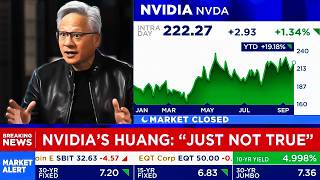
Now, regarding the stock, I know that Nvidia stock has not done much recently and to be honest, I don't know what the stock will do in the short term, but I do know that the fundamentals of the business remain very strong and that Nvidia is trading at what I would consider to be a low multiple given the company's future projected growth.
Nvidia's valuation is more than supported by the company's earnings growth. Therefore, as the company's earnings continue to grow, it'. I cannot tell you when that's going to happen, but I can reasonably say that I think it is inevitable. I'm , given the combination of Blackwell Ultra's Swift production ramp, Vera Rubin already being in full production, and coming online in the early part of this year.
Additionally, I'm optimistic about the year ahead and enic AI. I'm also very bullish on Iron. The fundamental thesis remains firmly intact and I am very bullish on Iron in 2026. This is the year that nd with all the talk about how the industry is constrained on power, it's worth mentioning that Iron has nearly 3 gawatt of secured renewable power.
As long as the world ron is projecting 3.4 4 billion in AI cloud ARR 100x Iron's . And ignore the noise. The fundamental thesis remains intact. And I am very bullish on Iron this year. As I mentioned, stretches well into 2026. And I expect the world to continue to be compute . Looking beyond agentic AI, I think the next major surge in compute demand is likely to be fueled by physical AI.
I'm so glad that Nvidia shined t CES this year, as I've been talking about it for months, saying that this segmen. And this is one of the main reasons that I . Most analysts are not



Comments 0