
저자: MohamedEl-Erian · 외국인
요약 보기
결론: 엘-에리안은 연준이 인플레이션 예측과 긴축 시기를 잘못 판단했다고 비판하며, 연착륙 가능성은 낮다고 본다. 연준 정책 비판: 연준의 '일시적 인플레이션' 전망은 틀렸고, 기대 인플레이션이 실제로 변했다. 기자회견 이후 시장 변동성이 과거보다 3배 높아 소통 실패라고 주장한다. 유럽중앙은행과 영란은행은 실수를 공개 설명했지만 연준은 그러지 않았다. 긴축 지연: 2022년 3월 인플레이션이 7%를 넘었을 때도 연준은 유동성을 계속 공급했고, 최소 1년 전에 멈췄어야 했다. 파월 의장이 늦은 이유는 분석 오류, 강한 회복 훼손 우려, 재임명 고려 등 여러 설명이 가능하나 확실하지 않다고 말한다. 그 결과 수십 년 만의 급격한 금리 인상 사이클이 발생해 성장과 금융 안정이 위협받았다. 재정정책: 버핏이 재정정책 책임을 언급한 데 대해 이견을 밝히며, 팬데믹 초기 긴급 재정은 정당했으나 이후 시점의 지원은 문제였다고 본다. 은행 위기: 엘-에리안은 '위기'보다 '격동'이라 부르며, 일부 은행의 경영 부실·금리 사이클 관리 실패·감독 미흡이 겹친 결과라고 설명한다. 예금 전액 보장은 법적으로는 아니지만 사실상 그런 신호를 준 것이라고 평가한다. 규제·그림자금융: 앞으로 은행 규제가 강화되고 은행의 경제 활동 기여가 줄 가능성이 크며, 자금은 그림자금융으로 이동할 수 있어 이에 대한 감시가 필요하다고 본다. 모바일 뱅킹으로 예금 인출 속도가 빨라져 효율성과 회복력의 균형이 중요하다고 강조한다. 기타: 대학과 민간 부문 경험을 비교하며 맥락 파악·신속한 행동·소통과 수정 능력의 중요성을 말했다. 가벼운 주제로 뉴욕 제츠 팬 이야기도 나왔다. 이 영상에서 대상 자산에 대한 명시적 1~3개월 방향 예측은 없다. 연준 정책의 실수와 불확실성, 은행 시스템의 취약성을 언급하는 데 그친다.
다듬은 글
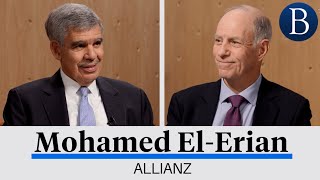
Welcome to Barron's. I'm Andy Server, and I welcome our guest Mohamed El-Erian, president of Queen's College, University of Cambridge, as well as chief economic advisor to Allianz and, I understand, a professor at the Wharton School. Yes, thanks for inviting me, Andy. Nice to see you, Mohamed. I want to start by asking you a little bit about the Federal Reserve's interest rate policy .
I know you criticized J. Powell, but my question, Mohamed: isn't it too early to criticize? I mean, shouldn't we wait until everything settles down and maybe he 'll make a perfect landing in the next 12 months and everything will be fine. I really hope so. Let me start by saying that it is very unusual for me to criticize any central bank, let alone the Fed.
I grew up in this world. I had a lot of respect for them and I believe they play a central role. But I also believe that when a central bank makes repeated mistakes , it should be held accountable. And he must be responsible, because accountability is the key to his political independence. Politically independent central banks are absolutely critical for the proper functioning of the economy.
And without accountability, it is impossible to have politically independent central banks. So I was unusually critical because this Fed made mistakes. So, isn't it too early? No. We know, for example, that the forecast of transitory inflation was wrong. Transient means not only short-term, but also that people do not change their behavior.
They believe it is temporary and can be fixed. But people really changed their behavior. So, it's not too early to call this a mistake. It's not too early to call communication a mistake. There is evidence that during this Fed's press conferences, markets are three times more volatile than they have been in the past because the messaging has not been consistent.
And finally, it's not too early to mention the third mistake— not admitting one's own mistakes. The Fed is the only major central bank that has not come out publicly and explained why it got inflation so wrong and why it started fighting it so late. The European Central Bank did it. The Bank of England did it.
So I don't think it's too early. That doesn't mean we shouldn't hope they can land perfectly. I really hope so, because there's a lot at stake, but I think it's unlikely to happen. You just said, Mohamed, that it's important for the Federal Reserve to be independent. Does this mean you think she is not independent?
No, it is independent, but this independence may not act independently? If there is a feeling that the central bank is constantly getting it wrong , the political system intervenes because we give them enormous power. They are the only government agency that doesn't have to go to Congress to make a major decision that affects all of our lives.
If the administration wants to raise taxes or increase spending, they have to go there. If the Federal Reserve wants to inject $ 7 trillion into the economy , it can do it. If it wants to lower or raise the interest rate, it doesn't have to go to Congress. It is now critically important that they have this independence, the so- called operational autonomy, but they must justify it.
Don't you think that some of this Fed activity was a reaction to the perception in Washington in 2008, where both fiscal and monetary policy did not respond sufficiently to the financial crisis? So this time they didn't want to make the same mistake. Yes, I was actually among those who called on them to do more in March 2020 when there was a sudden stop due to COVID.
However, what is important is what happened next. I'll give you a very simple example. In March 2022, when inflation exceeded 7 %. The Fed was still injecting extraordinary liquidity into the system. They should have stopped. They should have stopped a year earlier. But they didn't do it. I think it's very easy to flood the system with money because people like it.
It is much harder to make a political decision by saying "put away the punch bowl" when the party is just getting started. But this is what the central bank should do. And how is this possible, or why do you think J. Powell still pursued expansionary policy with inflation at 7%? So, there are many explanations.
I don't know which one is correct. One is simply a faulty analysis and prediction. So it could simply be that the analytics were wrong. Second, he did not want to prematurely halt the strong recovery. And he made a decision that turned out to be wrong. Third, some people have argued, I have not, that this was part of his reassignment process.
We had two senior Fed officials , who are no longer federal employees, publicly say that if he had been nominated earlier, they would have tightened the policy earlier. So, we will never know the reasons, but what we do know for sure is that they were late. And because of that, they have implemented the most concentrated rate hike cycle we have seen in decades.
And because of this, we have jeopardized not only economic growth , but also financial stability. And the last statement made by these two sounds quite serious. Warren Buffett recently said in Japan that he approves of Jay Powell's actions, but sees more blame in fiscal policy. What do you think about this?
I have the utmost respect for Warren. But I disagree with him on this issue . I believe that the fiscal measures were justified by real uncertainty about the performance of the economy. Wasn't that an exaggeration? Yes. You know, I remember my daughter who kept her job, she was lucky enough to work from home, and she was happy to get two checks in the mail.
In an ideal world, such support would be more targeted. But there was a big question of how to support people in times when everything had changed. And I believe that there are no questions about emergency measures, but I have comments about what happened when the consequences of the pandemic were already behind us.
Changing the subject, I want to ask you about the latest problem in the banking sector that stems from all the issues we've been discussing, or the situation with the Federal Reserve and interest rates. What lessons should we learn from this banking—I don't like to use the word "crisis" because I'm not sure if it was a crisis.
We don't even know if it's over yet. But what have you done for yourself since then ? Thank you for not calling this a crisis. The other day I was on television, and the host said " banking crisis". I replied: this is not a crisis. This is turbulence. We have no problems with the banking system . We have problems with several banks, and this is a fundamental difference, and that is why this is not a hopeless situation.
See, when you combine three things, you're bound to have problems. The first is poorly managed banks. The second is a mishandled interest rate cycle. And the third is shortcomings in banking supervision . The situation with Silicon Valley Bank is now well documented. They had all three problems at the same time.
And we realized that we need to pay more attention to how the financial system perceives low rates and excess liquidity, considering the Fed its eternal best friend, because when that paradigm shifts , it catches people off guard, and the consequences can be huge. You know, we now guarantee all deposits.
I don't think we would have done this if we hadn't been forced to take a day off in a very extreme situation, but it's not very good for us, but unfortunately there's no way back. Technically, we don't guarantee all deposits, but we wink—as if we do, right? So, Andy, once you do this for one bank—and you do this not by asking Congress to change the law, but you activate this exception, a very powerful exception, that allows you to do just that.
When you do this for a bank that serves the technology sector and mostly wealthy people, you have to do it for other banks as well. Otherwise you will get a huge political problem. You have worked and are working both in the private sector and in universities . Hmm, what's the difference? Compare and contrast.
I mean, you worked at PIMCO, at Allianz, you worked at Harvard, managing their endowment, and now you're the president of Queen's College at Cambridge University. What are the differences and similarities here? The biggest similarity is the content. Content really matters. And I was very lucky , whether at PIMCO or at the University of Cambridge, to be surrounded by really smart people.
And I am constantly learning. What is different are the operational aspects. These are, you know, completely different worlds. One moves much faster. The other is much more balanced in his decisions. But I think combining them is actually a very powerful process. After all, I remember my friends always telling me that you need three things.
You need context to make sure you have analyzed the situation correctly. It takes courage to act quickly. Don't expect 100%, 90% is good enough. And you also need the ability to communicate, learn from your mistakes, and adjust your course. These three things are present both in the private sector and outside it.
I'm actually going to come back to you, Mohamed, and ask a few more questions about banking. What is the optimal level of regulation and will we ever be able to tame " animal instincts"? That's a great question, and we don't know, Andy. So, before the crisis, the problems were with large banks. And we thought the problem was in the universal banking system .
That is, what is called highly specialized banking. You take deposits and make loans. And then you have universal banks, which include investment banking and everything else. And the generally accepted view is that they are problematic, while others are normal. Of course, the bankruptcies we received were not at all where we expected problems.
They occurred in so- called highly specialized banks, which do not have capital markets or investment banking activities. So, we're still trying to understand, and I think we're going to see more and more of a trend toward looking at banks as utilities. Believing that their mistakes are simply too costly to society.
So I suspect that, unfortunately, after this episode, we will have more regulation, which means that banks will contribute less to economic activity. It's unfortunate , but that's the price of responsibility. Does this mean that the money will instead go to the shadow banking sector? So this will continue, and we need to better understand the shadow banking system.
They are not sufficiently regulated and not sufficiently monitored. But you know, when there's a mass accident on the freeway, the first reaction is to lower the speed limit. Of course, it's not the best reaction, but that's what we do, you know? And I think we'll see that. They subject the banking system to lower speed limits, which means more regulation and more oversight.
Some suggest, Mohamed, that the recent problems in the banking sector are partly due to the fact that people can transfer money from their phones. Is this true? Oh, definitely. I mean, the numbers are just staggering . On Thursday, when the problems began, Silicon Valley Bank lost $42 billion. On Friday, they predicted a loss of 100 billion in deposits.
Which, of course, he couldn't stand, and so he had to close it down. Previously, you and I would have stood in lines, and there would have been "sand" in the wheels. It would take us a long time to get to the window and withdraw money . Now it happens at the speed of light. Again, efficiency and sustainability.
We have learned, whether in supply chains or in cases of mass withdrawals of deposits, that by chasing efficiency and trying to make the system more and more efficient, we lose resilience. And we will have to find that balance somehow. I think companies have realized this using the example of supply chains.
So you hear that it's not just about " just in time," but also about "just in case ." And now they are building resilience alongside efficiency. Yes, I really like this supply chain metaphor. I didn't think about that . Mohamed, last question. I promised I would ask you about it. Your New York Jets.
Hope dies last. It seems like I've been asking you this for a few years now, and you still haven't won a Super Bowl. So I assume next year will be the same . First of all, the problem is that we won the Super Bowl in 1969. And the reason why that's a problem—that's when I fell in love with the Jets.
Joe Namath. And I've been waiting ever since. I'm afraid you'll ask me this question over and over again . We won't win the Super Bowl for a long time. Every year I will go through the same process as all Jets fans . They will go through this during individual games as well. When we have high hopes, but the result is only disappointment.
But I think that's the burden we carry as Jets fans . By the way, we are very loyal. Are there any in Cambridge? Jets fans ? Yes. No, there are fewer of them. Much less. Mohamed El-Erian, thank you very much for joining us. Thanks, Andy. You watched Barron's. I'm Andy Server. See you next time.
Comments 0