원문 보기
If you look at the S&P 500 chart from January 2023 to today, July 2026, you can see an increase of basically 100%. So, a true doubling of capital. Now, it is clear that various analysts, market observers, and investors are frightened by these continuous market gains, so they talk about an imminent bubble, possible drops, market crashes, and some might even stay out of the market.
Nothing could be more wrong; the market is unpredictable, and for the small investor, being in the market is essential. While Warren Buffett, who manages an immense amount of billions with Berkshire, or whoever is managing for him now, Greg Abel, manages an immense amount of billions, they can afford to stay on the sidelines with all that cash and thus be ready for any potential market crashes.
For those who have small or limited capital, however, it is necessary to stay in the market. The greatest investors always said, and still say, never be out of the market, because the market does extraordinary things when you least expect it. In about ten or twelve days a year, the market achieves the kind of performance that can make a difference for our portfolio.
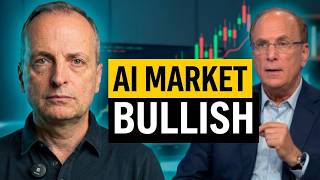
But there is a great manager , the great CEO of BlackRock, Larry Fink, who is a voice out of the chorus because he is optimistic about the markets and says that over the next 12 months, we will see bullish markets. I leave you with the words of Larry Fink. I remind you to leave a like if you enjoyed the video, and we will see you for the next video.
This is going to be the next revolution in finance and it's the next and it happens because of the strength of the United States capital markets having the ability to finance these new technologies so the United States and other places in the world can be leaders in the new technologies. You know, you mentioned 50 years so I am curious.
I mean, have you ever seen anything quite like this? Larry, we've got what were the most profitable companies the world has ever seen. Making a choice to incinerate, wrong word, to decide not to have any free cash flow anymore, to not return capital to shareholders because they have to be part of this headlong race to make sure they are not left behind in the AI future.
When I listen to myself say that, you know, there's some worrisome aspects to that, are there not? I mean, I've spoken to some of the uh leaders this week and last week in that sector. Um, their biggest worry right now is supply not keeping up with demand, and you see that showing up in the value of the memory stocks.
Ok, abbiamo più domanda di memoria di quanta ne abbiamo come offerta. Ovviamente, sono stati in grado di attuare forti aumenti di prezzo. Non so quanto tutto ciò sia sostenibile. Forse tra tre, quattro anni avremo abbastanza offerta, ma sai, ehm, e quindi quello che vediamo come grande investitore nei data center è che la domanda di calcolo non sta rallentando, sta crescendo più velocemente.
Il problema che abbiamo come paese è che non stiamo investendo abbastanza velocemente. Quindi io la vedo all'opposto. Quindi non siamo nemmeno, dobbiamo fare ancora di più. Voglio dire, un trilione di capitalizzazione da sei aziende non basta. Credo che non sia solo quello. Non stiamo investendo nelle nostre reti abbastanza velocemente.
Non abbiamo un'adeguata fornitura di energia ed è questo che sta creando alcuni problemi a livello di certi stati, che sono preoccupati per i prezzi dell'elettricità per i consumatori, il che è una questione legittima. Ma altri stati che hanno più energia e maggiore capacità di erogarla, e di erogarla senza aumentare il prezzo per il consumatore, saranno i grandi vincitori in termini di crescita .
Sì. Quindi nell'ultimo trimestre, sai, abbiamo contrattato quasi 1 gigawatt di potenza in Pennsylvania. Ok . Stiamo finanziando un altro grande data center in un altro stato. E nelle mie conversazioni con ogni hyperscaler, la domanda supera l'offerta. E sì, hai ragione. Queste grandi aziende un tempo erano leggere in termini di bilancio e ora il loro business è cambiato, e questo è il ruolo dei mercati dei capitali, e ti prometto che questi saranno ottimi investimenti per i privati, se sai che il modello di business sottostante, alla fine, genererà abbastanza entrate e profitti per poter pagare tutti i data center.
Non sono economici. Sì, costano 50-60 miliardi per un gigawatt. Ciò che mi preoccupa non è il lato della domanda. Mi preoccupa se tutta la società potrà beneficiare dell'IA, perché al momento il calcolo è così costoso. La mia domanda per tutti nel settore hyperscale non è se abbiano abbastanza domanda, ma quanto velocemente possano abbassare il costo del calcolo.
Non sono preoccupato che BlackRock paghi per l'IA, e penso che, sai, siamo stati dei grandi investitori in questo settore e il nostro team di azionario sistematico ha tratto grande beneficio dai flussi e dai rendimenti, ma sono preoccupato per le piccole e medie imprese. Come potranno competere in questo nuovo mondo della tecnologia IA?
Quindi, la domanda più grande che pongo dietro le quinte è: quanto velocemente possiamo abbassare il costo del calcolo? And okay, they, you know, they tell me it’s like Moore’s Law and how quickly they can develop faster and faster analytics to have faster compute. But unless we develop better technology and better systems in our grid to provide more power, more consistent power, you know, I believe the United States must be agnostic.
We should not care if it comes from solar or hydrocarbons. We have to be there, but we don't have, you know, we need to be manufacturing the solar panels in the United States, building the battery storage—at least we can do the battery storage here. We do, so those are my worries. My worry isn't about a bubble.
My worry is that we don't have the ability to build fast enough. And then I go watch China. China is building 100 gigawatts of nuclear. They're building close to 100 gigawatts of solar. Okay, they are getting set up for this AI revolution and the need for power. We're not doing this enough. And I actually get frightened when I see states say we’re going to do a moratorium.
That's not the answer. The answer is, how do we, how do we deliver more power quickly? Why don't we all just get started? How do we deliver more power so we don't raise electricity prices, but we can be the center of the AI revolution? Mhm.



Comments 0