저자: CharlieMunger · 외국인
요약 보기
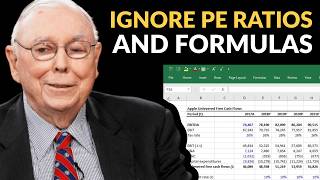
Munger는 공식과 PER 같은 수식에 의존한 투자를 경계하고, Graham의 가치투자가 소규모에선 유효했지만 대규모 자금에는 확장성이 없었다고 설명. 기업 실질 분석(챕터8)과 안전마진(챕터20)은 여전히 가치가 크다고 강조. 경영대학 이론(효율적시장가설 등)의 현실 괴리와 지속적 학습의 중요성을 언급. 중국 투자 기회는 크지만 미국 투자자가 익숙하지 않아 간과한다고 평가하며, 대형 포지션 구축의 어려움(공시 기준 등)을 설명.
다듬은 글
We've had to learn a different game. And that's a lesson for all the young people in the room. If you're going to live a long time, you have to keep learning. Yeah. What you've formerly knew is never enough. So, if you don't learn to constantly revise your earlier conclusions and get better ones, why you are I always use the same metaphor.
You're like a onelegged man in an asskicking contest. Yeah. If anybody has suggestions for another metaphor, send them to me. Graham, incidentally, one one point important point. Graham was not scalable. I mean, you could not do with really big money. Uh and when I worked for Graham Newman Corp here, he was the dean of all analysts and you know he was an intellect above all others around that time.
But our the investment fund was $6 million and the and the partnership that worked in tandem with with the investment company also had about $6 million in it. So we had 12 million bucks we were we were working with. Now you can make adjustments for inflation but and everything but it was it was just a tiny amount.
It wasn't it wasn't really scalable and and the the truth is Graham didn't care because he really wasn't interested in making a lot of money for himself. Uh so it had no reason to want to find something that could go on and on and become larger and larger and and uh uh so the utility of chapter 8 in terms of looking at stocks as a business is of enormous value.
The utility of chapter 20 about a margin of safety is of enormous value. But that's not complicated stuff. I finally figured out why the teachers of corporate finance often teach a lot of stuff that's wrong. When I had some eye eye troubles very early in life, I consulted a very famous eye doctor and I realized that his place of business was doing a totally obsolete cataract operation.
They were still cutting with a knife after better procedures had been. I said, 'Why are you in the great medical school performing absolute obsolete operations? He said, Charlie, it's such a wonderful operation to teach. Well, that's what happens in corporate finance. They get these formulas and it's a fine teaching experience.
You give them the formula, you present the problem, they use the formula. It's you get a real feeling of worthwhile activity. There's only one trouble. It's all boulder dash. [clears throat] Yeah. Whenever you hear a theory described as elegant, watch out. You know, I went to three business schools and at each uh I found a teacher or two.
I went to one specifically to get a a given teacher, but each one of them I found a teacher too that everybody got a lot out of. Um the So we're not anti- business school here at all. We we do think that the priesthood uh say 30 years ago for example in terms of or 40 years ago in terms of efficient market theory they they they strayed pretty far in in our view from the reality of investing.
And I would rather have a person if I could hire somebody among the top five graduates of number one, two, or three of the business schools. And my choice was somebody that had uh was bright, but had chapter eight of the intelligent investor. Absolutely. It just was natural to them. and they had it in their bones basically.
Um I I take I take the person from chapter 8 it this is not what we do is not a complicated business. It's got to be a discipline business but it is it does not require a super high queue or anything of the sort. Uh and um there are a few fundamentals that are incredibly important and you do have to understand accounting and it helps to get out and talk to consumers and start thinking like a consumer in many ways in certain ind.
it just doesn't require advanced learning and uh I certainly, you know, I didn't want to go to a college, though. I I don't know whether I would have done better or worse if I'd uh just quit after high school. Uh you know, and read the books I read and all of that. Uh, I think that if you run into a a few great teachers and they really change the way you see the world to some degree.
You know, you're lucky and you can find them in you can find them in academia and you can find them in ordinary life. And I' I've been extraordinarily lucky in having great teachers in including Charlie. I mean, Charlie's been a wonderful teacher and you know the any place you can find somebody that that gives you insights into things you didn't understand before maybe makes you a better person than you would have been before.
You know, you get that's very lucky and you want to make the most of it. If you if you can find it in academia, make the most of it. And if you can find it in the rest of your life, make the most of it. Charlie. Well, when you found Ben Graham, he was unconventional and he was very smart and of of course that was very attractive to you.
And then when you found out it worked and you could make a lot of money with sitting on your ass, of course you were an instant convert. And and and so it still appeals to me actually. I mean, but the world changed before he died. Bill Graham, I mean, I mean, Ben Graham recognized that the exact way he sought undervalued companies wouldn't necessarily work for all times, under all conditions.
And and that's certainly the way it worked for us. We gradually morphed into trying to buy the better companies when they were underpriced instead of the lousy companies when they were underpriced. And and of course, that worked pretty well for us. and and but and Ben Graham, he he outlived the the game that he played personally most of the time.
He lived to see most of it fade away. I mean, just to find some company that's selling for one-third of its working capital and figure out it could easily be liquidated and distribute $3 for every dollar of market price. Lots of luck if you can find those in the present markets. And and if you can find them, they're so small that Berkshire wouldn't find them of any use anyway.
You're absolutely right that we are American investors are missing China and they're missing it because it's a long way away. It looks different. They're not used to it. It's complicated. The headlines confuse them. In other words, it it just looks too hard sitting in Omaha to to outsmart the Chinese market.
But I think you're absolutely right. It's where they should be looking. Okay, we've actually had a couple investments in China. We actually we we've done pretty well. But uh there were you know there well if you go back number of years one pri uh in terms of getting a lot of money into something you know many billions and we have to get billions into things to to move any kind of a needle that that can be tougher in [clears throat] in markets that uh that you've got you're unfamiliar working in.
And it's it's difficult under any circumstances, but but accumulating a six or eight or 10 billion dollar position in investments outside the United States can be very difficult. For example, in in UK and much of Europe, we have to report when we own 3% of a company. In fact, we can be asked to report if we even have less than 3%.
that really gets very tough when we get a bunch of followers and a lot of publicity that probably isn't deserved in terms of what we're doing in the markets and everything. So, it uh some of the problems are just by the nature of our size. It would be a lot it it'd be a lot easier for running smaller fund.
Petrochina, we managed to get a very big position, but the government owned 90% of it. So, we bought 14% of what the government didn't own, but it was still only 1.4% of the company. Uh um but Charlie Charlie actually keeps pushing me to do more in China and we've tried a couple of times actually on there was there was one operation that we got involved in.
Well, you did so poorly the first time. You put in 200,000 and got about two billion. So, yeah. Well, wasn't encouraging enough. Okay.



Comments 0