저자: TomLee · 외국인
요약 보기
Tom Lee는 2023년 S&P 500이 연간 20% 이상 상승할 것이라고 예측하며, 이는 나스닥 30% 이상 상승을 의미한다고 주장. 예측의 근거: 1월 첫 주 증시 흐름이 좋았고, VIX가 200일선 아래에 있음. 1950년 이후 음의 해 다음 해에 VIX가 전년 평균보다 낮으면 평균 22% 상승했다는 통계를 제시. 연준 관련: 연준은 인플레이션이 2% 근처로 내려올 때까지 강한 불장을 허용하지 않을 것이며, 연준 인사들의 잦은 발언은 시장을 겁주려는 의도라고 주장. 인플레이션은 예상보다 낮게 나오고 있고 2023년 상반기 연율 약 1% 수준까지 떨어질 수 있다고 봄. 실적 관련: 월가는 2023년 실적 침체를 말하지만 시장은 실적 바닥 전에 먼저 상승하는 경향이 있다고 설명(2009년, 2020년 사례). 진행자는 Tom Lee의 예측이 실현될 가능성은 낮다고 봄. 과거 2022년 Tom Lee의 낙관 전망이 빗나갔던 점을 지적. 리스크: 연준의 금리 인상 지속, 실적 침체, 인플레이션 재가속 가능성. 진행자 개인 견해: 주식 롱 포지션이며 예측이 맞길 바라지만 기대하지는 않음.
다듬은 글
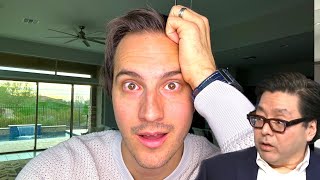
Tom Lee. Tom Lee just made a tremendous prediction, I'm not kidding, and I want to react to this here and give my opinion on it. We reserved this video exclusively for Tom Lee. Okay, nobody dares to buy one and get another one free today. Okay, fun strategies. Tom Lee expects the S&P 500 to return more than 20% this year.
This is an epic prediction. I'm looking forward to hearing it. In fact, I haven't even heard what he has to say here. So I'm looking forward to reacting to this in real time with you all here. I found out about this in the video I reacted to earlier and then I thought, "Oh man, I have to react to this one and hear what it has to say here." Because when we talk about if that were to happen, well, let's say a 20% rise for the S&P 500, you'll understand that that probably means 30%, if not more than 30%, for the NASDAQ this year.
OK? And what that essentially means is that there would be countless stocks that would double and triple in value this year; Because, remember, there are a lot of stocks that, no matter what the market does, let's say the NASDAQ goes up, you know, 30% a year, there are huge amounts of stocks that would go up 60%, 90%, 120%, 150%, 200% .
In that kind of crazy bullish scenario , it's no different than if you were talking about what happened last year. The NASDAQ falls more than 30% and see what happens to countless stocks. You see stocks being wiped out everywhere. Drops of 50%, 60%, 70% and 80%, even for some of the world's largest companies , right?
So I have to put into context how huge this prediction by Tom Lee is, who is usually optimistic. I'd say maybe a little too optimistic, you know, in my personal opinion, but let's hear what he has to say. It's a huge and epic prediction. So we 'll get into it. By the way, I just want to thank everyone who supports the channel on Patreon.
We literally just started here today. Just shout it out and leave a comment down there if you want to support the channel, if you like the content, etc. And you also have access to see all the stocks I buy and sell every single week. And I'm going to post screenshots of all the stocks I buy every Friday.
And yes, I just want to thank every single person who supports the channel. I appreciate you all and I'm glad you appreciate the content. And if you want to join us and see what stocks I bought last week, you can check out the comment below and, obviously, next week. Let 's get down to business. The next guest says this appointment bodes well for the market.
The shares are up 20% this year. Right now , in publication 9. CNBC contributor Tom Lee, of Funstrat Global Advisers. Happy new year. I'm glad to see you. Welcome back . I'm glad to see you, Scott. Well, it's true that you were too optimistic last year. Yes, in a way you're doubling down on that 20 bet.
Wait. Everyone wait, wait a minute. Okay. Yes, this needs to be said , of course. Tom Lee was 42% optimistic throughout the year. He would constantly go out and say, "We're going to have this surge, that surge." I remember that even back in February I predicted a violent spike in February . We never succeeded.
So, yes, of course. Tom Lee was going on CNBC and it was like the worst-case scenario for him because he was going on CNBC and saying, "Oh, we're going to the moon." And then all that happened was that the market went down more and more. And in the end, the NASDAQ had fallen by more than 30%. Which is one of the worst years for the NASDAQ in history, right?
I mean, you have to go back to the great financial crisis to find a year in which the NASDAQ fell by more than 30%. I mean , thinking about it. Yes, I believe that at 0808, I think the NASDAQ was down more than 30%. It's crazy. And before that, you have to go back to when the tech bubble burst . You know, when you go out and constantly talk about how the market is going to have this rally, rally, and rally, and then, obviously, it was a horrible year.
Obviously, we know what happened to Tom Lee and that credibility and that kind of thing. Chad Al. Yes. Last year was a year in which inflation shocked the markets in the first half. It has toned down since October, very gently. I mean, if December arrives as we expect, it will probably be an annualized inflation of 2.26.
And wages are slowing down; if we look at Friday's employment report, they're growing at 37, which is where they were before the pandemic. So, the third thing we believe needs to happen is that volatility needs to decrease, and the first week of trading bodes well for 2023. Part of what you 're using to make your prediction is that it's been a good start to the year so far, right?
In short, look at the NASDAQ year to date . Look at the S&P. It started well. We'll see if it continues like this, right? But basically he's saying that's one of the reasons why he thinks this is going to be a great year for stocks, right? And it's hinting at a 23% gain for the stock this year. 23%.
And as I said , when he talks about 23%, he's almost certainly referring to the S&P 500. And as I said, the NASDAQ will typically perform much better or worse than the S &P 500. In a bull market, the NASDAQ usually performs much better. In a bear market, no, the NASDAQ is obviously even more affected, right?
So, I mean , like I said, 23%, you're talking about more than 30% for the NASDAQ in that kind of scenario, something that nobody, I want to make clear, is making this prediction of this gentleman here. I don't think anyone else is making that prediction right now . Everyone is predicting that 2023 will be a bad year for stocks, or that it will be a slightly good year, perhaps with a rise of a few%.
Nobody out there is predicting a NASDAQ rise of more than 30%, except maybe Tom Lee right now. That 's an incredible, incredible prediction that this gentleman is making . The VIX, the bond market volatility index , is below its 200- day mark. If that happened to the VIX, we would be at 17. And since 1950, after a negative year, if the VIX is lower on average than the previous year, we have risen by an average of 22%.
So I think we're ready for a 20% year. Even with the Federal Reserve, even with the Federal Reserve once again, you know, if the VIX is lower on average than the previous year, we've risen by an average of 22%. So I think we're set for a 20% year, even with the core of their prediction, obviously, which is the VIX.
And the VIX has been quite low, you know, considering the volatility that was in 2022 and considering that we had a year in which the NASDAQ fell by more than 30% and countless of the world's largest companies fell by 50, 60 or 70%. I think the most shocking thing about 2022 was that the VIX was so low throughout the year and never went to the moon despite how awful the year was for stocks.
Even with the Federal Reserve's speech, you know, if it's not Kashkari, it's Esther George. If it's not Esther George, it's Bastik. Just to make sure Bastik got his message across. He spoke at the end of last week. He spoke again before today's program. I mean , these guys are talking and the women are talking loud.
Yes, they are speaking out because they want to keep financial conditions tight. You know, the dollar, stocks, bonds, everything is relaxing. So they're probably a little worried and want to be sure that inflation is really dead, but I think they want inflation to die. And most importantly, what I just said there, and I actually talked about this in my video earlier today, is that I said they cannot allow financial conditions to relax in any way.
Well, they don't want any kind of epic bull market to start here . OK? They are fine with the market moving within a range of, say, 5%-7%. Alright. The Federal Reserve will allow it. But the Federal Reserve doesn't want to allow the next big bull market to happen right now. Maybe in 2024. They do n't want to...
I'll tell you why they don't want the next big bull market to start until inflation has arrived. When I say inflation, I'm referring to the CPI figures. Until the CPI comes up with something that has a two in front of it. They don't want to allow the next big bull market to happen . And they are doing everything possible, the best they can.
And that's why they're constantly conducting 85 million interviews. These people from the Federal Reserve never stop talking. They're making more videos and more interviews and stuff than those damn YouTubers. What's wrong with these people? They do it to try to continue scaring the market. Continue to scare the market.
Continue to scare the market. And they try to prevent people from buying on dips. They try to prevent people from spending money. Whatever . They are doing everything in their power and, obviously, they are raising rates in the most aggressive way we have ever seen in percentage terms. From the beginning of 2022 until the end of 2022, we have never seen that kind of percentage increase.
Not even remotely close to that. So they are doing everything in their power to try to keep the stock market down, to try to maintain difficult financial conditions, to try to crash the housing market, to drive up the unemployment rate, and to end inflation. And part of that is going out and talking negatively, negatively, negatively over and over again.
And that 's exactly what they continue to do. One of the changes, especially since October, is that inflation has been below expectations. This Thursday will be very revealing. But if the inflationary CPI falls back to 2 basis points below consensus , that means the Federal Reserve's original projection of 48 in the PCE is 60 basis points too high.
You know that, when you translate that, inflation is below expectations by a wide margin. The bond market is going to pressure the Federal Reserve to say that February could be the last rate hike and , after that, the cuts. If you want to know what comes after inflation, what's next? What does the market start focusing on after inflation?
That's when it moves to the next level of concern for profits. Okay, you've heard a lot of people on Wall Street talking about earnings, about a earnings recession for 2023. What's happening to these companies' earnings? You have to remember that Wall Street, although it may be so short-term in nature, right?
And so short-sighted with their decisions, which will usually produce worse returns in the long run, right? It might save you a little in the short term and save face, but ultimately it produces worse returns in the long run. We 've seen it proven statistically time and time again, haven't we ? Hold 10, 15, 20 stocks, a diversified portfolio of large companies, and, you know, invest in those companies, buy on dips, and you'll probably do pretty well over time, right?
But something we've seen consistently on Wall Street is that they keep talking about a recession in earnings. They're going to talk about that a lot more. Therefore, as inflation continues to fall, it will move less away from the Federal Reserve and less away from inflation concerns than from profit concerns.
But keep this in mind : Wall Street, although it can get very caught up in the short term, does look at the long term when it comes to these companies. For example, in 2009, the market bottomed out in February 2009, March 2009 , at some point, right? And although corporate profits were rubbish for almost the entire following year, Wall Street was buying stocks left and right.
Not only because the Federal Reserve was starting to help the market, but because they understood that the likely earnings of companies had bottomed out or were close to bottoming out , right? And that's why they had to get ahead of that. And you know, I think it was about two quarters later, two or three quarters later, indeed, the bottom of the profits.
The market had already been rising for more than 6 months before the bottom of the gains. I think the market had been rising for six or nine months before corporate earnings bottomed out and improved, and that's pretty much what happened. Therefore, the market will continue to rise long before gains bottom out, and I think it's important for everyone watching this to understand the market and how it works, and March 2020 is another great example.
Yes, the Federal Reserve helped the market, but the market also understood that earnings were going to be bad for the next few quarters, but then they were going to improve. And indeed, the market was right. Profits were horrendous for companies during the next quarter or two. And after that, really from the fourth quarter onwards, the 2020 earnings started to get better and better.
And, obviously, we saw what happened with earnings in 2021. Many companies reached all-time highs. Incredible. The Federal Reserve members themselves aren't, you know, drinking what the bond market has to offer, are they? They keep talking as if they were, as I used the word with Leaseman a while ago, determined to reach that extra 5%, however much it exceeds 5%, we can discuss it, but then they stay there for a while.
Yes, I think that's because part of the Federal Reserve's model is that they're using a Phillips curve, and right now they're focusing on this services x housing number, which has been inflationary, and their view is that it's wage-driven. But what is not being grasped at the moment is that goods have fallen.
So much so, and wage inflation is slowing and housing, especially this week, seems to have really turned around dramatically, the trajectory for underlying inflation could be, you know, we could be annualizing close to 1% in the first half of the year and that's well below what the Federal Reserve...I think at that point, the Federal Reserve would have to rethink its reaction.
Interesting. So, yes, a huge epic prediction. Now, do I think Tom Lee's prediction will come true? I think it's unlikely. It is unlikely that the S&P 500 will rise another 20% this year. Obviously, I'm long on stocks, right? And I have , you know, I don't think I need to say the figure, but it's quite a large amount invested, isn't it?
And I always invest heavily in the stock market . And right now, I invest a lot in the stock market. So, would I love for the S&P 500 to rise another 20% , which means the NASDAQ will likely rise another 30% this year? Clear. That would be great. Some of my actions would make such ridiculous movements.
It's difficult to even express it in words. Basically, what would happen to the prices of many of my company's stocks? I mean, the number of stocks that would double, triple, and quadruple is quite a long list, isn't it? But having said that, I'm not counting on it. And I also secretly hope that the stocks stay low and in this range and channel we 're in right now, or that they go down a little more this year, basically.
Load much cheaper stocks. I love that, man. Well, anyway, I hope you enjoyed today's video as always. Thank you. I'm going for a walk and trying to enjoy the sunset. I think tonight is going to be a beautiful sunset. Very, very pretty. I am grateful to all the people who not only support the channel, but also support us on Patreon.
Thank you. That will be a pinned comment down there if you want to support the channel, enjoy the content, and also want to see the stocks I'm buying in the new Patreon portfolio. Lots of love and have a great day




Comments 0