저자: 미상 · 외국인
요약 보기
조엘 그린블랫의 가치투자 강의를 정리한 영상. 핵심은 자본수익률(ROC)과 유지보수 CAPEX 구분으로 기업의 진짜 수익력을 파악하는 도구. 사례로 NVR(옵션형 토지 확보로 리스크 억제, 2001년 PER 8.6배), NI Holdings(파산 후 PER 2.8배 저평가), Sportsman's Guide(카탈로그 비용 절감과 온라인 성장, FCF 5배 미만) 제시. 철학적으로 변동성은 위험이 아니라 영구적 자본 손실이 위험이며, 버핏식 집중 투자를 강조.
다듬은 글
What if you could get a seat in an exclusive value investing class at Columbia University? And what if it was taught by the legend himself, Joel Greenblat? Well, that's kind of what we're going to do today. We're going to break down the key lessons, the case studies, and the core philosophy from his amazing course on special situation investing.
So, let's just start with this incredible promise Greenblat made to his students. He was convinced that just a few simple, really clear ideas could give any investor a huge, huge edge. And by the end of this, you're going to have those exact same ideas in your own toolkit. All right, so here's how we're going to break it all down.
First, we'll get into Greenblat's core idea and build out our value investors toolkit. Then, we'll see it in action with a fascinating case study on a home builder called NVR. After that, we'll look at how to find hidden value in weird places. And we'll wrap it all up with some timeless wisdom from the master himself.
Okay, let's get right into it with Greenblat's core idea, which is all about building your toolkit. You know, before you can even think about valuing a business, you've got to have the right tools to answer one really fundamental question. Just how good is this business really? And for Greenblat, the whole thing starts with one key ratio.
So tool number one is return on capital. And think of it like this. For every single dollar you jam into a business, you know, to buy equipment and run the day-to-day, how much profit does it spit back out before taxes? Is it a fantastic business that's generating a 50% return? Or is it a terrible one that's only making 2%.
This one number cuts right to the heart of a company's quality. But, and this is a big butt, here's where things get a little tricky. That standard earnings number, EBIT, it's a decent starting point. The problem is it includes this accounting thing called depreciation, which is supposed to be the cost of keeping the business running.
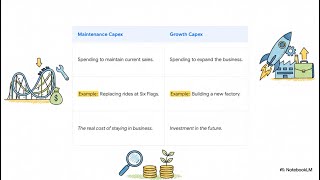
But is it accurate? Not always. To find the real cash coming out, we have to look at what the company actually spends. We got to look at capex. And this brings us to a really, really important distinction Greenblat makes. He splits all that spending into two buckets. First, you've got maintenance capeex.
This is the money a company has to spend just to tread water. His classic example is six flags. They have to keep adding new rides year after year just to keep people from getting bored and going somewhere else. That's not growth. It's just the cost of staying in business. Then you have growth capex, and that's the good stuff.
Spending that actually expands the business for the future. So, here's the crucial point of all this. By pulling apart maintenance costs from actual growth spending, you get a way, way clearer picture of a company's true earning power. And you have to do this because it's so easy to fool yourself into thinking you found a better business than you actually have.
All right, so how does all this theory work in the real world? Let's apply this toolkit to a fantastic case study Greenblat used in his class, a home builder called NVR. He saw it as having this just superior high return business model that was also way less risky than its competitors. So, what was NVR's secret sauce?
Well, it was really two things. First, unlike all their competitors who were buying up huge, expensive tracks of land, NVR just controlled its land using these cheap options. And second, they didn't hammer a single nail until they had a buyer already signed up with the deposit. This whole model meant they needed way less capital and took on way less risk.
It was just genius. And get this, here's the absolute kicker. Back in 2001, you could buy this incredible business for a song. Its PE ratio was just 8.6. And when you looked at the real free cash flow it was generating, you were paying less than eight times. It was an absolute steal. A highquality business at a bargain price with management smart enough to be buying back its own stock hand overfest.
And this table just shows you how brilliant their model was. Yeah, sure. In a hot market where prices are rising, the traditional builder who owns all that land makes a bit more. But look what happens when prices fall. The traditional guy is stuck with a huge loss. NVR, they just walk away from the option.
Their loss is capped at whatever tiny fee they paid for it. It's a strategy that gives them massive protection on the downside. So NVR is just a perfect example of a highquality company that was kind of hiding in plain sight. But this toolkit we've been building, it's especially powerful for digging up value in the messy, overlooked, weird corners of the market.
What Greenblat loves to call special situations. These are things like spin-offs or like we're about to see companies just coming out of bankruptcy 2.8 times. What does that even mean? Well, that was the ridiculously cheap price, the valuation for a company called NI Holdings right after it crawled out of chapter 11 bankruptcy, just 2.8 times its earnings.
So, what was the story here? Well, NI Holdings was this totally neglected company that had just cleaned up its balance sheet in bankruptcy. It was trading for, like we said, just 2.8 eight times its cash earnings. The whole idea was super simple. As this company moved from some obscure trading platform onto the main NASDAQ exchange, a whole wave of new investors would finally discover it, and they'd push its price up to a more normal level, maybe five or six times earnings.
Okay, here's another little gem. A company called Sportsman's Guide. And this chart tells you everything you need to know. Look at this. They were absolutely slashing their single biggest expense, mailing out all those paper cataloges. And at the exact same time, their sales online were exploding. All that money they saved on printing and postage, it dropped straight to the bottom line.
It was a cash flow machine in the making. So, the thesis for Sportsman's Guide was a total classic Greenblat setup. You had a super cheap stock trading for less than five times its free cash flow. It had a good return on capital. It had a strong brand in its little niche. And there was this powerful catalyst happening as the business model shifted online.
It just checked all the boxes. All right, we've gone over the tools and we've seen them in action. So now let's just zoom out for a minute and talk about the core philosophy that holds all of this together because so much of what Greenblood teaches is really built on the timeless wisdom of his own personal hero, Warren Buffett.
This this is so so important. In school, they teach you that risk is volatility. how much a stock price bounces around. Buffett and Greenblat too, they say that's nonsense. True risk isn't about a bumpy ride. It's about permanently losing your money. End of story. If you've done your homework and you know what a business is worth, a price drop isn't a risk.
It's an opportunity. And this quote pretty much captures Buffett's entire evolution as an investor. He learned the hard way to stop buying these super cheap but dying businesses, what he famously called cigar butts. And he started buying wonderful businesses at a fair price instead. Why? Because time is the enemy of a bad business, but it's the best friend of a great one.
So, how do you put this all into practice? Well, Buffett's advice is simple. Concentrate your bets. Instead of spreading your money so thin that you're just guaranteed to get average results. You know, diversifying into mediocrity, do the hard work to find a handful of truly great businesses that you actually understand.
Buy them at good prices and make some meaningful bets. And that brings us right back full circle to Greenblad's simple, incredibly powerful way of thinking about all of this. Every single investment you make, just think of it like a bond that pays you a coupon. Your job as an investor is just to figure out what that coupon is, whether it's going to grow or shrink over time, and how much you're willing to pay for it.
That's it. It's really that simple. So, I'll leave you with that fundamental question, the one that's underneath all of these lessons. When you look at your own investments, your own portfolio, which ones are the growing coupons, the wonderful businesses that are getting more and more valuable over time?
And which ones are the melting ice cubes, the cheap cigar butts whose value is slowly but surely disappearing? Answering that question for yourself, well, that's the first real step to becoming a better investor.

Comments 0