저자: LiLu · 외국인
요약 보기
글로벌 불확실성 속 가치투자의 틀을 제시. 중국은 청년실업·부동산 자산 급락·민간 신뢰 저하로 '문명 2.5단계' 병목에 있고, 저축률(약 50%) 대비 소비(약 40%)의 자본 순환 문제가 핵심. 자본시장 신뢰·법치 기반 구축이 필요하며 홍콩이 중국에 자본시장 자산을 제공한다고 주장. 투자 원칙으로 부(富)는 구매력 점유율이며, 거시 대신 자신의 역량 범위 내 '물고기가 있는 연못'을 찾으라고 강조. 특정 자산에 대한 가격 방향 예측은 없음.
다듬은 글
Let's be honest. If you're an investor today, it's pretty easy to feel disoriented. The global landscape is shifting under our feet, and a lot of the old playbooks just don't seem to be working anymore. It's causing some serious confusion. But what if there were a clear framework to cut right through all that noise?
We're about to dive into a powerful speech by the renowned investor Li Lu that does exactly that. It's a guide to value investing in this incredibly complex new era. Here's how we'll break it down. First, we'll tackle the big-picture challenges causing all this confusion. Then we'll zoom way out for a 500-year historical view to understand the root causes.
From there, we'll zero in on China's specific economic bottleneck. And this is the important part: we'll drill down into a practical six-step playbook for value investors. We'll wrap it up with a powerful metaphor that might just change how you think about finding opportunities. All right, let's set the stage.
Li Lu doesn't pull any punches. He makes it clear that we're in a tough spot, facing a series of interlocking challenges at home and abroad that create deep uncertainty about the future. This quote from him says it all: we're not just dealing with a short-term market blip. This feels different. It's more like a fundamental paradigm shift. The strategies you and I relied on in the past may not be the right tools anymore, which is exactly why so many investors are feeling adrift right now.
When you look at China's domestic scene, you can see a vicious cycle at play. Youth unemployment is sky-high, nearing 20%. Why? In large part because confidence in the private sector, the engine that creates 80 to 90% of jobs, is cratering. On top of that, real estate, which makes up a staggering 60% of household wealth, is actually losing value. That crushes consumer confidence and leads to serious deflationary pressures. It's a tough situation.
And if that weren't enough, there's a huge external pressure. For decades, the US served as the anchor for the whole global system of trade and capital. Li Lu points out that this role is now being fundamentally questioned, and that creates uncertainty not just for US-China relations but for the entire global economic order. The key takeaway is that major headwinds are coming from all directions.
So how do we make sense of all this confusion? Li Lu's answer is compelling: we need a much wider perspective. By looking back over the last 500 years, we can uncover a framework that puts today's headlines into a clearer context.
He introduces the idea of civilizational stages. Civilization 2.0 was the agricultural world. Growth was capped by how much land and how many people you had, the old Malthusian trap. Today we're in Civilization 3.0, a totally new paradigm defined by modern science and market economics, which for the first time in human history has unlocked sustainable compounding growth. It's a whole new ball game.
The difference is clear. In Civilization 2.0, wealth was all about land. That mindset fueled horrible conflicts like World Wars I and II. In Civilization 3.0, wealth is generated by market scale and the circulation of capital, technology, and ideas. Look at Germany and Japan. They failed spectacularly at military conquest, but they achieved incredible prosperity by plugging into the global market system after the war.
So what's the source of our problems today? It's a fundamental mismatch. Our economy runs on brand-new, high-speed Civilization 3.0 software, but our governments, political systems, and habits of mind still run on the older 2.0 operating system. That gap, that friction, is where much of the conflict comes from.
Now let's apply that framework to China today. Li Lu argues the country is stuck in what you might call stage 2.5, a critical transition period where the mismatch is especially sharp and creates a massive bottleneck for future growth.
This chart captures the core of the problem. Personal consumption is only about 40% of the economy, but the national savings rate is around 50%. That means an enormous pool of capital isn't circulating effectively, like a major blockage in the economy's arteries. A state-controlled banking system isn't built to solve this. Banks aren't really structured for risk investment. The real solution lies in developing a modern capital market, a sophisticated ecosystem built on credibility, trust, and the rule of law. That's what efficiently channels savings into the most promising and innovative ideas.
Building such a market doesn't happen overnight. It's a centuries-long story that started in Venice, was refined in the Netherlands, and was finally perfected in Britain after the Glorious Revolution. Britain didn't just copy the Dutch; it merged with their entire financial system, creating the credibility-based machine that funded the modern world.
This leads to perhaps Li Lu's most provocative point. History has handed China a unique gift. Just as the Netherlands provided the financial blueprint for Britain, Hong Kong offers China a mature, world-class capital market. It's a turnkey solution to the capital circulation problem, an incredibly valuable asset that, in his view, is being dangerously underutilized.
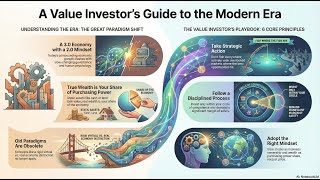
So we have the macro diagnosis. But what does it mean for us as investors? This section gives a concrete playbook based on timeless value investing principles. First, though, we have to ask a fundamental question: in a world where the economic pie itself keeps growing, what are we actually trying to achieve? What is wealth? If we get that definition wrong, our whole strategy will be flawed from the start.
Here's the answer, and it's a game-changer. Real wealth isn't a static number in your bank account, a certain amount of land, or a pile of gold bars. In a Civilization 3.0 economy, real wealth is your share of total purchasing power. The goal isn't to hit a magic number. It's to make sure your slice of an ever-expanding economic pie is at least maintained, and ideally growing.
With that definition in mind, the timeless principles of value investing become our roadmap. The first three come from Ben Graham: think of stocks as owning a business, use Mr. Market's mood swings to your advantage, and always demand a margin of safety. Buffett and Munger added a fourth: stay strictly within your circle of competence. Munger gave us the fifth, which we'll cover next. The sixth is Li Lu's own contribution: frame the whole endeavor around growing your share of purchasing power.
Let's explore that fifth principle: fish where the fish are. It's a simple but profound metaphor that ties these ideas together. Li Lu tells a story about going fishing with Charlie Munger in Minnesota, a state with around 10,000 lakes. Instead of fishing the huge, obvious lake next to their cabin, Munger hired a guide who knew the small, obscure, out-of-the-way lakes that were teeming with fish and had no other fishermen.
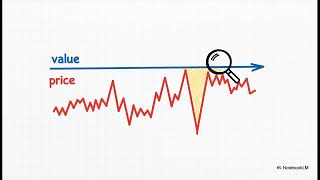
The lesson is simple but powerful: go where the fish are, not where everybody else is. That's the ultimate takeaway for professional investors. The macro environment is the vast ocean. We have to accept it; we can't change it. Our job is to find our own private fish pond, which means focusing on the micro level, the specific industries and companies where we have a deep, almost proprietary understanding. That's our circle of competence, where we can find opportunities with little competition.
In the end it comes down to one question. In a market that feels confusing and chaotic, obsessing over the entire ocean is a futile exercise. The real work, the work that generates lasting value, is finding your pond. So the critical question every one of us has to ask is: do you truly know where the fish are?
Comments 0