원문 보기
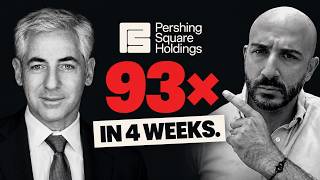
Bill Ackman spent $27 million in February 2020 and got $2.6 billion back 4 weeks later. That's 93 times what he paid. It was insurance against a credit crash and he cashed it in on the 23rd of March, the week everyone else was forced to sell. He was buying because nobody could force his hand. His own letter 2 days after he got out, the premiums, the commissions, and the proceeds on one page.
On March 23rd, we completed the exit of our hedges generating proceeds of $2.6 billion for the Pershing Square funds, $2.1 billion for PSH compared with premiums paid and commissions totaling 27 million. There's a book called The Outsiders that says the best CEOs are the best capital allocators. This is what capital allocation looks like when the money behind you can't run away, and he stole it.
At the Berkshire 1994 annual meeting, a young investor stands up and says, "Mr. Buffett, my name is Bill Ackman." His question is about leverage the debt company runs on. Buffett has a rule for that and he wrote it down. We never want to count on the kindness of strangers in order to meet tomorrow's obligations.
In 2025, Ackman writes to the board of Howard Hughes, a property company he would go on to chair his words. With apologies to Mr. Buffett, it would become a modern-day Berkshire Hathaway. The best CEOs are the best thieves. He took the rule from Buffett, you can take it from him. In the December 2018 sell-off, Bill Ackman says he would have been a seller.
Instead, he was a buyer. The only difference, his investors couldn't take their money back. In 2015, it was the other way around. Two in every $3 he ran could walk out, and after one bad bet they did. His firm's assets went from 20.2 billion dollars to 6.8 billion dollars and his staff from 74 to 38.
Same man, three records. His fund PSH wrote down the reason. We would have We would likely have been sellers rather than opportunistic buyers had PSH been subject to the risk of investor redemptions. 21% a year for a decade minus 12.9% a year for 3 years then from 2018 onwards with the money locked 22.6% a year.
Now over the whole stretch since 2012 he still trails the S&P 500. Same man. When his investors could leave he was the seller when they couldn't he was the buyer. Small businesses live this too. In a business we worked with cash fell by about 65% in 3 months while the fix was still a plan. And once the money runs out before the plan works the timetable belongs to somebody else.
Here's how you steal it. He put three locks on his business and each one has a version for yours. Lock one, money nobody can take back. When his fund listed in 2014 34% of his capital was permanent. Today that number is 98%. Your version is getting paid before you deliver. Deposits, annual prepayment, retainer.
The customer's cash is in your bank before your costs go out. Lock two is that the lender can never call in. He borrows with bonds at about 3.6% for about 6 years and his slide spells out the point. No margin leverage, no marked market covenants. Nobody gets to call that money in on a bad day. Small firms mostly borrowed the other way around.
For smaller companies, three and four credit lines expire within a year, and 59% of small business borrowers personally guarantee their debt. Your version, swap the overdraft the bank can pull on demand for a fixed term fixed rate loan and sign it in a good year. Lock three, an owner leaving can't force a sale.
When his investors want out, they sell their shares on the market and he has bought back 1.9 billion dollars of them at 29% below what they were worth. A departure never makes him sell a company. Your version is a buy-sell agreement with a price formula signed while everyone still gets along. So, a partner leaving becomes a planned buyback.
Put one lock in a contract this quarter. February 2020, for the first time ever, his firm considered selling everything it owns. He buys insurance instead. On the 18th of March 2020, Bill Ackman told CNBC that hell is coming, and that same day he was buying Hilton. By his own account, every hotel in the country was about to shut.
He had paid for the protection weeks before. A small cap cost nowhere near the core of what he owned. He compared it to over-insuring your home in advance of an expected storm. When the storm hit, the policy paid out 2.21 billion dollars. Most of it into six companies within three weeks. You have Starbucks, Howard Hughes, Lowe's, Hilton, RBI, Agilent.
Uh within a year, those 2.21 billion were worth 3.915 billion. Small firms get the opposite storm. Between late 20 2008 and late 2009, the share of small employers with a credit line fell from 57% to 46%. That's about one in five small firms fewer holding a line right when they needed it. Your version, arrange the line now in a good month and leave it undrawn.
The structure does not necessarily make him right. Valiant, a drug company he backed, was in his own words a huge mistake and it was the public loss that sent his investors to the exit. Locks won't pick your winners. They stop a bad pick from deciding the rest. The typical small business holds 27 days of cash and a quarter of those hold them less than 13 days.
Work out your days of cash. That's cash in the bank divided by a month of expenditures times 30. Under 13 means the next bad month gets to decide for you. Type cash in the bank, type a a month of of expenditures and this is how many days you would last uh on on a bad month uh meaning when revenue is delayed.
So, three moves one lock in a contract, the credit line arrange in a good month and count every month on this one line. If you're like Bill Gates, you want that number to be closer to one year. That's what he believes is good enough for him to be able to have a good night's sleep. Now, you want to know what is the fastest lock?
The fastest lock costs nothing. It's structure your working capital so your customers pay you before you pay your suppliers. Zara does exactly that and I broke down how in my video on Zara. Ackman learned it the expensive way. You get to build your business so nobody can force your hand before the bad year arrives.
If you would rather have this done for you, the details are in the description. For more of these, subscribe to get the next one.


Comments 0