
저자: BernardodeGarcia · 외국인
요약 보기
레이 달리오가 AI를 버블로 경고했고, 버블 붕괴는 고평가 자체보다 부채 상환·세금 등으로 인한 강제 매도에서 비롯된다고 주장. 현재 신호로 미국 30년 국채금리 5.64%(2002년 이후 최고), 빅테크 AI 투자 부채 급증(장기부채 1,100억→3,170억 달러대), 협소한 상승장(S&P500 과반이 200일선 하회)을 제시. 지수 투자자도 AI에 과도 노출되어 있으므로 집중도 점검(연동형 vs 선택형 투자) 권고. 영상 말미 뉴스레터·프리미엄 브리핑 홍보 포함.
다듬은 글
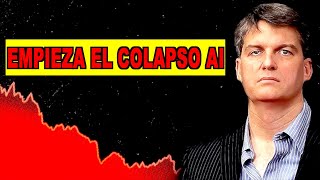
Rey Dalio, the founder of Bridge Water, and the man who saw the 2008 crisis coming and told everyone about it, has just said it again on Bloomberg and it affects you even if you don't own a single share [snort] of envy. Artificial intelligence is already a bubble. And today, at a conference in Singapore, he went even further.
verbatim words. We are in the part of the cycle prior to that, but getting closer to that point. I think we're very close now. And notice the moment when he's saying it. Yesterday, Tuesday, Samp closed at new all-time highs of over 7818 points. Nasdaq also at record highs. Everyone is buying, everyone is euphoric, and one of the most respected investors on the planet is telling you that this is nearing its end.
So in this video you're going to see three things. First, why does Dio think it's a bubble? Second, that's exactly what makes a bubble burst. And third, what signals are on. And at the end I'm going to tell you exactly what I'm going to do . So I hope you're ready because let's get down to business.
Reyoo has studied the last 500+ years of market history and the comparison he makes with the 1920s, just before the 1929 Crash, is incredible. Think about it. For the first time at that time there was electricity. There was, let's say, a refrigerator, there was light, cars, airplanes, radio, cinema, all at the same time.
In other words, everyone saw that it was going to change the world, and they were right . Obviously I changed it, but everyone wanted to bet on it and this is exactly what happened. I'm buying it and borrowing money to buy it because it's going to keep going up. And believe me, that's the important detail.
People go into debt to buy things, and the debt only adds fuel to what might be a spark further down the line, and bam, we all end up in another crash. The fact is that, as we were saying, today, according to Rey Dalio, all that bet is concentrated on one thing. Expensive shares by almost any measure.
And here he also adds something that I think is super important and super important. Artificial intelligence companies have no other option. You ca n't invest little and compete, so most likely everyone will overinvest and that in itself is what's inflating this bubble. But wait, because here's the important part.
A bubble doesn't burst just because it's expensive. No, sir, something doesn't have to be expensive to explode, does it? A stock can be expensive for one year, two years, or five years. What makes a bubble burst and causes stocks to collapse is something else. And Dio explains it with a difference that seems silly.
Wealth is not money. Let me give you an example. Imagine you have shares of envy that are worth 000 per option. So, right now you're rich, very rich, at least on paper. But don't use those shares to pay off your mortgage, your groceries, or your children's school fees. To pay you have to sell them. And the problem arises when many people need money at the same time.
And what really compels you to need that money? Well, Dali gives two very clear and very good examples. The first is having to repay loans. If you bought with debt and you have to pay, then you sell. It's over. The second example is a wealth tax. The thing is, when everyone is selling the same thing at the same time, the price falls, and as we said, that forces others to sell, worries others, and they start selling, and then, yes, that's when the bubble starts to burst and everything ends up collapsing.
And right now, how do you think we are doing ? Well, there are three signals that are already on. The first is that the price of money has risen a lot. What does this mean? As you already know, the 30-year US Treasury bond is currently paying 5.64%. This is the highest level since 2002. Think about that.
When money becomes more expensive, debt weighs more heavily, interest rates are higher, and you have to pay more and more. And obviously more people need cash to pay for it. Dalio goes even further. In the same interview, he is asked when a debt crisis will occur in the United States, and he responds directly with this.
By the way, if you're liking this, you're going to love it. The newsletter is undoubtedly the best newsletter on the market. We have it for free for now. Check it out at the link in the description. We have transcripts, we have businesses that I've been analyzing near yearly lows, but businesses that are still working, opportunities, we have it all concentrated, not to read in one day, believe me, because it's about 9, 10, even 11 pages, but to read little by little, seriously, it's going to be very worthwhile.
And if you're already investing and want to know which businesses have the greatest opportunity right now, which have the greatest margin of safety, which are the most interesting businesses that Wall Street is ignoring, Briefing Premium is for you. We are going to take a huge leap in quality, not only because of the platform, but also because of the depth of the analyses.
Each analysis, each premium briefing lasts more than an hour every day. Link in the description. Check it out, you'll love it. 15-day money-back guarantee. If you don't like the product within 15 days, you will get your money back. You don't ask. Seriously, the price is going up. Take advantage of this offer.
Now, as we were saying, the second sign is the one that worries me the most personally, that is, how the big tech companies are paying for the race in artificial intelligence. Think about this. Previously, they paid for it out of pocket, at least when they invested in the cloud. Now they need debt. The box hasn't arrived.
The money arrives too slowly. The woman next door is going into debt, and I have to go into debt too . They all go into debt. This is a huge infrastructure project, but it's mired in debt. And seriously, this is not an opinion. There are accounts that they present to the SC and that are even outside their balance sheets, which makes it a bit riskier because they try to protect their credit quality and perhaps not scare the market too much, but the reality is there no matter how much they try to hide it.
Think about it, Amazon, Google, Meta, Microsoft, they all invested 165 billion between April and June of this year. It's outrageous. And we say, this is a year. No, no, this is in a quarter. A year earlier it was 88,000 million, it was 88 billion, it was half. It has doubled in 12 months and it keeps growing.
And this is obviously going to have consequences. And if we think that investing with so much debt has no consequences, especially for such large businesses and especially such extraordinary figures, we have [snort] a problem because they will have consequences. Amazon, Google, and other companies were projected to generate $14 billion in free cash between April and June 2025.
In that same quarter of this year, they burned through almost $13 billion. So how are they covering this difference? Obviously with debt. And if the person next door takes on debt and I don't, the person next door is buying something I can't afford, I'm going to be left out, and I don't know if this is going to be profitable for me, but I'm going to invest because I don't want to be left out.
And the person next door is starting to invest too. Then this starts to spin and it's fantastic. The long-term debt of those three has risen from 110 billion last year to more than 317 billion. Triple, I repeat, almost triple in one year. Buying with borrowed money, just as Dalio describes, is good.
Fantastic if it goes well, terrible if it goes badly. And the last sign, the third one, is that the market is rising, but rising in a rather narrow way. I don't know if you 've noticed, but according to the Wall Street Journal, on Tuesday less than half of the companies in the S&P 500 were above their 200-day moving average.
That is, only a few are up, and almost all of them are in the artificial intelligence sector. Exactly the concentration that Reitalio is talking about. But Bernardo, Reitalio has been saying this for a while now, and that he's going to fall. And yes, it's true. In January he was already saying that AI was in the first phase of a bubble, and in June he repeated the warning in Bloomberg.
Since January, the S&P has risen almost 13% and the Nasdaq a little over 17%, in addition to Nvidia's 28%. So let's be honest, knowing that something is a bubble doesn't tell you when it's going to burst. And as we saw in last week's video , getting out of the market to wait for the crash is usually very expensive.
[snort] So, what exactly do we do? At the end of the interview, Dalio was asked, "What is the only thing an investor needs to think about today?" and he answered this directly. And here comes what many people don't know. If you have an index fund, like the Samp5 or the LasaDAC, you've already made a huge investment in artificial intelligence.
You're overvalued, even if you have an MSCI World Index, because almost half of it is from the United States and then 25% goes to Korea, to semiconductors that have experienced an out-of- proportion rally. Even if you haven't bought a single Nvidia option, you're exposed to artificial intelligence. Because?
Because the companies that weigh most heavily in those indices are precisely all those that have benefited from this tremendous artificial intelligence rally. So no, I wouldn't sell everything, I wouldn't try to predict the day of the crash. What I would do is look at how much of what I have depends on just one thing.
How much of what I have is a conjunctive investment and how much of what I have is a disjunctive investment? A conjunctive investment is one where several things have to go right at the same time. This is extremely risky. And a dilemma investment is one where if only one of the things goes well, the business recovers, or rather, the shares recover.
And surely the rest we're looking at are businesses that don't need artificial intelligence to make money. Moreover, they are the ones who, with little investment in artificial intelligence, can tremendously improve their margins. And now I'd like to ask you, is it 1929? Is it the year 2000? Or does artificial intelligence finally justify the prices this time, and is things different this time ?
As always, I read your comments with all my heart. I hope you enjoyed the video. We say goodbye wishing you all the best. Until next time.




Comments 0