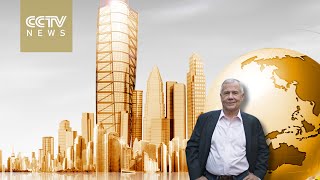
저자: JimRogers · 외국인
요약 보기
짐 로저스는 신흥국 전반을 하나로 묶기보다 개별적으로 봐야 하며, 러시아는 혐오받는 저평가 시장으로 긍정적으로 전망하고 중국은 장기적으로 강국이 될 것이라고 본다. 러시아: 과거 47년간 부정적이었으나 크렘린이 새 규칙을 이해하기 시작했다며 강세로 전환했다. 자원이 많고 국가부채가 작다는 점을 근거로 들었다. 중국: 부채 증가로 일부 기업은 파산할 것이나 이는 새 출발의 기회라고 봤다. 환경정화, 의료, 농업 분야에 낙관적이며 중국을 사지는 않지만 차세대 강국이 될 것이라 했다. 원자재·유가: 고가는 소비를 줄이고 생산을 늘리며, 저가는 생산을 줄이고 소비를 늘려 가격을 다시 끌어올린다는 논리를 폈다. 유가는 바닥을 찍고 2~3년 내 훨씬 높아질 것이라 전망했다. 다만 대체에너지는 유가 50달러에선 경쟁력이 낮고 300달러 수준이 되어야 경쟁력이 생긴다고 했다. 인도: 관료주의와 규제 때문에 사업하기 어렵다며 보유 지분을 매도했다고 밝혔다. 모디 총리에 대한 기대도 말뿐이라고 비판했다. 미중 관계: 전략적 갈등은 정치인들이 만든 것이며 일대일로는 지리를 바꾸는 훌륭한 구상이라고 평가했다. 북한·미국 정치: 북한에 대해 매우 강세라고 했으나 미국인이라 투자할 수 없다고 했다. 미국 정부에 대한 불만도 드러냈다. 개인 성향: 외부 선전과 언론이 아니라 세상을 직접 보고 판단하라는 입장이며, 자녀에게도 같은 교육을 한다고 했다.
다듬은 글
Adventures in the markets and on the road. Legendary investor Jim Rogers began his financial career after graduating with a bachelor's degree in history from Yale University. Then in 1973, Rogers and George Soros founded the Quantum Fund, one of the world's first truly international funds. After generating returns of 4,200% over 10 years, at the age of 37, Rogers decided to retire and quit full-time investing.
He went on to travel the world a few times over and wrote a few books about what he saw and learned. His investment tourism books, Investment Biker and Adventure Capitalist, are still must-reads for anyone interested in learning how global markets work. I ran into Jim Rogers most recently at St. Petersburg Economic Forum.
It was one of those rare occasions, in fact, that these days, at least, where Western investors are seen in Russia. We sat down in our studio there, where the conversation began with his grand global tour on a motorcycle. What are those trips for you? What do they mean for you as an investor and as an individual?
I retired early because I wanted to have more than one life. And one of the things I wanted to do was to go around the world on a I wanted adventure. That was the main thing I I didn't want to sit in front of a computer all my life. I wanted adventure to see the world. I went around the world on a motorcycle.
It took a long time to get permission. It was so wonderful, I did it again in a car. So, I mean, I like adventure, I like to see the world, I like to know what's going on. I could still be sitting in front of a computer. I'd rather not. Mhm. What have you learned through those trips? The biggest things you have learned.
thing is we're all alike, in a way. When you go to this place, they say, "Where have you been?" Oh, I was there. Those are dangerous, horrible people. Where are you going? We're going Oh, you're going to get killed. We're all afraid of each other, but we're all the same. We all like to eat and drink and dance.
We like to have a good time. But politicians tell us we're terrible and you should be afraid. Don't listen to the politicians. Back in the year 1984, wow, think about that. Jim, you were heroic in the way you made a heroic trip to China on a motorbike. I drove across China on a motorcycle twice. Yes, that's wonderful.
What was it like 1984? Well, 1984 I was just asking permission, but in 1986 they let me everywhere I went. I mean, it was like a Martian. Here was a Caucasian an American Caucasian on a motorcycle. Mobs everywhere I went. And every time I drove across China for the next 10 years. are so curious about you.
They've never seen an American. They've never seen a Caucasian. They've never seen a big motorcycle like that. They didn't know what was happening. They thought I was from Mars. But it was wonderful. What do you make of the Chinese economy because years back you made a big decision. You moved to Singapore.
You sold your house in New York. And you say future is going to be in Asia. And we've seen though after this round of financial crisis, the Asian economies also suffered a great deal. China looking for its own growth engine working hard for any possibility of structural reform. So, what do you make of your decision then?
Well, China will have setbacks along the way. It's normal. America, as it rose, had 15 depressions, a civil war, very little little rule of law, massacres and we were a mess. And yet, we became the most successful country in the 20th century. China's going to have problems. I don't know what, I don't know when, but everybody has problems.
But don't worry. When I see problems in China, I'm going to take advantage. I'm not going to stop teaching my children Mandarin and teach them Danish. You know, the Chinese have a wonderful word which does not exist in English. Wei Ji Mhm. Uh Opportunities and crisis are all in the same thing. Yeah.
Yeah, opportunity and crisis are the same thing. Well, English we don't have that. You invented the word. So, when you see problems in China, take advantage of the opportunity. What do you make of China's economy at this moment as an investor? Well, the whole world, Jinwei, is having problems and it's going to get much worse.
That's going to affect China. Japan is in recession. You trade a lot with Japan. Parts of Europe, parts of America in recession. So, you're going the com- companies which deal with the West are companies in recession going to have problems. Now, Jinwei, it's very important to know also China now has debt.
You did not have debt for many decades. Now you have debt. So, some companies are going to go bankrupt. Beijing says we'll let them go bankrupt, which is great. It's xin hao. It's very good because then it will clean out the people with mistakes and China can grow again from a new base. Mhm. But but what do you make of the next rounds of the next uh a few years in China, for example?
Some companies that deal with the West or developed world are going to go back if they have debt, they're going to go bankrupt. There's no question about that. But other parts of the Chinese economy, if you're in a pollution clean up, you don't care if America disappears. You're so busy making money.
If you're in health care in China, China needs enormous health care and Beijing knows that. Agriculture, I'm extremely optimistic about agriculture in China. Some parts of the Chinese economy are going to go like that. And some are going to go like that. but Jim, uh this is a very serious issue. Geopolitics, as we all know these days, are playing such a big role in economic prospects.
What do you make of the current situation, particularly with the political fights that's going on now in your capital? Well, every time I go to China, the Chinese people love America. They don't particularly love the American government. And I don't particularly love the American government a lot of times myself.
I don't know why some politicians like to make their name by bashing other countries, whether it's Russia or China or whatever. It is a political problem, but China and America should be working together to have great prosperity for everybody. There's a lot of of uh synergy. But but there's also a lot of talk about the strategic conflict between US and China.
There should be no strategic conflict. That's in politicians' minds. I cannot think of any strategic America wants to tell everybody what to do, and when China says, "You can't tell us what to do." That's a conflict, but that's crazy. Hot spot issue, South China Sea issue, territorial disputes, and DPRK nuclear issue also in Asia.
Not to mention China and US looking for their various positions in the world, even in the Asia-Pacific region. In the US, you have a US-led TPP. In China, China is working on OBOR, One Belt One Road initiative. Not to mention in Eurasian area, there's a war of interesting ideas popping up. Jim, there's a lot of ideas, there are a lot of potential points of conflict, some would say.
The One Belt One Road? It's brilliant. It's fabulous. It's changing geography. Not very often in world history does geography change. China's changing geography. Why is that a conflict? That should be great. A lot of people are going to make a a of money. I don't see necessary conflict. Are you a rebel of your culture?
Because what you have just said seem to be a very much a different from many of the voices you could hear from where you are coming from. So, is it because you're here in Russia? Is it because you're already living in Asia and therefore you go all the way to talk about your country in a very different lens?
I have always looked at tried to look at the world as it is, not as I'm told by propaganda and media and other people. I try to teach my children don't listen to them, don't listen to anybody, look at everything and decide for yourself. And I've been doing that a long time. The world is changing rapidly and some say the great opportunities now lie in emerging markets.
That includes countries which are not as advanced as developed countries, but have functional economies and infrastructures that are fast growing. But last year saw the weakest growth ever in emerging markets, marking a fifth consecutive decrease and their worst year since the global credit crisis. Russia is in a recession as oil prices tailspin and sanctions weigh heavy.
China's growth hit a record low in 2015. Brazil is struggling with its worst recession since the 1930s. India is becoming more vulnerable to shocks with more external debts piling up. With growth being such a challenge for emerging economies, no one can be sure which countries will regain their glorious growth of the days past.
As a group, emerging economies, where do you think its future is? Well, first of all, anyway, there's not a such a thing as emerging economies. There's some great ones, some mediocre ones and some disasters. So, don't put them all together. I'm optimistic about things like Kazakhstan now, Nigeria, I'm looking at Iran.
I'm an American, so it's difficult. I'm wildly bullish on North Korea, but I cannot do anything. I'm an American. I'm a citizen of the land of the free. We're not very free in the land of the free. We used to be. I'm bullish on China. I'm not buying China, but China's going to be the next great country in the world.
Well, you were talking about the commodity prices. You said the high prices are the problems for the commodities. However, low prices are the solutions for the commodities. Is that still true today? Absolutely. If there are high prices, people consume less, and people produce more. If there are low prices, people produce less and consume more.
So, it drives the price higher. But, we have seen commodity prices going low for really quite some time. Economies such as Russia, in which we are in right now, St. Petersburg, they suffer greatly as a result of this. So, is that logic still working? What is likely to be the future of commodity prices from your Oil prices hit bottom a few months ago, and they're now going up again, because low prices bring high prices.
People cut production in a huge way. Many companies went bankrupt, and other people consume more. So, the prices are going back up. Prices will be much higher in 2 or 3 years. That sounds interesting. However, you have to consider all of these complicated factors. For example, there are alternative energies that are quite popular in the world, unlike before, and also a lot of geopolitical issues going on.
So, once again, is that logic still the logic today? Can wait. Life is complicated. It's not easy. I wish it were easy. That's why I'm asking you. Wouldn't that be wonderful if life were easy? I Of course, alternative energy it to be complicated. Okay. Well, there is alternative energy, but it's not very competitive when oil is at $50.
Most alternative energy has to be subsidized by the government, some government, whether it's wind power, solar power. They're not great yet. Now, at $300 oil, it'll be very competitive. They won't need subsidies. But at the moment, we have $50 oil. So, yeah, someday, someday, but someday is not here yet.
Not here yet. Therefore, there's a big question mark for economies such as those depending heavily on energy and commodity prices such as Russia. Jinwei, my parents taught me to buy low, and Russia is low. Russia is hated. It is probably the most hated stock market in the world. You are doing PR for Russia now?
No, I said it's hated. It's cheap. When I see something that's hated and cheap, I like to go and think about buying. I don't always buy, but I came to Russia two or three year Jinwei, I was negative on Russia for 47 years. 47 years. Now I'm bullish. I see it changing. And when something change, I change.
Changing what way? Well, at the Kremlin, they start to understand well, we can't play by the old rules. We have to play by the new rules. We have to treat people properly. We have to help them invest. We cannot steal their money. So, everything and Russia has a lot of resources. It's not a big debtor nation.
The United States is the largest debtor nation in the history of the world. Russia's not a big debtor nation. Talking about emerging economies, you are not just testing with Russia. Previously, you were testing also with India. However, just a few years ago, you were making a very big public announcement saying, "It is impossible, using your word, to make a profit here." What do you mean exactly, Jim?
And why India upset you so much? I didn't make a big announcement. India made the big announcement. I just said I'm selling India. It's impo- it's very difficult to do business here. And I sold. Oh boy, they went crazy about it. India still got the worst bureaucracy in the world. The Indians learned bureaucracy from the English and then they made it even better or worse, depending.
It's just very difficult. Mr. Modi, I thought would be a very exciting politician, leader. He hasn't done much except talk. So I sold. As simple as that. Just simple as that, yeah. But I didn't go. I mean, India went and announced it. I didn't announce it. Jim Rogers, such a pleasure to have you. Anyway, it's my pleasure. I'm a fan of CCTV. so much. Thank you for being with us. you. Thank you.

Comments 0