원문 보기
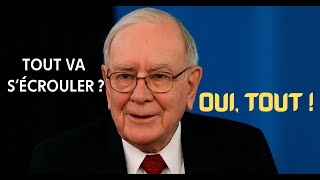
This is Charlie Minguer, one of the most respected investors in the industry, and he predicts a major economic crisis where many people will lose everything, and you really need to pay attention. He says that what is happening is so much worse that you would wish for a recession and the reasons he gives are so true that you will automatically be alerted.
Billions of dollars in investments from unsophisticated people have disappeared in the last three years, and billions more will disappear during the horrible crisis he predicts. And the worst thing he predicts is the terrible change that is going to happen, and very few people are prepared for it. The first problem he raises is the massive accumulation of wealth and power within a small group of companies, notably BlackRock, Vanguard and State Street.
These financial titans, who collectively manage a staggering $22 trillion in assets, have the financial capacity to acquire virtually anything they desire, thus wielding considerable influence over global markets. Not only do these companies own substantial shares in at least 80% of the world's largest companies , but they also have a significant hold on key sectors of the global economy.
With a hint of concern in his observations, he notes that the leaders of these financial companies such as Larry Fink have transformed into new emperors and popes of the modern world, wielding enormous power and influence that allows them to shape markets, policies, and even nations. He expresses deep concern about the concentration of economic and financial power in the hands of a small number of entities and individuals.
He suggests that this accumulation of power and wealth could have unforeseen and potentially negative implications for the global economy and social stability. "I don't know what the consequences will be, but I predict they won't be good," says Charlie Minguer, who underlines the potentially very dark repercussions of this concentration of power.
His concern lies in the impact that this accumulation of wealth and influence could have on economic stability and the way companies are run. These concerns are not only his , but are shared by others in the financial world and beyond, highlighting the need for a broader debate and potential action to ensure a fairer distribution of power and wealth globally.
Charlie Minger's second major concern is that the majority of assets in which you can invest your money today are, in his view, subtle traps designed to rob unsuspecting individuals of their financial resources. He and his partner Warren Buffett, with a cash reserve of $140 billion, are firmly resolved to avoid these pitfalls.
Let me elaborate. For some years now, an increasing number of individuals have been buying assets not with their own money that they have worked to earn, but with money they do not have, i.e., debt. As people buy assets with debt, the price of those assets will increase, and some experts believe that the prices being shown are actually just debt-factored prices .
Some experts believe that these prices, inflated by debt, are in reality just illusions, fictitious prices, fueling what many financiers describe as a financial bubble destined to burst sooner or later. Charlie Munguer highlights the vulnerability of those who take on debt to invest, pointing out that excessive debt, combined with reckless investments, can lead to catastrophic losses, especially in an unstable and uncertain market.
He points out that debt-fueled prices can collapse abruptly when market realities are revealed, leaving indebted investors in a precarious situation. But that's not his main concern. What truly worries him is the unprecedented printing of money by countries such as the United States, Japan, and European nations, which he perceives as a monumental risk that could trigger an unprecedented crisis.
He said, and I quote, "The money created out of thin air and injected into the economy reaches such colossal proportions that we are entering uncharted territories in terms of volume and scale." He claims that there has never been a historical precedent for what we are currently doing with money. According to him, printing money in astronomical quantities will inevitably end up posing a colossal danger.
And we are now, more than ever, in the immediate vicinity of this danger. He refers to the great American economic crisis of the 1980s. This crisis was so severe that governments, in order to borrow debt and finance their projects, had to pay 15% of the interest rates to these borrowers. This crisis lasted a long time and caused so much agony to many people.
He says that given how modern politicians handle things, you'll wish for a crisis like the one in the 80s. But what you get could be a crisis that's far worse than the one in the 80s. He cites past economic crises to illustrate the potential consequences of reckless economic management. He mentions historical examples such as the Vaimar Republic in Germany where hyperinflation led to economic collapse and the rise of Nazism.
He warns of the risk of such scenarios recurring if economic policies are not managed with prudence and discernment. He warns of the dangers of the degradation of democracy and civilization, citing examples from Latin America and ancient Greece where inflation and demagoguery led to the loss of democracy.
He says it's the greatest danger apart from the atomic bomb. He also said that we have done something extreme by printing so much money and we do not know the trouble this will cause. But what is certain is that we are on the verge of a major crisis with serious unrest. The third factor that Charlie Meringer believes could contribute to triggering the crisis is the emergence of robotics and artificial intelligence, which threatens to replace many jobs.
Indeed, if intelligent machines and software take over tasks formerly performed by humans, this could lead to massive unemployment. When people lose their jobs, they also lose their purchasing power, which means they can no longer consume as much as before. This can have a domino effect on the economy because when consumption falls, businesses sell less and may in turn go bankrupt or reduce their staff, thus exacerbating the unemployment problem.
Automation could also widen the gap between highly skilled and low-skilled workers, exacerbating existing inequalities. Highly skilled workers who can work with these new technologies could thrive, while low-skilled workers could find themselves without viable employment options. What Charlie Manger is doing is a prediction, and these three factors combined could create a serious crisis. Do you think that will be the case? Let us know in the comments.


Comments 0