원문 보기
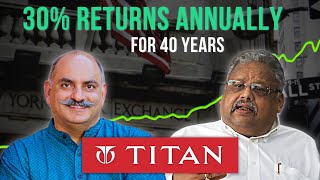
Hello everyone, welcome back to the channel. Today I will be reacting to excerpts from a recent interview with Monish Pabrai, where he told a very interesting story about one of the greatest investors of all time, who you may not have heard of. A man named Rakesh Jhunjhunwala. Rakesh was an investor from India who sadly passed away just a few weeks ago.
And Moniz tells a great story about his incredible investment journey and how he accumulated his fortune. When Rakesh first started, he had virtually no money. And in the end, he turned a $25,000 loan into about $4 billion. Monish describes Rakesh as a “ split-brain” person when it comes to investing, as he has been involved in both short-term trading and long-term investing.
But the biggest driver of his profits was buying and holding shares in two great companies that later became incredibly profitable. So, that's the topic of today's video , so let's get started. There have been a lot of posts recently about Indian investor Rakesh Jhunjhunwala, who just passed away. I wasn't familiar with him, but I have friends who were close friends with him, a sort of "friend of a friend." Rakesh was 62 years old.
He was in poor health. He died with a net worth of over $4 billion . All of this was earned in the market, and he never managed other people's money. I mean, if he decided to open an investment advisory firm, billions of dollars would come his way. But he wasn't interested in it. So he just managed his own money.
And when he was just, when he was just starting out, he was a certified public accountant, a CPA. When he started, probably in his early 20s, about 40 years ago, he had no money. He had absolutely zero. He went to this lady and asked her to lend him about $25,000 so he could buy some stocks. The woman asked him, “If I give you this money, what is the guarantee?” What guarantee can you give me?
What kind of deposit will I get? So he replied, “ Look, the only guarantee I can give is my signature. I have nothing left . I have no assets, so you should only give me money if you trust me.” So , she didn't fully trust him because he was a stranger to her . But she tells him, “Okay, listen. Here's what you'll do.
"Take this 25,000. First I will give you 12,500. You buy shares for this 12,500, and then you give me these securities." I will keep these shares. These are your shares. The profit is yours, but this is my guarantee. So he said, "Agreed." He also agreed to pay her 18% interest per year on this money.
You know, these were different times, probably the early 80s, when in India they usually borrowed at 12-13%. Rakesh was paying 18%. And then he started investing, and I would say he had a kind of " bifurcated" approach. He was engaged in active, fast trading. But he also had two long-term investments.
There's a company in India called Titan Industries that he invested in, I think, about 20 or 25 years ago, and at that time it was about 3 or 4% of his portfolio. He did not sell a single share until his death. And of his 4 billion, about 2 billion were for Titan. Titan shares have grown by about 30-35% annually for more than two decades.
Actually, if you look at Titan—I don't want to digress because your participants probably won't be interested in it—it's a jewelry company. In India, you only dealt with jewelers you had known for years to have any trust, because when buying gold, you never know if it's real or fake. Titan was promoted by one of the large, highly trusted Indian conglomerates, so they had a natural advantage.
The Indian jewelry market was highly fragmented and now Titan is gradually consolidating it. In my opinion, Titan still has 50 years of development ahead of it. It has huge potential, but to Rakesh's credit, the company has had its ups and downs, but he understood the business. And when the share of stocks in his portfolio grew to 10, 20, 30, 40, 50%, he didn't worry at all and just held on to them.
There was another company, Lupin, from the pharmaceutical industry, which seems to have accounted for 25-30% of his capital. So, he was constantly engaged in active trading. He had three monitors in front of him , he would buy something at 10:00, sell something at 14:00, and all that stuff. I think it was just to keep my mind occupied.
Yes, a very smart guy. But these two stocks, even though he was engaged in high-speed trading , had his own opinion about the market and its every move, he never touched these companies. And the reason these companies were successful was because they were great businesses. So, one of my main takeaways: despite Rakesh trading a lot, which Monish believes was just a way to keep his mind occupied, most of his profits came from buying two high-quality compounding companies.
I looked at the price of Titan: Titan has been growing at about 34% per year since 1999, and based on what Monish said, I'm sure Rakesh bought them even earlier. And to enjoy Titan's huge rise , it also had to endure the volatility that accompanied the process. Another key factor in Rakesh's success with Titan was that he did not sell the shares after they had risen significantly.
Rakesh could have easily sold Titan when they had grown 10 or even 100 times. But he held on to them and effectively let the “ snowball” roll on, even when they made up 40 or 50% of his portfolio. And the reason these companies were successful was because they were great businesses, and he never sold them , even when they visually looked overvalued.
So, Titan became the darling of the market. After 20 years, everyone loved Titan. They understand this story very well. It's like Costco, you know, everyone understands Costco. Everyone loves Costco or Walmart and so on. So one of the important things about investing, which you know, is a departure from the ideas of Ben Graham.
Although Ben Graham is considered the father of value investing, he did us value investors a disservice, in my opinion, by having a dogma set in stone. And this dogma was that stocks should not be held if their price is higher than their intrinsic value. And actually , with all due respect, and I hope you'll forgive my blasphemy, the right model, I think, would be the Buffett-Munger model or the Chuck Acres model—Chuck Acres is a great example, and I think you should try to get him to speak to you.
Chuck Acre asks one question. He doesn't ask, "Is the stock above its intrinsic value ?" He asks, "Is business getting better?" And if the business is getting better, then it needs to be given a lot of space. So, while you wouldn't buy Titan at 50, 40, or even 30 years' worth of annual earnings, you shouldn't sell it .
So, there is an asymmetry in investing that Ben Graham didn't talk about or perhaps didn't even believe: at a certain price, I wouldn't buy a stock, but I would n't want to sell it either. So I think when we invest, this asymmetry—you know, between the price at which you're willing to buy a stock and the price at which you're willing to sell it.
Let me digress a little. The very nature of capitalism is that if someone has a great defensive moat and is making super profits, there are lots of incentives for entrepreneurs and companies to get into that business and destroy those super profits. Such is the nature of capital. And this means that phenomena like Titan for 30-40 years, Costco for 50 years, Walmart or Southwest Airlines should not exist in capitalism.
From a purely theoretical point of view, these anomalies should not exist. But they exist. Therefore, sustainable benefits are very difficult to predict at the start. But in capitalism, sometimes when you look back, you can find enduring advantages that have somehow formed and even look like they might last for a while, and those are the ones worth focusing on.
That's one reason why the index is so hard to beat. Literally only four or five percent of companies generate almost all of the income that a stock market index gives you. If you removed those four to five percent of companies, the market return would be terrible. When we, as individual investors, choose stocks, the odds are against us because we have to choose one out of twenty.
And the chances of making a mistake are very high. Especially when you put on the thrifty investor hat and try to buy something cheap while trying to choose one of these twenty great companies. Cheap. Good luck with this. It is very difficult to implement this. And the index works so well because it's too stupid to know what Google owns, too stupid to know about owning Microsoft or Costco, and too stupid to ever sell them .
Therefore, he simply "rides " on these assets. As we saw in the case of Rakesh: 3% of his portfolio, a very small portion that was probably worth less than $50 or $25 million at the time, turned into $2 billion. Okay. And what did he do? The most important thing he needed to do was do nothing . So, the holy grail of investing is that we will make a lot of mistakes.
John Templeton said that the best investor will be wrong two out of three times or one out of three times. Most of us will be wrong half the time. Even if you are wrong half the time, you can achieve true success. This is a very indulgent business. But the important thing is that when you find yourself in the fortunate position of owning a great business, you have to put aside your doubts.
And if you see the prospects for development , if you see that this is a great business that will continue to grow and operate successfully under the leadership of great , honest managers, then you just hold on to it with all your might . When it comes to buying stocks, I believe Graham's advice is still very relevant, even for investors who are trying to acquire long-term assets at a fair price.
But Graham's advice on selling stocks is a bit vague . And how you do that depends on what style of value investing you follow. According to Monish, if we want to be successful owners of these great companies, we need to reject Graham's teaching about selling stocks above their intrinsic value . If you look at some successful companies, like Costco or Titan, after a certain amount of time, when it becomes clear that this is a great business, they usually become very expensive.
By selling a great company when it becomes fully valued or overvalued, you may miss out on the opportunity to make big profits from its continued rapid growth. He also mentions Chuck Arie, who has a similar approach to investing in finding " multi-baggers," and says Chuck asks the question "is the business improving?" , not "is the business overvalued?" .
If the business is improving and there are still many prospects ahead, then for a long-term investor the wisest decision would be to do nothing . So while you might not buy Costco at its current price, you definitely wouldn't sell your stake in Costco at that price, which is also similar to what Charlie Munger said recently.
So, overall, I think Rickesh is another good super investor worth learning from. I was thinking of doing a full video where, similar to what I did for Nick Slip, I would analyze some of Rickesh's best investments, like Titan, to see if we could learn any useful lessons for our own research. Here's a quick introduction to Rakesh Jhunjhunwala.
And I hope you found it interesting. If so, please hit the like button as it really helps the channel grow. And if you watched the video to the end, thank you very much for watching. If you're still bored, I'll post another video in the corner that I think you'll find interesting. So, that's all for today. Thank you very much for watching and I hope to see you in the next video.

Comments 0