저자: CharlieMunger · 외국인
요약 보기
찰리 멍거의 중국 투자 견해를 소개하며, 중국 기업이 미국보다 더 강하고 저평가되어 있다고 주장. 중국의 기술 산업 우위(64개 핵심기술 중 57개 선도), 해외 경쟁 배제로 인한 슈퍼앱 중심 성장을 긍정 요인으로 제시. 반면 미국 상장폐지 위협, 중국 정부 규제, 핀둬둬의 불투명성 등 리스크도 언급. 투자 방법으로 MCHI, KWEB, ASHR 등 ETF 소개.
다듬은 글
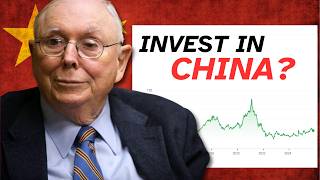
I don't agree with you. I think the strongest companies are not in America. I think the Chinese companies are stronger than ours and they're growing faster and I have investments in them and you don't and I'm right and you're wrong. China has been home to the most extreme economic growth in human history.
In the last four decades, the nation has transformed itself from a struggling with poverty economy to a nation that is one of the dominant powers in many of the most important and fastest growing industries. And the driver of this growth is definitely the embrace of the free market which led to the creation of numerous industry-leading companies in sectors such as electric car manufacturing, cloud computing, artificial intelligence, online shopping, renewable energy, and many more.
And this astonishing success has caught the attention of many legendary value investors. and one of them being Charlie Mer, also known as Warren Buffett's right-hand man, who had personally invested a big chunk of the Daily Journal's portfolio that he managed in the Chinese company Alibaba. And he even managed to convince Buffett to invest through his Birkshar hataway in China's electric vehicle manufacturer BYD, which turned out to be a huge success.
Yes, I have never helped do anything at Bergkshire that was as good as BYD, and I only did it once. our our $270,000 investment there is worth about 8 billion now or maybe nine. So in this video I'll explore his opinions on investing in the Chinese market and outline the positives and negatives when investing in China and at the end I will show you the best methods to invest in Chinese companies for foreigners if you decide to.
So let's begin with the positives of investing in China by looking at this interview question from Charlie Mer. Why would anyone as smart as Munger or Buffett consider investing in China or any of the Chinese companies? Well, we did it for a very simple reason. We got more strength per dollar invested in China.
This the companies we invest in are stronger relative to their competition and priced lower. That's why we're in China. From this clip, we can understand that Charlie believes that Chinese companies can perform better than American ones. And there are three main reasons for that. The first most prominent one is the Chinese companies now dominate a major portion of the world's biggest and most innovative industries.
For example, look at this report from the Australian Strategic Policy Institute where it has the goal of tracking 64 critical technologies in the sectors like artificial intelligence, biotechnology, robotics, advanced materials, and key quantum technology areas, which is a pretty good indicator of a country's research performance and potential future science and technology capabilities.
So between 2003 and 2007 the US led in 60 out of 64 technologies with China leading in just three. Fast forward to the period 2018 2022. This research concludes that now China leads in 57 out of the 64 technologies. This trend clearly shows the astonishing increase in Chinese innovation in a very short amount of time.
Another interesting chart is this one where you can clearly see how China quickly became the world's largest car exporter in just the last 5 years. This clearly shows that Chinese companies have the capacity to grow exponentially in a small amount of time which is also connected to the next reason for their high performance and it is that Chinese companies face a lot less external competition which is primarily a result of the strict rules and forced by the Chinese Communist Party to not allow many mainly American tech companies from offering their services in China.
These includes companies like social media giants Meta and Snapchat as well as Google and its services like search, YouTube and Google maps. Also payment companies such as Visa, Mastercard, PayPal and many more. And the reason being is mostly because of China's tough censorship controls. So because of that a lot of Chinese companies can easily get as much market share as possible in their domestic market.
So there is a Chinese alternative for almost every American service. This led to something that American companies have been trying to achieve for years but have always felt short and it is the creation of super apps. Those are apps that integrate multiple services into one app. Imagine having one single app in which you can use multiple services without leaving it like messaging, shopping, ordering food, banking and even ordering a taxi like service like Uber.
Well, China has two companies that fit that profile. The first one is Tencent and its super app called WeChat, which is not only one of the most popular social media and messaging apps, but also doubles down with popular features like doing payments, video games, online shopping, and even booking doctor's appointments.
Penc is also a leader in digital entertainments like online videos similar to YouTube, music streaming services like Spotify, live streaming services like Twitch as well as artificial intelligence, cloud computing, ebooks and many more. It is also the world's biggest gaming company in terms of revenue as well as operating as a large investment fund which owns big percentages in a lot of foreign companies.
The other most prominent super app is Alibaba's Alip Pay app, which is primarily a finance app used for mobile payments and money transfers, but also has food delivery, ride hailing, and ticket booking features. Alibaba is also the leader in the Chinese e-commerce market with multiple leading platforms like Teimo and Taoba as well as couple of international online platforms and he's currently the Asians leader of cloud intelligence and is also the leader in many other services for messaging AI navigation supply chain and logistics, video hosting and streaming services, groceries and healthcare services.
So far we have established two things. One is that China has the innovative capacity to create companies in leading technological industries and that the lack of competition which allows it to grow companies that are leaders in multiple industries which have a very strong economic mode. To top all of this, Munger has one more major reason to like investing in Chinese companies and it is the very low prices that they're being sold for on the market.
The reason that I invested in China is I could get so much more so so much better companies at at so much lower prices and I was willing to take a little political risk to get the to get into the better companies the lower prices. Other people might reach the opposite conclusion. So being able to purchase great industry-leading companies with strong economic modes and great growth potential must be great, right?
Well, yes, but there is a few very big reasons that those companies are sold on those low prices. So, let's look why that is and what is the arguments against investing in China. The first most showing problem with investing in China is caused by the same reason as one of the advantages. It is indeed the strict Chinese regulations which cause various issues for foreign investors.
One of them being the United States government threatening to delist Chinese stocks on the US exchange. This is important since the Chinese government does not want to allow foreign investors to hold voting shares in Chinese stocks so that they cannot make decisions about the management or the future of their companies.
So big companies like Alibaba and Tencent have special listings on outside exchanges which do not have voting rights. But the main issue with this is that the Chinese Communist Party do not allow US regulators to audit these companies inside China which puts foreign investors at risk of getting incorrect data about these companies.
So then in the year 2020 the United States government threatened to release these companies from the US stock exchanges and in this year in 2025 Republican lawmakers continue to push for their restrictions due to national security risks. But that is only on the foreign side. Inside China, these companies face different regulatory threats.
One of them being crackdowns from the Chinese government itself. So the government established a new antitrust authority and significantly revised its anti- monopoly law which led to large fines and investigations against companies like Alibaba for anti-competitive practices. This affected things like restricting Alibaba's fintech company and Group to have an IPO as well as tough restrictions on the gaming industry which hurt Tencent significantly and forcing the delisting of some foreign listings like the right hailing service DD on the New York Stock Exchange following a security probe.
So these companies face some pretty strict regulations on both their mainland and foreign operations which can temper their future potential. Well, the Chinese government is worrying all the capitalists in the world way more than it used to. Of course, we don't like that. We wish that China and the United States got along better.
But this lack of transparency led to something even more worrying, and it is the questionable practices of some of these companies. And a great example of this is the company Pin Duo Duo, who is the owner of the popular Chinese e-commerce brand Teimu. In recent years, the company has had an astonishing market grab in China, challenging the duopolistic lock of the market by Alibaba and JD.com and snatching a big chunk of their market share in an astonishing time.
However, there is little to no information in their annual report about how the company runs its business and it also does not disclose important financial figures which are essential for a company of its kind. The CEO of the company is known for working under the bridge and he does not have ownership in any of these companies.
In addition to that, there is quite a lot of scrutiny surrounding the questionable origin of their products since it is rumored that they use materials and labor from places which have international bans for products to be sold in Europe and the US. As I mentioned before, the country does not allow foreign auditors to check the validity of its finances and business practices.
And those shady operations are one of the reasons that the US is threatening to delist some of the Chinese companies on its stock exchange. So those are the main things that I believe an investor should consider before investing in the Chinese market. So if you have decided to diversify your portfolio within China as a foreigner, there are two main ways to do that.
So the first way to invest in China is by buying shares listed directly on the foreign stock exchanges such as the New York Stock Exchange or London Stock Exchange. However, this method does not cover all public companies but mainly bigger ones which want to attract more funding outside of China and so have listings outside of the mainland.
So there is one other method which I believe is most preferable for investing in Chinese companies and it not only eliminates the risk of owning individual companies but also can allow you to invest directly into the Chinese exchanges allowing you to own a lot more companies within the Chinese market.
And this happens by buying ETFs, some of them being greenlisted from China like Black Rockck's eyeshare ETF that hold basket of stocks in a lot of companies either in a specific sector or the entire market. Some well-known examples that you can buy on US exchanges are MCHI which provides a broader exposure to Chinese equities including large and midcap companies traded on exchanges outside of mainland China.
Then we have KWEB which is an ETF that provides targeted exposure to Chinese internet and technology companies with top holdings including Alibaba, Tencent and PDD. And finally, there is the ASHR ETF that is comprised of the 300 largest and most liquid mainland Chinese stocks from the Shanghai and Shenzhen stock exchanges that are mainly focused in the companies that operate only within China.
Of course, there are a lot of others that you can research, but be aware to first look for ETFs with lower management fees as this can easily eat away from your long-term compounding returns. And also, do not just take my advice on the topic. Make sure to familiarize yourself from other sources as well.
And do your own due diligence before making any investment decisions. If you want to learn more about value investors like Charlie Mer and how they manage to pick and analyze the right companies and produce their astonishing long-term results, make sure to check these videos where I go more in depth on topics like this. Hope you enjoyed this video and see you in the next one.


Comments 0