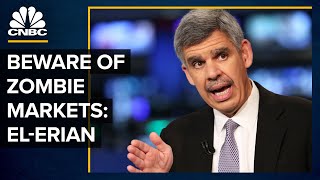
저자: MohamedEl-Erian · 외국인
요약 보기
한 줄 결론: 엘-에리언은 2020년 6월 기준 경기 회복이 길고 완만할 것이며, 연준의 금융완화가 자산가격만 밀어올려 실물경제와 괴리가 커지고 있다고 경고했다. 경기 전망: 정책 대응이 없으면 V자 반등이 아닌 길고 평탄한 회복이 예상되며, 실업률이 2월 3.5%에서 크게 오른 상태가 한동안 지속될 수 있다. 고용 전망: 파산이 늘어나고 호텔·외식 등 노동집약 업종은 회복이 어려우며, 기존 기업도 구조조정(wide sizing)으로 인력을 줄일 전망이다. 일시휴직이 장기실업, 노동시장 이탈로 번질 우려가 있고 연말 실업률이 10%에 이를 수 있다고 봤다. 정책 처방: 생산성 제고, 인프라 투자, 노동 재교육, 사회안전망 강화가 필요하며 이는 연준이 아니라 의회·정부·기업의 역할이다. 연준 역할 비판: 연준의 제로금리와 대규모 유동성은 금리·자산가격만 올리고 실물경제 문제는 해결하지 못한다. 기업은 부채로 자사주 매입 등 금융공학을 하고 위험선호가 과도해졌다. 시장 괴리: 주식시장 호황은 경제가 아니라 '연준이 받쳐준다'는 기대(도덕적 해이)에 의한 것이며, 하이일드 시장 개입 이후 시장이 연준을 인질로 잡고 있다고 봤다. 부채와 좀비기업: 사상 최고 수준의 부채와 최저 수준의 위험 스프레드가 공존하며, 좀비기업과 잘못 가격 매겨진 '좀비 시장'이 자본 배분 기능을 훼손하고 있다고 경고했다. 탈세계화: 가계, 기업, 정부 모두 탈세계화를 추진하는 최초의 사례로, 공급망 국내화 압력이 커질 것이다. 단기 리스크: 경제 재개방이 비동기적으로 이뤄지면 의도치 않은 부작용이 생길 수 있다. 금융 급정지는 중앙은행이 해결하기 쉽지만 경제 급정지는 훨씬 어렵다고 설명했다. 긍정 요인: 과학 혁신의 도약, 공공-민간 파트너십 강화, 산업계의 사회문제 해결 참여 등이 긍정적 신호로 언급됐다. 언급 종목·자산: 개별 종목 언급 없음. 미국 경제·주식시장 전반에 대한 견해만 제시.
다듬은 글
We're interviewing some of the top minds in economics to get a sense of what's next for the global economy and financial markets. Today, we're talking to Mohamed El-Erian. He's the chief economic adviser at Allianz and the former CEO of PIMCO. Mohamed, thank you so much for joining us today. I want to start out with your outlook for the economy overall.
How long is it going to take for the global economy to get back to normal. If we don't get specific policies that we can talk about, it will be a long and rather flattish recovery. And we have to understand that we're going to come levels that will still be eye popping notwithstanding really horrible not as we've seen so far.
So we are going to be in a very deep hole. And unless we get policy accelerator's, it will take us quite a long time to get out of it. Are there parts of the economy that you think might never return to what we would see as normal? So they are going to be a very wide range of winners and losers in this economy, not only among companies, but also unfortunately among people with the most vulnerable segment being most at risk.
So let's talk about some of the policies that are necessary then to try to address that inequality. You've got to address productivity. It's about infrastructure. It's about retooling and retraining of labor. You've got to address household economic insecurity. It's about better safety nets. And then you've got to do something about globalization.
It's one thing to de-globalize. It's another thing to de-globalize in a disorderly fashion. What are some of the factors that might keep the unemployment rate at that high level? Given that we were at 3.5 percent just in February of this year. So I think part of it is companies not coming back. We're going to have, unfortunately, lots of bankruptcies.
Once a liquidity problem becomes a solvency problem, you cannot reverse it that quickly. Certain activities that happen to be very labor, intensive hospitality is very labor intensive, are not coming back. Then you have existing companies that are now no longer talking about resizing. They're talking about wide sizing.
And most of them, unfortunately, wide sizing means less labor. So existing companies will also be shedding labor. And then the sectors that are going to be really favored in the next couple of years. Other than health care are not that labor intensive. So I worry that what started out as furloughs now becoming short term unemployment may become long term unemployment, then people dropping out of the labor force.
And that is problematic both from the supply side and the demand side. That's why I keep on saying it's really important to identify likely trends and do something about them now because none of this is predestined. We have the tools to address these things, but we have to change our mindset. So the Fed has tried to address on the demand side with rates at zero and trillions of dollars in stimulus.
Is this the Fed's job to continue trying to stimulate the economy going forward? It is certainly not the FED's job. In fact, if the FED continues doing what it's doing, it will become a big part of the problem. All that the FED can do is ensure financial conditions that encourage risk taking, encourage companies to borrow.
Why the hope that the more risk we take, we boost up asset prices. The more we boost up asset prices, the better off we feel and the better off we feel, the more we consume the wealth effect. And then on the other side, the hope is by making bond financing really cheap, it will encourage companies to borrow in order to invest.
But what we've discovered is that when that happens and the underlying economy is not fixed. Companies borrow for debt buybacks, for stock buybacks. They borrow for financial engineering, basically. And people take on too much risk. And you don't get to the real economy. So you boost asset prices. You boost debt, you boost everything financial.
But you don't get through to the economy. That is I stress that is the way that the FED is constructed. It can only go through asset markets. So you need entities that can actually address underlying productivity and underlying demand. And that would be Congress or state governments or where would that kind of come in and whose job would that fall to?
So all of your above. It is local government, it is state government. It is the federal government. It is also collaboration with other countries. Even though we've got de-globalize, it doesn't mean we to turn linkages with the rest of the world off completely we're still going to have supply and demand linkages.
They'll be less pronounced than they are now. It's also companies role. I think one element coming out of this crisis is greater social responsibility. And companies realizing that they have a role to play in making sure that we have more inclusive capitalism. You've talked about the disconnect that we've seen in the real economy, the financial markets.
Is that primarily because of the FED? Are there other factors at play? And how can the average American understand why the stock market is booming while there are 40 million people who don't have jobs right now? Yeah, I mean, it's something that's actually hard to explain. I get asked that question all the time.
And the easy answer is the markets are not the economy, but then people press you. But aren't you investing in companies and don't companies operate in the economy? And you say yes. And then the next easy answer is, well, markets are forward looking. They can look through short term. So, yes, unemployment is terrible, but that's short term.
Markets are forward looking. And then you get a really interesting answer. So let me get this right. Market analysts, confidently predict what the future looks like when most companies have suspended earnings. So most companies are telling investors we don't have visibility. And then. But the people who call the market seem to have perfect visibility.
What's going on? How can that happen? Which leads you to the third answer. It's not about companies. It's not about the economy. It's about a backstop. It's about confidence that someone with a printing press in the basement. Massive willingness and ability to support financial markets, as they have done for the last 10 years, will continue to do so.
So if you're an investor who's willing to embrace this moral hazard, if you embrace it, you end up with this win win mindset. I win if I guessed correctly about the economic recovery. And I still win if I guess wrong, because I'm going to be bailed out. And the minute the FED went into the high yield market and the FED said, I'm willing to take on default risk, I'm willing to take on capital impairments.
In the marketplace, the difference between high yield and equities in the capital structure is not that big. So the mentality of the market is, well, if they're willing to do high yield, they'll be willing to do equities, because after all, the last thing the FED wants is a financial crisis to make the economy worse.
So the market feels very strongly that it basically is holding the Fed hostage. One of the effects of all of this, of course, is record high debt levels that we've seen growing at a record pace. Is this something investors should be worried about right now? It seems like we're kind of all ignoring it for the time being.
Yeah, its record high debt levels with record low risk spreads and very high risk taking on part of the investors. Normally, the higher that goes, the more the market prices the sovereign or the company. There's a higher risk of the complete opposite has occurred. Now, if you are a short term economist or investor say that's wonderful.
The Fed has secured the loosest financial conditions on record. And if companies can borrow, they can ensure that liquidity problems don't become solvency problems. Some companies are also then taking on a lot of debt. And we've heard this term zombie companies, so they have all this debt that they won't be able to pay off.
But they continue to operate and function sort of like a zombie, I suppose. Is that something we should be worried about? Is that a issue for the broader economy going forward? So I think we should be worried not just about zombie companies, but zombie markets. Zombie markets, a market that are completely mispriced they're completely distorted.
Why? Because there is a policy view that we need to subsidize everything in markets for now. So what happens when you get these conditions? The two most important roles that markets play, and we are a market based system and part of the success of America is, the market system. One, they allocate resources.
So think of the stock market. You allocate uses of funds with sources of funds. And if you price that well, you get an efficient outcome. So the first thing you do is you destroy the efficient allocation of capital across the country. So the second thing you do is, is you destroy the price signal. So people no longer care about fundamentals.
Does the globalization piece fall on the companies then? Because companies are seemingly the ones who are saying we're going to move our supply chains back. They are getting pressure from people in Washington to do so as well. So whose job is it to try to address the fallout and how to make that even happen in the first place?
So what makes this distinct is that all three segments of society will be pushing for de-globalization. Governments, companies and households. This is very different from the first two shocks to globalization. The first in 2010, was a household led shock. If you remember, it was led by people who felt alienated and marginalized by globalization.
The second shock to globalization came in 2017-18. That was a government led shock. This one is going to involve companies, like you just said, governments as well. We're going to have a massive blame game. Governments are going to be very keen in certain priority sector on shoring their supply. What you're gonna hear over and over again is we need to localize our supply trades.
And then households. I fear that unemployment may be 10 percent still by the end of the year. That is not an environment where the household sector embraces globalization. So what makes this different is that every segment of society will be a driver of de-globalization. And what do you see as the biggest risk to the global economy going forward in the next six months and then maybe in the longer term too?
So I think the next six months is going to be lack of synchronization. It's hard enough restarting an economy. When I warned on CNBC in the beginning of February that this is really serious. It's because I had experience economic sudden stop because I worked on Sudan, a failing economy at that time in the 80s.
And what you learn when you get an economic sudden stop, not a financial sudden stop, an economic sudden stop is really hard to get out. Believe it or not, financial sudden stops that seem worse, are actually easier to get out because you can restart the financial system by using the central bank's balance sheet, because ultimately the financial systems break down because of counterparty risk.
Two banks not trusting each other. So it's like a heart attack. It hits you hard. But you know exactly where to go. And economic sudden stop is like you having infections all over your body and you need to address these things in a synchronized manner. So look at the difficulty of you re-opening when you don't have inventory, when you're not sure whether your customers are coming in or not.
It is very hard. You need it a certain amount of synchronization. Now, imagine that you get a global economic stop. That degree of difficulty becomes even higher. So what I worry about on the economic front over the next six months is that we will try to reopen, but we will reopen in this de-synchronized fashion and then risk all sorts of unintended consequences.
And any bright spots that you see to end on a more optimistic note? Oh, there's there's many bright spots. And that's why I told that I have a sheet of paper here, because one of the challenges of winning the peace is to bottle up the good stuff we see in. And use it. So we are seeing, for example, much more respectful signs, leapfrogging of scientific inventions that are going to help multiple generations.
We are seeing better public private partnerships. We are seeing industry, it's pharma, finance, technology, come together and try to solve societal issues. We are seeing great acts of kindness. We are seeing much more respect for critical passer by economy. So there are lots of good things that we are seeing in this crisis.
And I think our challenge is to bottle this up and make sure it continues to help us because it's about, you know, winning the war and winning the peace. And we've got to do it. But we can't afford a repeat of without it.



Comments 0