원문 보기
In the last week of July, 2026. One of the biggest AI funds in the world was dying. Its positions were collapsing. Its lenders wanted their money back. Its founder had told investors only days earlier. That this was a buying opportunity. Now he was being forced to sell everything, but this story is not about him.
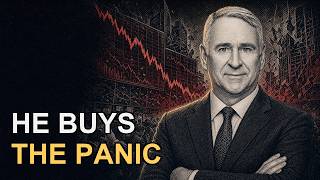
It is about the man on the other end of the phone. A man who has been answering this exact call from dying funds for 25 years. On Wall Street, a call from this man in the middle of a crisis has become a familiar story. If he is calling, someone is usually already in serious trouble. His name is Ken Griffin.
His firm is called. Citadel Days after that call, one of Citadel's funds reported the best month in its history. This is the playbook. Rewind One Week Wednesday, July 29. Rumors are moving through Wall Street. A famous AI fund called situational awareness is in trouble. The fund had built enormous positions in AI stocks, multiplied by borrowed money.
When the AI trade cracked in July, the borrowed money turned on it. Reuters reported its portfolio lost 67 % in a single month. Amid market rumblings that a firm was in trouble. Griffin assembled his top lieutenants to investigate. Reuters, citing five people with knowledge of the talks, described what happened next.
By Wednesday morning. Citadel had reached out. Griffin spoke directly with the funds young founder. Leopold Aschenbrenner. Then came the all-nighter. Citadel's senior team went line by line through the wounded portfolio. How big? How liquid. How badly hurt. They were not alone. Business Insider reported that Millennium and Jane Street, two of the largest firms on Wall Street, put in rival offers.
But speed has always been Citadel's edge. In less than 24 hours, the deal was done. One block transaction. Citadel took the bulk of a roughly $16 billion stock portfolio, reportedly at a discount of around 10%. The seller wrote to his investors that night. Quote. We let you down, the buyer wrote. Nothing he did not need to.
Wall Street already new. The pattern. It has watched versions of this playbook for decades. To understand the pattern, go back to 1987. A Harvard sophomore is running money from his dorm room. The university does not allow businesses on campus, so he asks the building supervisor for permission to mount a satellite dish on the roof.
To get real -time stock quotes. He is 19, trading convertible bonds. With about $265 ,000 from family and friends. After graduation, a Chicago fund manager named Frank Meyer stakes him, and in 1990, at 22. He launches his own firm. With $4 .6 million. The firm will become Citadel and its founder will learn his most important lessons.
Not from his wins. From other people's disasters. 1998 The most famous hedge fund collapse of the century. Long -term capital management. Run by Nobel Laureates. Loses 90 % of its equity. And nearly takes Wall Street down with it. While the industry stared at the wreckage. Griffin did something strange.
He went and met with the senior people who had worked there. He wanted the answer to one question. In his own words. How does a firm that loses 90 % of its equity? In a levered financial services industry, still stay in business. He would later call those lessons existentially important. Remember that word.
It comes back, December 2, 2001. Enron, one of the largest companies in America, files for bankruptcy. 20 ,000 Employees are about to watch their company collapse around them. That same day. Griffin chartered a Gulfstream jet and put 16 of his people on it, found for Houston. While the world saw a scandal, he saw a talent auction.
For several days, his team interviewed Enron's people. What worked What did not. How they made money. By his own account. He hired the entire leadership of Enron's quantitative research effort. Those hires became the seed of Citadel's commodities business. Griffin has said Citadel has made in his rough estimate.
Some $30 billion in commodities since. From a team he found in the ashes of a bankruptcy. 2006. A fund called Amaranth makes the wrong bet on natural gas and loses over $6 billion in weeks. Its energy book is taken over by... J .P. Morgan and Citadel. Days later. Citadel buys out JP Morgan's half as well.
Here is the mechanism to understand. In a forced sale, the buyer can demand a deep discount for taking enormous risk overnight. If the assets recover. That discount becomes the first layer of profit. The trade was reported as a windfall for Citadel. Critics Have a harsh word for buyers of distress. Vultures The less dramatic word is liquidity.
Citadel shows up when almost no one else can. Summer 2007. The first hedge fund casualty of the coming credit crisis is a Boston firm called So Wood. In one month, it loses more than half its investor's money. On a Sunday morning, Sowood calls Citadel. Griffin assembles a team of 50. Eight of them fly to Boston that day.
Through the night, they value a portfolio of roughly $30 billion. Gross. At some point, a banker from another firm says he will pick things up again in the morning. Griffin's answer became Wall Street legend. Quote, there will be nothing to pick up in the morning. We are going to get this done. At 6 a .m.
Before the markets opened. Citadel had bought, substantially, all of the portfolio. Sawa's own letter to investors called it. The only immediate and comprehensive solution. Months later, Citadel led a $2 .5 billion rescue of the broker eTrade. Buying its troubled mortgage securities at roughly $0 .27 on the dollar.
The pattern was now a machine. And then. The machine nearly died. 2008. The global financial crisis. This time it is not somebody else's disaster. Citadel's own flagship funds are collapsing. The funds lose roughly 55 percent. Griffin later said the firm lost half its equity in about 16 weeks. And stood on the verge of going out of business.
In December. Citadel stopped investors from taking their money out. The rescuer of funds had become the fund that needed rescuing. What saved it? By Griffin's own telling. Were the lessons from 1998. The interviews in the wreckage of long -term capital. The homework on how a levered firm survives, losing almost everything.
That word he used. Existentially important. This is what it meant. In 2009, the funds rose 62 percent. But be precise about the math. After losing 55, gaining 62 still leaves you a quarter below where you started. It took until January 2012 for investors to be made whole. Every fund Griffin has bought from a dying rival since.
He has bought, knowing exactly how it feels to be on the other end of the phone. January. 2021. A fund called Melvin Capital is bleeding out in the middle of the GameStop frenzy. Citadel and its partners put in $2 billion. 0 .72 Added 750 million more. But look at the structure. The money bought a non -controlling share of the fund's revenues.
Not a promise to go down with the ship. Melvin never recovered and shut down in 2022. Yet Bloomberg reported, citing a person familiar, that Citadel did not lose money on the rescue. By the time Melvin closed, Citadel had already pulled most of its original capital back. That is the quiet genius of the playbook.
Even when the rescue fails. The rescuer is built to walk away whole, which brings us back to the last week of July. 2026. And the phone call to a drowning AI fund. Before the deal, Citadel's own July had been ordinary. Bloomberg reported its flagship fund was up less than half a percent for the month.
Then it bought 16 billion dollars of beaten down AI stocks from a forced seller. And the market turned. Citadel's equities fund finished July up 14 .2 percent. Its best month on record. The flagship ended the month up nearly six. The year. The equities fund is up 27%. With five months still to go. The Financial Times, citing a person familiar with the matter, reported that Citadel made billions of dollars in a single week.
From the position. One hedge fund manager who held similar positions put it simply. They were highly volatile. But they were liquid. So Citadel made a killing, and a former Citadel employee told the FT. It's Classic Ken. He has played that card many times. There are very few investors in the world who can do what he did.
Why can so few do it? Because the trade requires three things at once. A fortress balance sheet. So you can buy when everyone else must sell. The machinery to value $16 billion of positions overnight. And 25 years of answering the phone. In every market, there are people who predict the storm and people who sell umbrellas when it hits.
Prediction pays sometimes. The umbrella stand pays every time. The scoreboard says the same. Since 1990, Citadel has made its investors over $90 billion. Net of Fees. By that measure, LCH Investments ranks it the most profitable hedge fund in history. As for Leopold Aschenbrenner. The young founder on the other end.
Of that call. His fund survived, smaller, and kept its private crown jewel. A stake in Anthropic, the AI company now preparing to go public. If that listing arrives, this whole story may get one more chapter. The seller could yet be proven right about the future. But Griffin was paid in the present.
Savior. Or vulture. Wall Street has argued about the answer for 25 years. Perhaps it is simpler than that. He is the man who does his homework before the disaster, so he can move faster than anyone during it. Markets will crash again, another fund will die suddenly. And somewhere above the storm. Ken Griffin will already be reaching for the phone.





Comments 0