원문 보기
bill gross if we look at the investment the recent investment return in that you mentioned the german trade the spread trade with germany did the central bankers get in your way are you willing to blame any sense of underperformance on federal reserve officials ecb officials etc etc these people didn't go by the book and bill gross got run over because they did something new and original well not necessarily i mean they didn't go by the book and it's up to the portfolio manager to analyze what that new book is in terms of reading you know for uh five six seven eight years quantitative easing has provided an opportunity for bond investors to take advantage of capital gains the question became in terms of germany versus the united states you know what would the effect of u.s tightening by the federal reserve and the ultimate you know exclusion of quantitative easing in the beginning of quantitative training what would that do relative to what was happening with the ecb and it uh the spread continued to widen and continues to widen even till today and that's a it's a very long-term situation but bill this is critical and critical going forward as you invest your own money and everybody else wants to know what you feel about central banks that got away from phillips curve theology over to balance sheet adjustment through q quantitative easing and then on to some set of quantitative type means to come which of those two was the real harm was it the balance sheet dynamics or was it the death of the phillip curve dynamic well i i think it's basically both in terms of the balance sheet i find it very interesting certainly in the us with the fed um you know the fed expanded its balance sheet during quantitative easing from approximately 1 trillion to approximately 4 trillion in a world in which credit in the united states was around 60 trillion dollars you know to my way thinking back in 2007 and 2008 the fed was in a highly leveraged situation relative to total credit it was 1 trillion versus 60 trillion or 60 to 1.
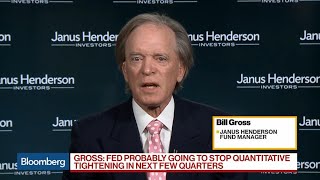
they expanded that and basically equitized their portfolio to 4 trillion and that was a much leveraged situation now quantitative tightening reducing that to some extent although probably going to stop uh in the next few quarters or so you know it perhaps is at a point where the leverage inherent in the fed's balance sheet and the leverage inherent in the u.s credit um economy is is better to put it that way although not necessarily satisfactory so many times i've found uh bill gross i don't want to mention names here but a lot of acclaimed managers in whatever way are shown the door and then x number of months afterwards whatever their play was works out like a charm do you sense any kind of jump condition coming where yields come up or those spreads normalize i mean is it going to be smooth functions over one year two years three years or do we get a jump con addition in abruptness to some outcome this year 2019 well we we need to speak to different central banks i suppose in different countries in the us in the u.s the fed is that two and a half percent in terms of fed funds if you assume inflation's at one at two then you've got a half a percent uh in terms of real interest rates which to my way i think it is about as high as you can go in a leveraged type of economy in the rest of the world you know let's just take the ecb and take japan as well with their zero percent interest rates or even negative interest rates in germany all the way out to seven or eight years um you know there's a very different situation and things haven't really changed and i wonder uh versus the us you know what that means for their economy and as i've mentioned for many times on your program tom the the disadvantage in addition to potential inflation down the road the disadvantage of negative interest rates and low interest rates in the rest of the world is that savers are disadvantaged and insurance companies and banks are disadvantaged and so the savings function is at risk this is really important folks i'll do one more question on this and then switch themes in this generous conversation with bill gross this morning again on bloomberg television and bloomberg radio worldwide we have negative interest rates this was a huge theme at davos in the in the hallways bill gross a chronic nature to negative interest rates in europe it redounds on the u.s as well is that something that goes to a breaking point or do you have an optimism that ecb and europe as a political entity can extricate itself from these negative interest rates that don't help savers well i i think it will take time to observe and haven't we had that for the last three four or five years and and what we've found certainly in in the ez in europe uh with the ecb is that these rates are just enough uh to keep growth above the line and just enough uh you know to keep inflation at one to two percent yeah you know japan for me tom is the petri dish uh because they've been doing this for 10 or 15 years right right um you know an economist would have predicted that uh if the government was buying up all of the debt issued by its uh treasury or if the central bank was buying it that that would be quite inflationary but it hasn't been right so the the quandary going forward is for uh other central banks will this behavior create inflation and in my uh context will this uh disadvantage savers to the point where the the savings function and the investment function is severely disrupted we welcome all of you on bloomberg television and bloomberg radio worldwide bill gross announcing his retirement today from janice henderson we're thrilled to bring him to you on bloomberg surveillance





Comments 0