
저자: MarcFaber · 외국인
요약 보기
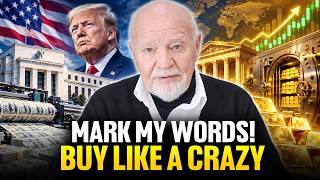
Faber는 서방 정부의 화폐 발행으로 법정화폐 구매력이 하락할 것이라며 금·은 등 실물자산 보유를 권한다. 1970년 대비 금의 구매력 보존력을 근거로 든다. 주식이 채권·현금보다 구매력 방어에 낫다고 보지만, 미국 주식은 비싸고 브라질·인도네시아 등 신흥국이 상대적으로 싸다고 본다. 백금은 금 대비 저평가되어 3배 상승 가능하다고 주장한다. 미국은 긴축이 어렵다고 보며, 과잉 유동성과 자산 인플레이션, 부의 양극화가 사회 불안을 낳을 수 있다고 경고한다.
다듬은 글
I truly believe that Western governments will print money and purchasing power will fall. I admit that owning stocks is a way to protect your wealth, because the stock market protects your purchasing power better than bonds and cash. Cash and bonds would be the worst instruments. So, in reality, he could own shares.
I think it could go down if liquidity becomes really scarce. But as I said, I doubt the United States can tighten monetary conditions. Global economic stability faces unprecedented challenges as nations navigate massive debt limits. Investors worldwide are seeking reliable strategies to protect their wealth against inevitable currency devaluation.
Mark Faber, a veteran financial analyst, argues that Western governments will print money, which will drastically erode the purchasing power of fiat currencies. He emphasizes that central banks cannot be trusted in the long term, making physical gold a vital shield for preserving personal wealth. While cash and bonds are likely to perform the worst , tangible assets naturally reflect the deterioration of paper money.
It predicts that the United States will fail in its attempt to tighten monetary conditions, forcing individuals to insure their own assets. Maintaining a substantial allocation in precious metals provides an essential safety net. Accumulating gold monthly remains an excellent method to protect savings from depreciation as the global monetary system deteriorat, and subscribe to receive the next update.
I am a large holder of precious metals and I have been saying for 40 years that you should not trust central bankers or the government; They must have their own gold reserves. I maintain this opinion, but I would like to make an observation about it. If you look at the gold bull market of recent years, we had a big move up to 2011 and then we went down until 2015.
In 2015, gold last touched around $1,000 an ounce. We are now above 3,000. My opinion is that gold is reflecting the loss of purchasing power of money. And if someone asks me, is it expensive or cheap ? Well, if I compare the cost of living in 1970 with the current one, gold has been a very good protector of wealth.
I mean, you owned an ounce worth $35 in 1970 and now it's worth over $3,000. So that's fine, and I would recommend to anyone anywhere in the world that, little by little, each month, they accumulate a little gold with the intention of having approximately, I don't know, between 20 and 40% of their money in gold.
I have about 25%, but I was thinking today while I was taking a bath last night whether I shouldn't put it all in gold and silver, because I really believe that Western governments will print money and purchasing power will fall. Now, I admit that owning stocks is a way to protect your wealth, because the stock market is a better protector of your purchasing power than the bond market or cash.
Cash and bonds would be the worst instruments. Except that, when I look at the world, I notice that US stocks are expensive and that some emerging markets, Latin America, let's say Brazil and Colombia, of course, and Asia, Hong Kong, China, uh, Indonesia, Thailand, are relatively cheap. European markets are also relatively small compared to those in the US.
So you and I, if we decided to put all our wealth into stocks, would have to buy stocks at reasonable prices and not buy like the NASDAQ did in March of 2000, which then fell 83%. Whereas with gold, I think it could go down if liquidity becomes really scarce. But as I said, I doubt the US can actually tighten monetary conditions.
I'm not sure it's used by the system, by central bankers and governments, but it could be used by individuals. Understand, you and I have money and perhaps we have a tendency to speculate. But part of us is also to have money as a store of value, so that it does n't constantly depreciate. That's all; that their purchasing power, uh, is maintained.
In other words, if you have savings, you want to maintain the purchasing power of your savings, regardless of making money here or there, but rather maintaining your individual purchasing power . Individuals are gradually shifting their funds from cash that yields, say, in US dollars, still 4 % or so in 10-year bonds; They are changing it to gold, silver, and platinum.
At the moment, I think platinum looks cheap relative to gold and silver because it hasn't moved much in recent years, and there are times when platinum actually sells at a premium to gold. So today, platinum is around $1,300 and gold is above $3,000. Therefore, I believe that platinum could, could triple its value.
Actually, if I were Putin or the South African government , I would put pressure on the platinum market. It would n't require much money because it's a small market. The US government , with its gigantic debt, can do some things. In theory, they could raise taxes to pay, say, the interest on the debt, but no politician would get elected if they told the public, " Look, everyone needs to tighten their belts because I'm going to raise taxes." That's not going to work.
Trump has increased taxes. A tariff is a consumer tax in the United States . But he is a great promoter. He tells people, "Oh, we have to protect our interests in the United States, our economic interests." "That's why we're implementing the tariffs." You understand? He doesn't go in front of the public and say that it's a tax.
No, but it's a tax, and that's a possibility. The other possibility is to tell people in the United States: "Look, we have this debt problem, we have to solve it and we can do it." The problem is that, in a democracy, people like it when the government spends money on subsidies. The corporate sector loves subsidies and government contracts.
That's why they will never oppose the government, because they receive money from it, and cutting social security and retirement benefits would be unacceptable in a democracy. Do you think veterans would accept a 30% cut in their pensions? No. The third possibility, which all governments have used throughout history, for more than 5,000 years on record, is to print money.
The Romans did it, the Spanish did it , the British did it, and the Americans will do it . And especially Trump, he has no respect for those who lend him money. Navigating the global stock market requires a highly tactical approach, especially when traditional domestic options appear overvalued. Historically , stocks offer a far superior shield for purchasing power compared to crisis-ridden bond markets and stagnant cash reserves , which are the worst instruments in inflationary cycles.
However, specific geographic areas offer very different risk profiles today. While US stocks remain exceptionally expensive, secondary precious metals such as platinum remain severely undervalued against gold, signaling a strong prediction that platinum's value could triple. These small, specialized commodity markets are highly susceptible to sudden supply pressures.
Investors must look beyond overinflated indices to ensure real value. Now, let's get back to the interview. I want to tell you what I think about it. Back in the 1980s, I thought they were growing exponentially and that this would lead to a collapse. And now, 40 years later, we continue happily increasing credit and public debt.
And that can be done for a long time because money can be printed. The central bank can simply accumulate these bonds or make money available to insurers and banks so they can accumulate these treasury securities or offer them to foreigners. Thus, foreigners, through their current account surpluses , accumulate dollar reserves and then buy stocks, bonds, or real estate in the U.S.
So this can continue for a long time. I mean, if you go to Istanbul or 5 years ago to Argentina, inflation was close to 100%. In my opinion, most people in the United States and the Western world have been in recession for a long time. Their living standards are falling, not rising, and the problem is that their wages are increasing less than the cost of living.
The BLS has shown that they make mistakes in calculating absolutely everything. They know they don't...it's incorrect to say they have no idea, but the way they calculate things is irrelevant. You see, in the United States , I have to point this out. In the United States, the word inflation refers to a department store, grocery store, or supermarket where prices go up and the housewife complains, and they say it's inflation.
But there is another type of inflation , which is asset inflation. Property prices go up, stocks go up, bonds go up, collectibles go up, cryptocurrencies go up; Consider that 5 years ago the crypto market was worth 200 billion and now it exceeds 4 trillion. That's called liquidity. Liquidity, $4 trillion floating somewhere.
It would be interesting to see if, when cryptocurrencies collapse, the Fed will intervene to buy them. And the other thing is that, of course, they create a class of immensely wealthy people. I mean, today we have a concentration of wealth similar to what we had perhaps before the 1929 crash. A huge amount of money in the hands of very few people.
Because the printing of money does not flow uniformly throughout the world, but rather benefits this or that sector, these people and not others. So, ever since the U.S. government started printing money ... I mean, the Federal Reserve is a branch of the government. We have a huge expansion in wealth inequality.
I'm not complaining, the truth is I don't care if Bezos has a billion, half a billion or 5 billion dollars. Do you understand? That's not something that worries me. But I'm just saying that the current system is siphoning money from the population, from that large group of people, let's say 80%, into the hands of barely 0.1%, and that doesn't create a healthy society.
I mean , we could have civil problems. There are many internal problems regarding political leanings, where the poor tend to lean more towards the left or socialism , and the rich towards Elon Musk or Alternative for Germany, creating an unhealthy environment. The long-term structural consequences of unlimited debt expansion go far beyond monetary mathematics, fundamentally reshaping the very fabric of modern civilization.
Continuous credit expansion can deceptively persist for decades because central banks possess the infinite capacity to absorb sovereign securities and manipulate institutional liquidity channels . Because printed money flows unevenly through the global economy, the general population faces a silent recession marked by consumer costs that consistently outpace stagnant real wages.
This growing economic disparity predictably foreshadows serious internal turbulence in the future. The continued deterioration of public living standards is likely to trigger widespread civil discontent and highly destabilizing political polarization . Keeping abreast of these macro changes is crucial for navigating future financial challenges .
If you found this valuable, hit the like button, share it with those who are interested, , prepare, and continue to accumulate tangible assets.




Comments 0